 Pin It
 There's a moment in late autumn when you're standing at the market and spot black currants gleaming like tiny jewels, and you suddenly remember why you love cooking with berries that taste like wine itself. That's when this reduction came into my life—not from a cookbook, but from watching someone at a dinner party drizzle something dark and glossy over duck, and the whole table went quiet. I had to know what that was, and once I learned, I realized it was the kind of sauce that makes people think you've spent hours in the kitchen when really, you've just learned to let fruit and time do the talking.
I made this for a dinner party one rainy evening when I was nervous about impressing my partner's friends, and by the time I'd strained the sauce and smelled that rosemary-currant perfume filling the kitchen, I knew I had something special. The duck turned out beautiful, but honestly, people were more interested in the sauce—one guest asked for the recipe before dessert, which basically never happens. That's when I knew this reduction deserved a permanent spot in my cooking life.
Ingredients
- Black currant juice (unsweetened): This is the foundation—use unsweetened juice so the sauce isn't cloyingly sweet, and it lets the tart complexity shine through when you taste it alongside roasted meat.
- Dry red wine: A good-quality wine adds depth and a slight dryness that balances the fruit's natural sweetness, so don't reach for anything you wouldn't drink yourself.
- Balsamic vinegar: Two tablespoons give you the backbone of umami and a gentle tang that keeps the sauce from being one-dimensional.
- Black currant jam: This isn't redundant with the juice—the jam adds body and a subtle jammy richness that thickens the sauce naturally as it reduces.
- Fresh rosemary sprigs: The key word is fresh; dried rosemary will overpower everything, and these sprigs infuse the reduction with a woodsy, almost piney note that feels very European.
- Shallot and garlic: Finely chopped shallot brings sweetness and a delicate onion flavor, while one clove of garlic adds savory depth without making the sauce taste garlicky.
- Sea salt and freshly ground black pepper: Taste as you season at the end—the salt should just highlight the fruit, not announce itself.
Tired of Takeout? 🥡
Get 10 meals you can make faster than delivery arrives. Seriously.
One email. No spam. Unsubscribe anytime.
Instructions
- Gather your aromatics and combine the base:
- Pour the black currant juice, red wine, and balsamic vinegar into a medium saucepan and set it over medium heat. Add the black currant jam and stir gently until it dissolves into the liquid—this takes just a minute or two, and you'll notice the color shift to a deep, wine-dark purple.
- Add the fragrant herbs and aromatics:
- Toss in the rosemary sprigs, finely chopped shallot, and minced garlic, stirring them in so they're evenly distributed. The kitchen will start smelling incredible at this point.
- Bring to a gentle boil and let it simmer down:
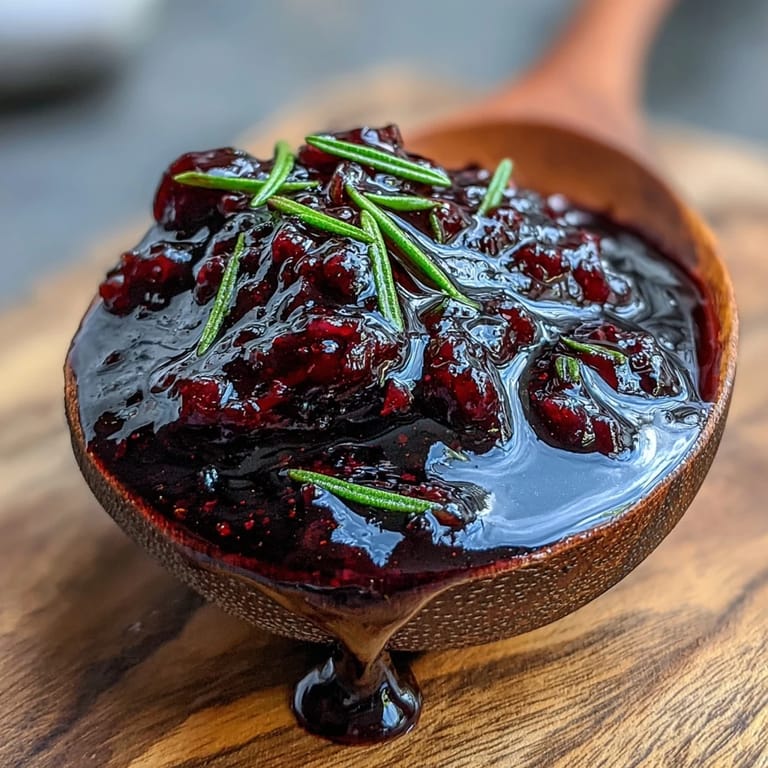
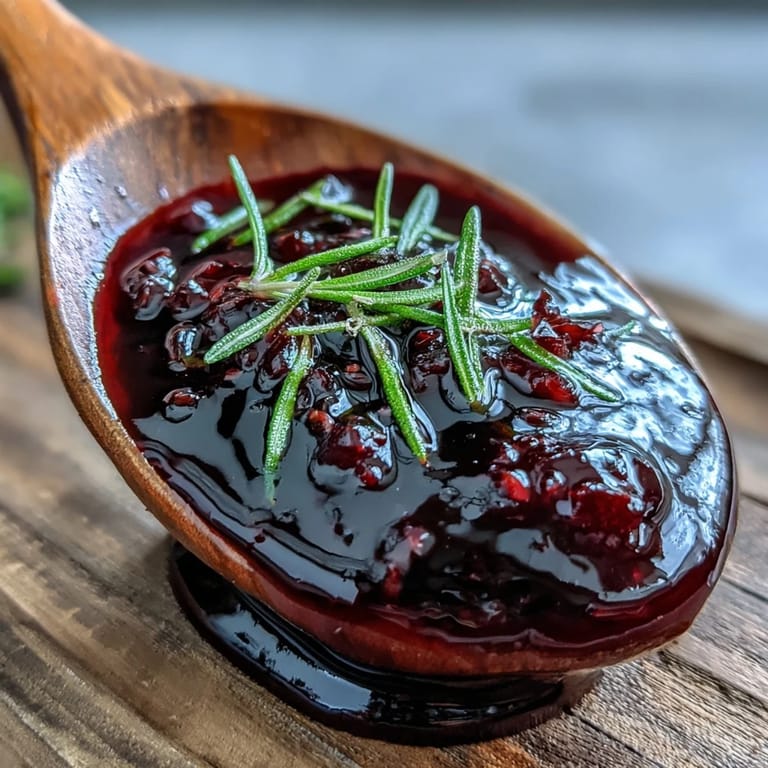
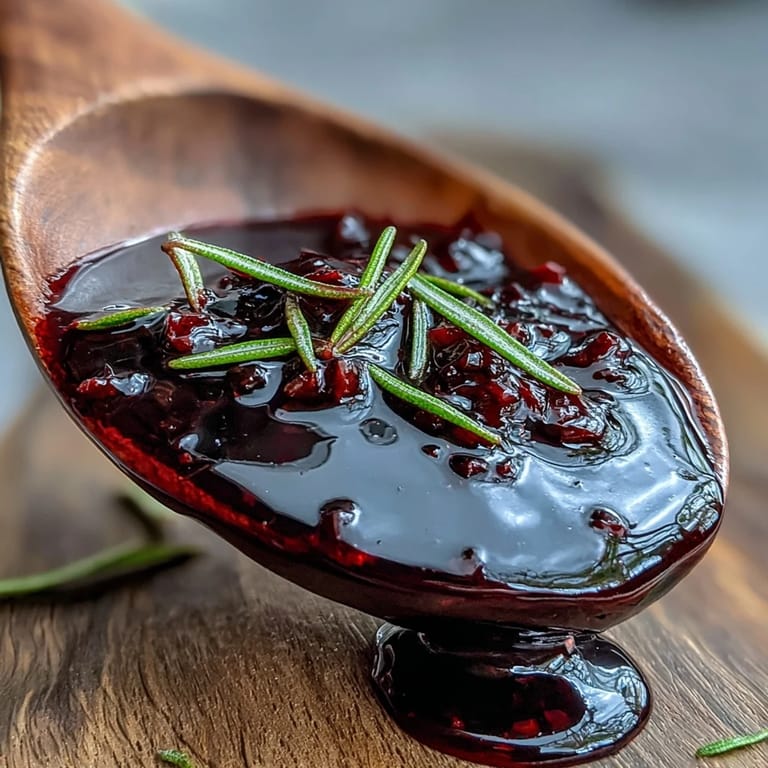
- Once you see small bubbles breaking the surface, turn the heat down to low and let it simmer uncovered for 15 to 18 minutes, stirring occasionally so nothing sticks to the bottom. You're watching for the liquid to reduce by about half, which is when it thickens into a glossy, coat-the-back-of-a-spoon kind of sauce.
- Finish and strain if you like:
- Remove from heat and fish out those rosemary sprigs with a fork. If you want a perfectly smooth sauce, pour it through a fine-mesh sieve into a clean bowl, pressing gently on the shallot and garlic to extract their flavor.
- Taste and season one final time:
- Add salt and black pepper to taste—start with just a pinch of each because you can always add more, but you can't take it back. Serve it warm, and watch how it transforms whatever it touches.
 Pin It
 There was a quiet moment during that dinner party when everyone was eating, and no one was talking much—just the sound of forks and gentle appreciation. That's when I realized that a good sauce is like a good supporting actor; it doesn't demand attention, but it makes everything else shine a little brighter. Food memories are built on those moments of silent satisfaction.
What Makes Black Currants Special
Black currants are one of those underrated fruits that taste like concentrated wine and earth all at once, which is exactly why they're beloved in European cooking and barely known in other parts of the world. They're tart without being sour, and they have this almost mineral quality that pairs incredibly well with game meats and rich proteins. If you can't find black currant juice at your regular grocery store, look in the international aisle or a specialty market—it's worth the hunt, because there's really no substitute that will give you the same flavor.
The Rosemary and Wine Partnership
Rosemary and red wine have been cooking together since medieval times, and there's a reason for that—they just understand each other. The rosemary's piney, slightly peppery notes cut through the wine's tannins and keep the sauce from feeling heavy or one-dimensional. When you combine them with black currants, you get this elegant triangle of flavors where none of them overshadow the others.
Serving Suggestions and Pairings
This reduction is magical over anything rich or gamy—roasted duck, lamb, venison, or even beef tenderloin. It's equally stunning on roasted vegetables like beets, root vegetables, or charred Brussels sprouts, because the tart fruitiness plays beautifully against caramelized sweetness. I've even spooned it over creamy polenta, and it was absolutely unforgettable.
- If you're cooking for someone plant-based, this sauce transforms grilled tofu or roasted cauliflower steaks into something that feels like restaurant-quality fine dining.
- Make it ahead and reheat it gently on the stove—it keeps in the refrigerator for up to a week, and it actually tastes even better the next day after the flavors have settled.
- A small drizzle goes a long way, so you'll have leftover sauce that begs you to find reasons to use it again and again.
 Pin It
 This is the kind of sauce that becomes your secret weapon, the thing you make when you want to feel like a real cook without the stress. Once you've made it once, you'll find yourself reaching for it again and again.
Recipe FAQs
- → What dishes pair best with black currant reduction?
This reduction complements roasted meats beautifully, especially lamb, duck, venison, and game birds. It also works wonderfully with roasted vegetables or as a glaze for grilled tofu and portobello mushrooms.
- → How long will the reduction keep in the refrigerator?
Store in an airtight container in the refrigerator for up to 2 weeks. The high acidity and sugar content act as natural preservatives. Reheat gently before serving.
- → Can I make this reduction ahead of time?
Absolutely. This sauce actually benefits from sitting overnight as flavors meld together. Make it 1-2 days ahead, refrigerate, and gently reheat on low heat before serving.
- → What can I substitute for black currant juice?
Cranberry juice or pomegranate juice work well as alternatives, though the flavor profile will shift slightly. Both provide similar tartness and deep color that complements the rosemary.
- → Should I strain the reduction?
Straining through a fine-mesh sieve creates an elegant, restaurant-quality smooth sauce. However, leaving it unstrained adds rustic texture and more intense rosemary flavor.
- → How do I know when the reduction is ready?
The reduction is ready when it has reduced by half and coats the back of a spoon. It should have syrup-like consistency that slowly drips rather than pours.