 Pin It
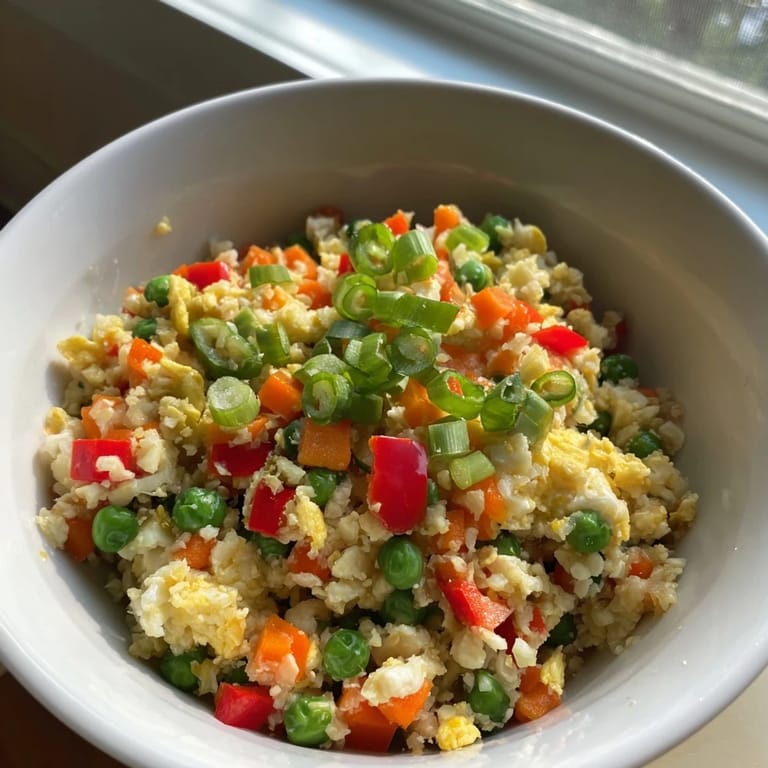
 My kitchen smelled like toasted sesame oil the afternoon my neighbor stopped by with groceries she couldn't use before moving away. Among the bags was a head of cauliflower, and instead of letting it wilt in my crisper drawer, I remembered something I'd read about ricing it. What started as an experiment turned into something I now make almost weekly—a dish that feels indulgent and light at the same time, like you're eating something your body actually wants.
I made this for my sister during a visit last spring when she was trying to cut back on rice. She sat at my kitchen counter with a cup of tea, skeptical at first, but by the second bite she was asking for the recipe. Now she texts me photos of her versions with added shrimp or different vegetable combinations, which makes me smile every time.
Ingredients
- Cauliflower head, riced: The foundation of this dish—pulse it until it looks like grains of rice, not a paste. If your food processor is small, work in batches so it processes evenly.
- Carrot, diced: Adds natural sweetness and those satisfying little pockets of texture that make each bite interesting.
- Frozen peas: Keep a bag in your freezer always; they thaw in the heat and taste fresher than you'd expect.
- Red bell pepper: For color as much as flavor—it makes the dish look vibrant and alive on the plate.
- Green onions: Slice them thin and use both the white and green parts; they're the finishing touch that wakes everything up.
- Garlic and ginger: The aromatic duo that transforms ordinary vegetables into something that smells like a restaurant kitchen.
- Eggs: Two large eggs scrambled and mixed throughout give you protein and richness without heaviness.
- Sesame oil: Use the regular kind for cooking (it has a higher smoke point) and save the toasted version for drizzling at the end for that deep, nutty note.
- Soy sauce or tamari: The salty backbone that brings everything into focus; tamari is the gluten-free option and honestly tastes just as good.
- White pepper: Milder and slightly different from black pepper, it distributes flavor without visible specks if that matters to you.
Tired of Takeout? 🥡
Get 10 meals you can make faster than delivery arrives. Seriously.
One email. No spam. Unsubscribe anytime.
Instructions
- Rice your cauliflower:
- Rinse the florets and pat them completely dry—moisture is the enemy of good texture here. Pulse them in a food processor until they resemble rice grains, working in batches so nothing gets over-processed into mush.
- Scramble the eggs:
- Heat one tablespoon of oil over medium-high heat until it shimmers, then pour in your beaten eggs. Let them set just until they lose their shine, then push them to the side of the pan to rest on a plate—they'll finish cooking when everything comes together.
- Build the aromatics:
- Fresh oil goes in next, then garlic and ginger for just thirty seconds. You'll know it's right when your kitchen fills with that distinctive fragrance and your mouth starts watering.
- Cook the colored vegetables:
- Carrots, bell pepper, and peas go in next, and you want them tender but still with a little snap. This takes about two to three minutes, and you're looking for them to smell sweet and look glossy.
- Add the cauliflower rice:
- Stir it constantly for four to five minutes so it gets a little golden and loses its raw edge without turning mushy. This is where the magic happens—the cauliflower absorbs all those flavors you've built up.
- Finish and season:
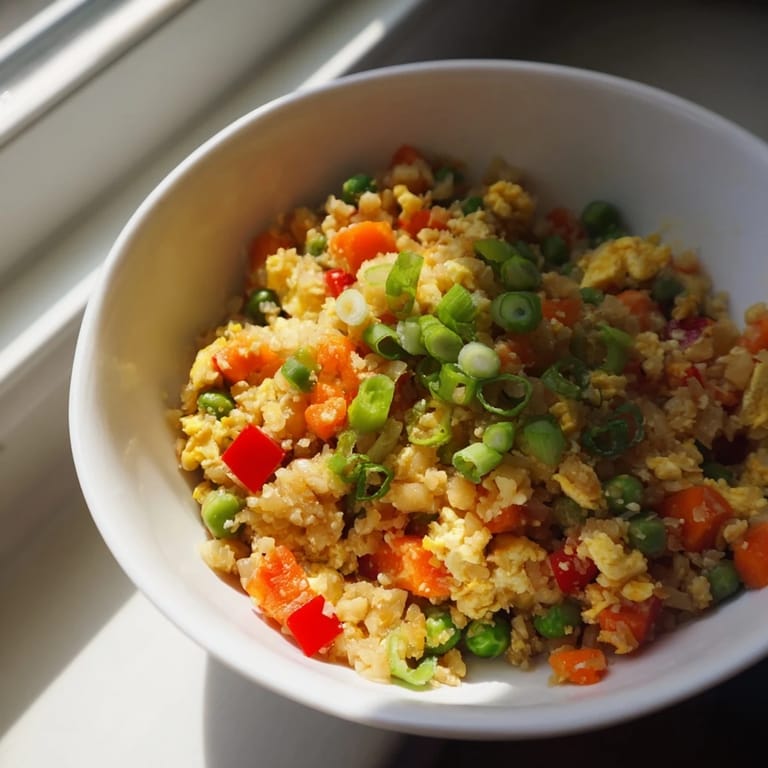
- Soy sauce goes in along with pepper and salt to your taste, then you return those eggs and scatter the green onions across the top. A final drizzle of toasted sesame oil if you have it, then you're done.
 Pin It
 There's a moment near the end of cooking when everything in the pan comes together and the colors blend into something that looks both simple and intentional. It's the moment I know this dish will be good, that my gamble on trying something different paid off.
Why This Works Better Than You'd Think
Most people assume cauliflower is a compromise, something you eat because you're trying to be healthier or following some trend. But once it's riced and cooked properly with enough seasoning and texture from the other vegetables, it stops feeling like a substitute and becomes its own thing entirely. The key is not treating it gently—you want it to actually cook and develop color, not just steam in the pan.
Making It Your Own
This recipe is genuinely a canvas, not a strict formula. I've made versions with leftover rotisserie chicken torn in, with shrimp that I cooked separately and tossed in at the end, with cashews for crunch, and even with a spoonful of peanut butter stirred into the soy sauce for a completely different dimension. The base is strong enough to carry whatever you throw at it.
The Practical Truth About Cooking This
Honestly, the only real technique here is not overthinking it. Once you get comfortable with the timing, you can make this without much thought, which means it becomes something you actually make on weeknights when you're tired but want something better than cereal. It's fast enough that you can start cooking and have dinner on the table before your tea gets cold.
- If you don't have a food processor, a box grater works perfectly fine—it just takes a few minutes longer and your hand gets a little tired.
- Prepare all your vegetables before you start cooking; the cooking happens quickly once the pan is hot, and you won't have time to chop while things are sizzling.
- Taste as you season; soy sauce saltiness varies wildly between brands, so add it gradually and adjust to what tastes right to you.
 Pin It
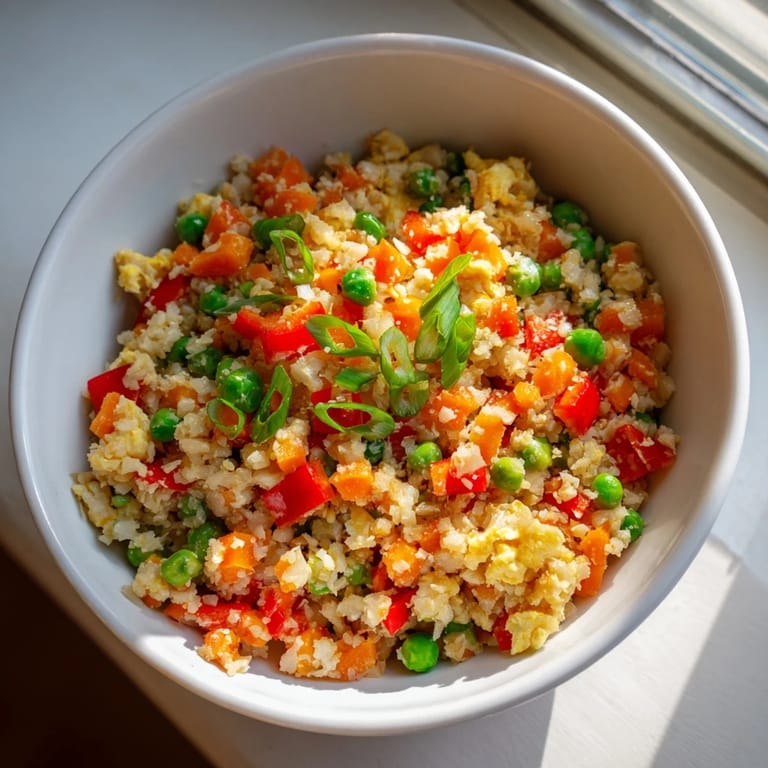
 This dish has become my answer to the question of what to eat when you want something that feels intentional but doesn't require hours at the stove. It's proof that sometimes the best discoveries aren't complicated.
Recipe FAQs
- → How do I rice the cauliflower?
Cut a medium head of cauliflower into florets, then pulse them in a food processor until they resemble rice grains. Work in batches if needed to avoid overcrowding. Alternatively, use a box grater for a more hands-on approach.
- → Can I make this dish vegan?
Yes, simply omit the eggs or replace them with tofu scramble. The dish remains flavorful and satisfying with the vegetables, garlic, and ginger providing plenty of depth and taste.
- → What vegetables work best in this dish?
Carrots, bell peppers, peas, and green onions are featured in this version, but you can easily swap in broccoli, snap peas, corn, zucchini, or mushrooms based on your preferences and what you have available.
- → How do I make this gluten-free?
Replace regular soy sauce with tamari, which is a gluten-free soy sauce alternative. All other ingredients are naturally gluten-free, making this dish suitable for those with gluten sensitivities.
- → Can I add protein to this dish?
Absolutely. Stir in cooked chicken, shrimp, tofu, or additional eggs for extra protein. Add these proteins after cooking the vegetables and before the final seasoning step.
- → How should I store leftovers?
Store any leftovers in an airtight container in the refrigerator for up to 3 days. Reheat gently in a skillet or wok with a splash of sesame oil to restore texture and flavor.