 Pin It
 There's something about the snap of a fresh edamame that makes you feel like you're actually cooking something, not just assembling ingredients. I discovered this salad during a lazy summer when my fridge held mostly forgotten vegetables and a bottle of sesame oil I'd been meaning to use. The moment those chilled beans hit the crisp cucumber and tangy dressing, I realized I'd stumbled onto something I'd be making constantly.
I made this for a potluck where everyone brought their "safe" versions of things, and somehow this simple salad was the first bowl empty. A friend asked for the recipe with such genuine surprise that I felt oddly proud of something so straightforward. That's when I knew it wasn't just refreshing—it was the kind of dish people actually remember eating.
Ingredients
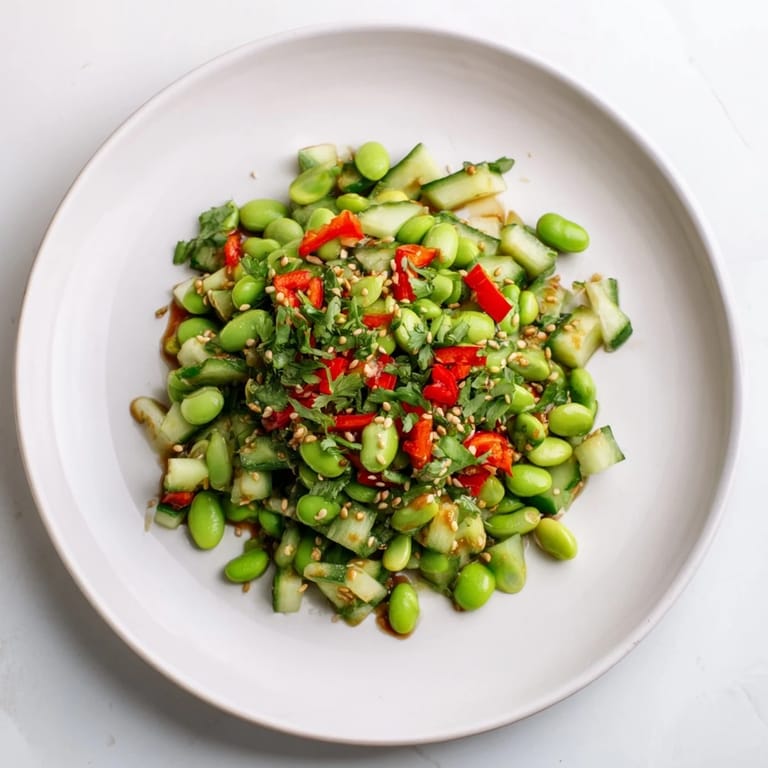
- Shelled edamame (2 cups): Whether you use frozen straight from the bag or seek out fresh ones at the farmer's market, they're the star here. Frozen actually works beautifully because they're already blanched, saving you a step.
- Cucumber (1 large): Dice it into small, even pieces so each forkful has a bit of that cool crunch. The freshness is non-negotiable.
- Green onions (2): Slice them thin so they distribute their onion brightness throughout instead of lurking in clumps.
- Red bell pepper (1 small, optional): Adds a gentle sweetness and a flash of color, but if you skip it, the salad won't miss it.
- Toasted sesame oil (2 tablespoons): This is where the magic lives—it smells like it means business, and a little goes a long way.
- Rice vinegar (1 tablespoon): Bright and subtle, without the aggressive tang of regular vinegar.
- Soy sauce or tamari (1 tablespoon): Use tamari if you're cooking gluten-free and want to feel virtuous about your choices.
- Honey or maple syrup (1 teaspoon): Just enough to balance the salt and vinegar into something that feels complete.
- Fresh ginger (1 teaspoon grated): Peel it fresh and grate it on the finest side of your box grater—dried ginger tastes like a completely different spice.
- Garlic (1 clove, minced): One clove is plenty; more and you're eating garlic salad instead.
- Toasted sesame seeds (1 teaspoon for dressing, 1 tablespoon for garnish): Toast them yourself if you have time, or buy them already toasted and feel zero guilt about it.
- Fresh cilantro (1 tablespoon chopped, optional): If you're the kind of person who loves cilantro, use it generously. If you're the kind who finds it soapy, don't use it at all.
Tired of Takeout? 🥡
Get 10 meals you can make faster than delivery arrives. Seriously.
One email. No spam. Unsubscribe anytime.
Instructions
- Boil the edamame:
- Bring a pot of salted water to a rolling boil and add your edamame. They'll float to the surface almost immediately, then keep cooking for about three to five minutes until they're tender but still have a slight resistance when you bite them. Drain them and dunk them in cold water to stop the cooking and shock them into that perfect chilled state.
- Assemble the vegetables:
- In a large bowl, toss together the cooled edamame, diced cucumber, sliced green onions, and bell pepper if you're using it. Keep the bowl at room temperature—you're not making a cold salad, you're just holding the ingredients cool until the dressing arrives.
- Whisk the dressing:
- In a small bowl, combine the sesame oil, rice vinegar, soy sauce, honey, ginger, garlic, and that first teaspoon of sesame seeds. Whisk it until the honey dissolves and everything looks emulsified. The dressing should smell like a sesame dream.
- Combine and taste:
- Pour the dressing over the vegetables and toss gently so everything gets coated without bruising the cucumber. Taste it—this is your moment to decide if it needs more salt, more sesame, or more ginger.
- Finish and serve:
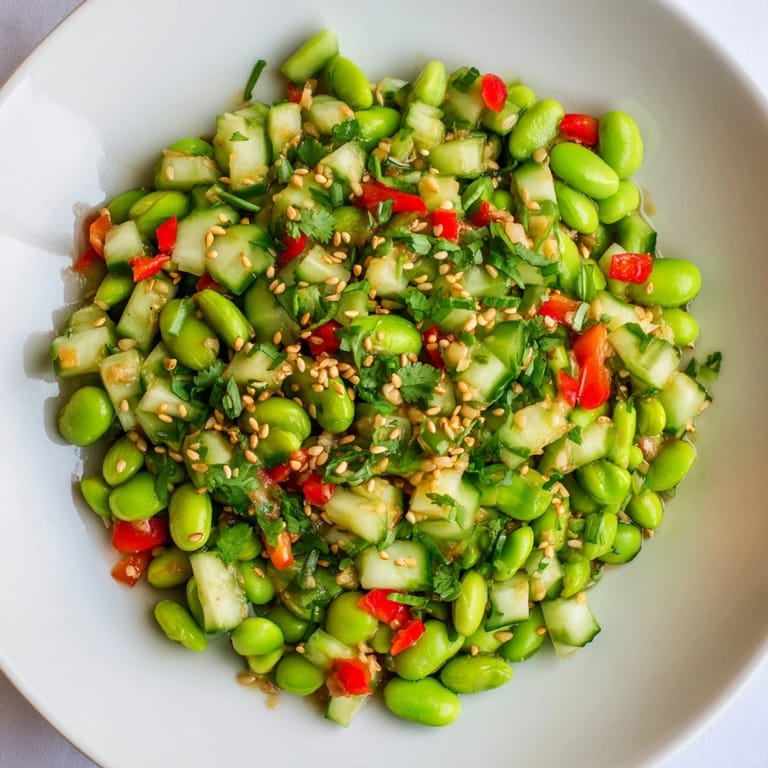
- Top with the extra sesame seeds and cilantro if you want them. You can eat it immediately while everything is at its crispest, or cover it and chill for up to thirty minutes to let the flavors get friendlier with each other.
 Pin It
 My best memory of this salad isn't making it alone in my kitchen—it's watching someone's face light up when they realized all those separate textures and flavors were actually supposed to taste this good together. That's when food stops being practical and starts being a small gift you're giving the people around you.
The Sesame Oil Question
Sesame oil is not like other oils. It's not a cooking oil in the way that olive or vegetable oil are—it's a finishing touch, a flavor statement, almost a condiment. If you've never used it before, you might be surprised by how dark it is and how strong it smells. That's correct. A little goes so far that you might actually worry you've used too much, and then you taste it and understand. The recipe uses two tablespoons for four servings, which sounds like nothing, but sesame oil has opinions and doesn't need much space to share them.
Why This Salad Works Any Season
In summer, when everything is hot and you want something cool and straightforward, this salad feels like relief in a bowl. In winter, when you're tired of the same vegetables, those bright sesame notes wake your palate up. The edamame are available year-round, the cucumber can be decent even when it's cold outside, and the ginger and garlic are always ready to remind you that you care about flavor. It's the kind of salad that doesn't apologize for being simple.
Variations and Substitutions
This salad is forgiving in the way that the best recipes are. Sugar snap peas or blanched snow peas can replace the edamame if you need them to. A splash of sriracha or a pinch of red pepper flakes goes into the dressing if you want heat. Some days I add a handful of crushed peanuts for texture, other days I skip the red pepper entirely because I'm tired. The bones of the recipe—the sesame oil, rice vinegar, ginger, and garlic working together—that part stays the same.
- If cucumber is mealy, try a firmer vegetable like jicama or even shredded daikon instead.
- Peanut oil can substitute for sesame oil in a pinch, though it'll taste like a different salad entirely.
- Make it a side dish for grilled fish or fold it into a bento lunch where it shares space with rice and pickled vegetables.
 Pin It
 This salad is proof that sometimes the best dishes are the ones that don't try too hard. It's been my quiet favorite for years, the recipe I reach for when I want something that feels both intentional and effortless.