 Pin It
 The first time I tasted authentic hummus was at a small kitchen table in Beirut, watching my friend's mother work tahini into chickpeas with the kind of practiced ease that only comes from making it hundreds of times. She explained that the secret wasn't fancy ingredients—just patience and the right balance of lemon and garlic. When I finally replicated it at home, that silky texture and subtle tang became my measuring stick for everything else. Now, whenever I blend up a batch, I'm transported back to that moment, the smell of toasted sesame filling the air.
I brought this to a potluck once, nervous it wouldn't stand out against the other dips. Within minutes, half the bowl was gone and people were asking for the recipe—something that had never happened before. What struck me most wasn't the compliments, but watching someone taste it and close their eyes for a moment, like they were remembering something themselves. That's when I realized hummus isn't just food; it's a bridge between people and their own stories.
Ingredients
- Chickpeas (1 ½ cups cooked or canned): The foundation that creates that dreamy texture—canned saves time, but always drain and rinse to remove excess starch that clouds the final result.
- Tahini (⅓ cup): Ground sesame paste that transforms simple chickpeas into silk; if yours is separated, stir the oil back in before measuring.
- Fresh lemon juice (2 tablespoons): The bright note that cuts through richness and prevents the hummus from tasting flat or heavy.
- Garlic (1 small clove, minced): Use fresh, not jarred, and keep it minimal—raw garlic intensifies as it sits, so go light your first time.
- Cold water (3 tablespoons): The invisible player that creates creaminess; add it gradually, never all at once.
- Ground cumin (½ teaspoon): Warm and earthy, it anchors the flavors and hints at the dish's Levantine roots.
- Sea salt (½ teaspoon): Fine salt dissolves evenly; adjust after tasting, as the lemon juice will also brighten the overall flavor.
- Extra virgin olive oil (2 tablespoons for garnish): Quality matters here since you taste it directly—use something you'd eat with bread.
- Sweet paprika or sumac (½ teaspoon): The final flourish that catches the eye and adds a whisper of spice or tartness depending on which you choose.
- Fresh parsley (2 tablespoons chopped): A green accent that adds freshness and makes the plate feel alive.
Tired of Takeout? 🥡
Get 10 meals you can make faster than delivery arrives. Seriously.
One email. No spam. Unsubscribe anytime.
Instructions
- Build the base:
- Add chickpeas, tahini, lemon juice, minced garlic, cold water, cumin, and salt to your food processor. Start everything together so the flavors begin blending from the first pulse.
- Blend until silky:
- Run the processor continuously, stopping every 30 seconds to scrape down the sides with a spatula—this ensures nothing hides. Listen for the sound to change from grainy to smooth; that's your cue you're close.
- Adjust consistency:
- If it's too thick and stiff, add water one tablespoon at a time while the processor runs, letting each addition fully incorporate before adding more. You're aiming for something that spreads easily but still holds a shape.
- Taste and season:
- Pull a small spoonful and taste it at room temperature—cold hummus tastes muted. Decide if it needs more salt for depth or more lemon for brightness, then pulse again gently to combine.
- Create the canvas:
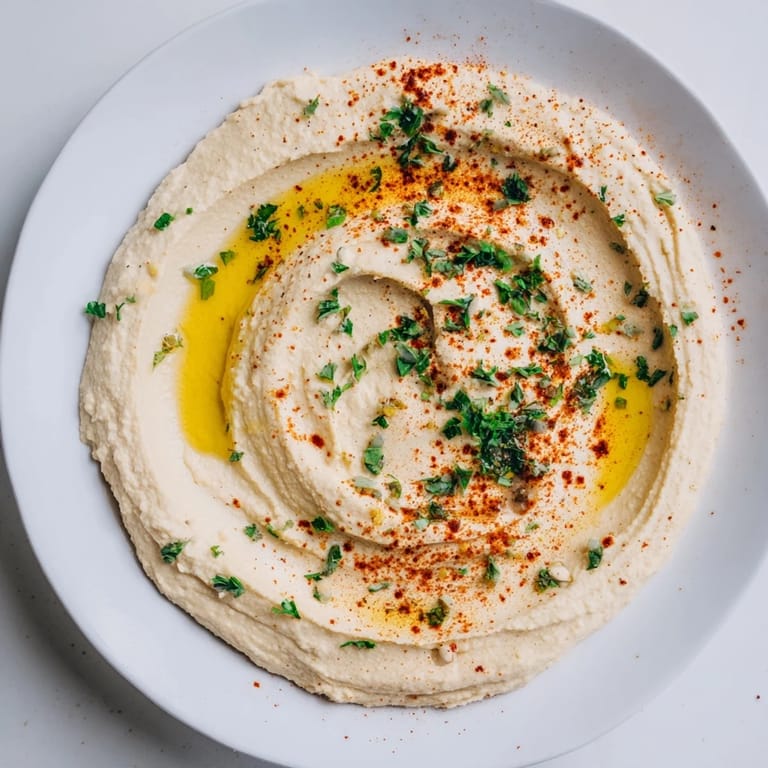
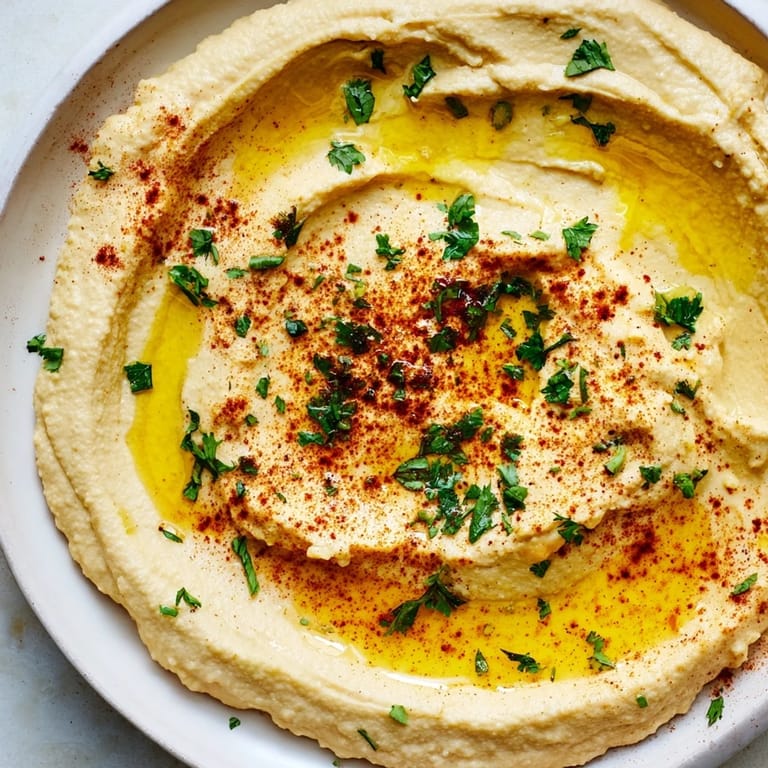
- Transfer the hummus to a shallow serving dish and use the back of a spoon to create gentle swirls in the surface. This isn't just pretty; it's functional, as those wells hold the olive oil and let it soak into every bite.
- Finish with intention:
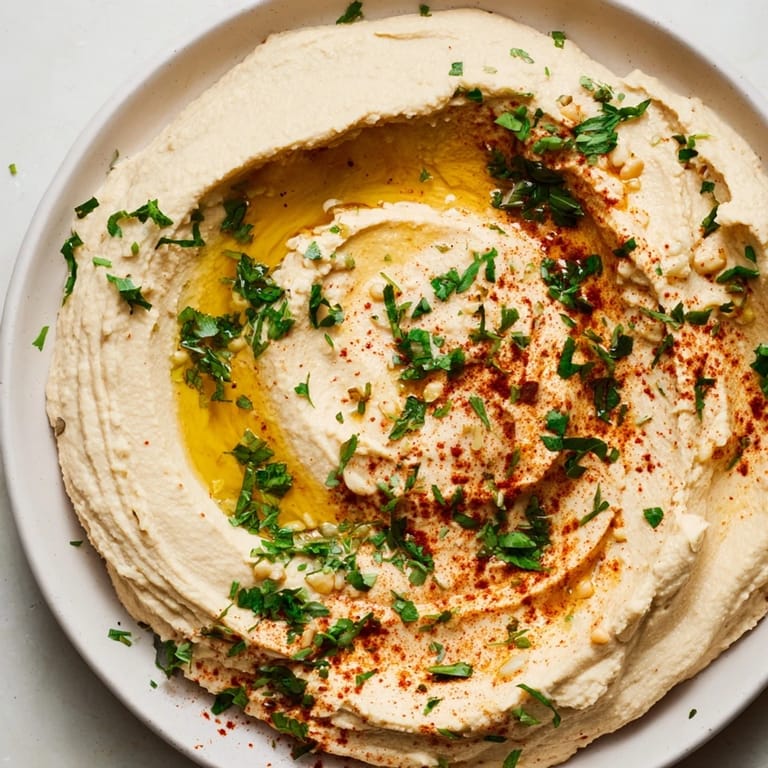
- Drizzle the olive oil in a spiral or pool in the center, then dust paprika or sumac over the top, and scatter parsley across like you're blessing the dish. Serve immediately while it's still cool and the oil hasn't fully absorbed.
 Pin It
 There's a quiet joy in watching someone tear off a piece of warm pita and drag it through your hummus for the first time—the way they pause and taste again, slower. It reminds me that the best meals aren't about impressing anyone; they're about creating a moment where people feel welcomed and fed, not just satisfied.
The Levantine Connection
Hummus belongs to a place and a culture that stretches across the Levant, and every kitchen makes it slightly different based on what they have and what they love. Some add more tahini for richness, others let the chickpea flavor shine through. Learning to make it teaches you to listen to your own preferences while honoring a tradition that's been feeding families for generations. When you adjust the lemon or salt to match your taste, you're not breaking the recipe—you're making it yours.
Texture and the Food Processor
The difference between grainy and creamy hummus often comes down to your equipment and your patience, not magic. A food processor works differently than a blender—it chops and then slowly combines, which is what you want. If you only have a blender, work in batches and expect to process longer, and if you're using an immersion blender, you'll need patience and several minutes of continuous blending.
Beyond the Basic Plate
Once you master the foundation, hummus becomes your canvas for creativity and regional variations. Some days you might add roasted red peppers, other times a handful of fresh herbs or a pinch of cayenne heat. The technique stays the same—what changes is your mood and what's in your kitchen. Each variation teaches you something about balance and how flavors play together.
- For a roasted garlic version, char whole cloves until soft and sweet, then blend them in for a completely different but equally beautiful result.
- Try adding a tablespoon of reserved chickpea cooking liquid if you're using dried chickpeas, as it contains starches that create extra creaminess.
- Make it ahead and serve it cold from the refrigerator, drizzling fresh olive oil just before guests arrive for the freshest taste.
 Pin It
 This hummus sits at the crossroads of simplicity and soul—four main ingredients creating something that tastes like home, no matter where you learned to taste it. Make it once, and you'll understand why it's been served at tables for centuries.
Recipe FAQs
- → What gives hummus its creamy texture?
The creamy texture comes from blending cooked chickpeas with tahini, lemon juice, garlic, and cold water until ultra-smooth.
- → Can I adjust the consistency of the spread?
Yes, adding more cold water tablespoon by tablespoon helps reach the desired smoothness and spreadability.
- → What spices enhance the flavor in this dish?
Ground cumin and a pinch of fine sea salt provide subtle depth, while paprika or sumac adds vibrant finishing notes.
- → How should this spread be served?
It's traditionally served as an appetizer or side, drizzled with olive oil and garnished with chopped parsley, perfect alongside pita or fresh vegetables.
- → Is there a tip for extra smoothness?
Peeling chickpeas before blending can create an even silkier texture, enhancing the overall mouthfeel.
- → How long can leftovers be stored?
Store in an airtight container in the refrigerator for up to four days to maintain freshness.