 Pin It
 The first time I made labneh, I was standing in my friend's kitchen in Beirut, watching her mother move through the process with the kind of ease that only comes from doing something a hundred times. She'd simply drape cheesecloth over a bowl the night before, leave it in the fridge, and by morning had this silky, tangy treasure waiting for breakfast. What struck me most wasn't the complexity—there was none—but how something so minimal, just yogurt and salt and time, could taste so alive and necessary.
I remember a morning when I'd forgotten to make labneh for a mezze spread, so I hastily strained some yogurt for just six hours instead of the full overnight. It was thinner than intended, almost sauce-like, but poured it into a bowl anyway and drizzled it with olive oil. Everyone at the table preferred it that way—looser, easier to scoop with warm bread, more generous on the plate. It taught me that labneh isn't finicky about perfection; it just wants to be made with intention.
Ingredients
- Full-fat plain yogurt (1 kg): The quality here is everything—use Greek yogurt if you can find it, or a really good whole-milk yogurt from a local dairy, because the fat is what becomes that creamy, luxurious texture once it's strained.
- Fine sea salt (½ tsp): It seems almost incidental, but salt draws out the whey and seasons the cheese at the same time, making every spoonful taste intentional.
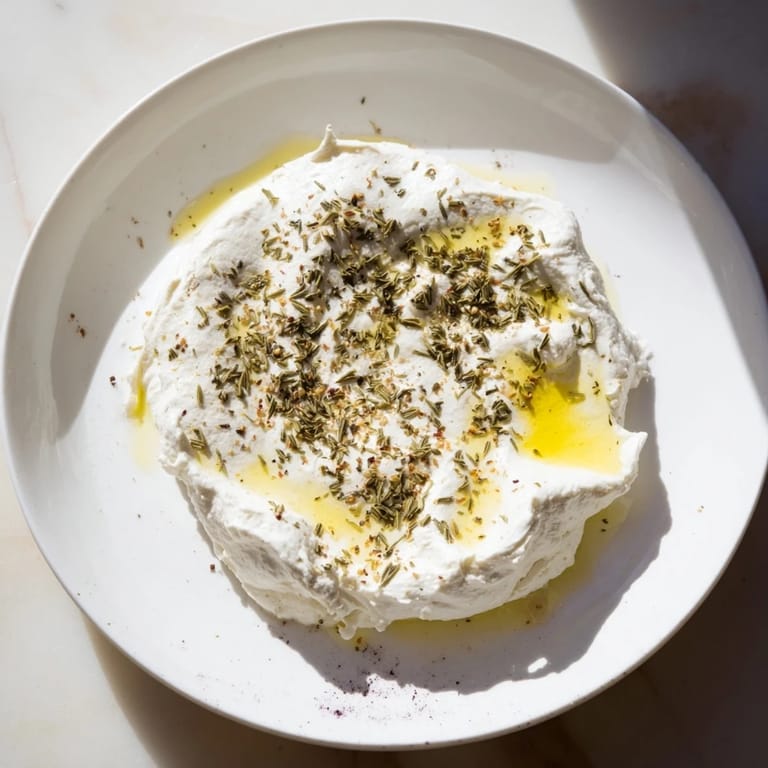
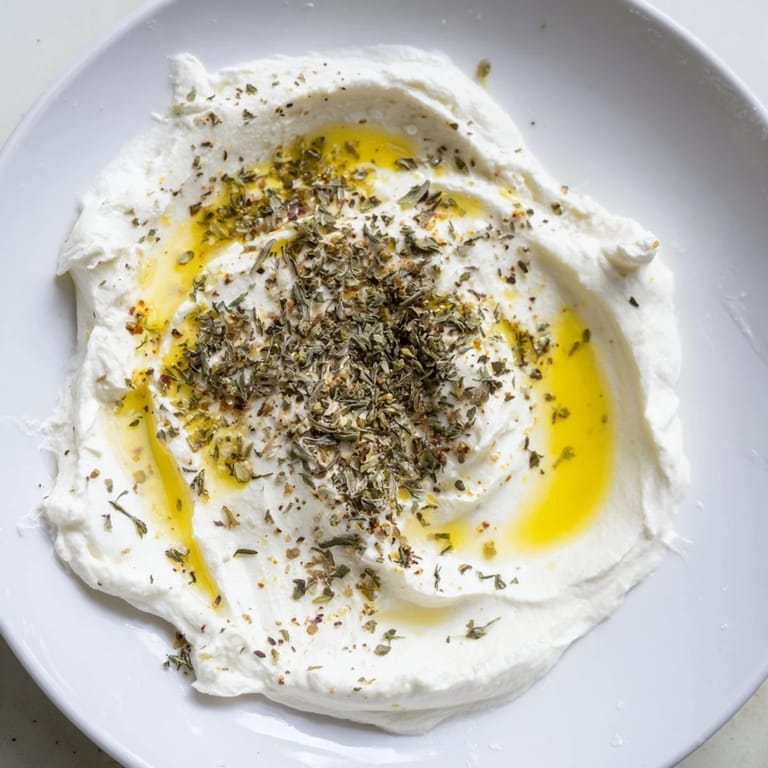
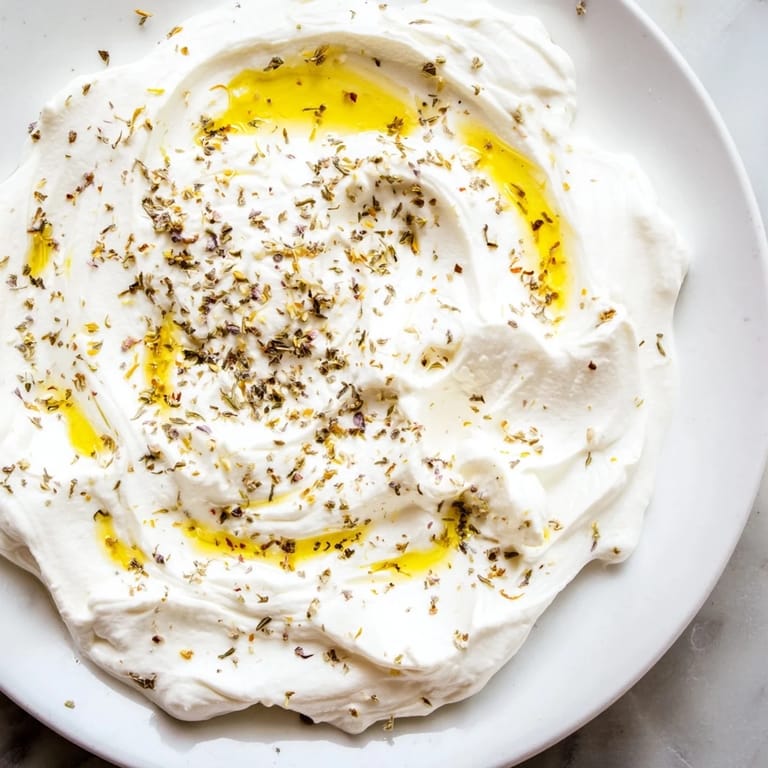
- Extra-virgin olive oil (2 tbsp): This isn't the finishing touch—it's the moment labneh becomes a dish worth eating, so use something you'd actually taste on its own.
- Dried mint or zaatar (1 tsp, optional): These herbs add a whisper of flavor that feels both homey and sophisticated, though plain labneh with just oil is equally beautiful if you prefer simplicity.
- Aleppo pepper or sumac (optional): A tiny pinch brings brightness and color, but this is truly optional—I love it for the visual pop more than anything.
Tired of Takeout? 🥡
Get 10 meals you can make faster than delivery arrives. Seriously.
One email. No spam. Unsubscribe anytime.
Instructions
- Salt the yogurt:
- Stir the salt into the yogurt until it disappears completely and tastes evenly seasoned. This matters because once it's in the cheesecloth, you won't be able to fix it.
- Set up your strainer:
- Double-line a large sieve or colander with cheesecloth or a clean kitchen towel—the double layer is what prevents any grainy bits from slipping through. Position it over a bowl deep enough to catch the whey without the cloth touching the liquid below.
- Transfer and cover:
- Pour the salted yogurt into the cloth, then gather all the edges and tie them loosely so the yogurt can breathe but nothing can escape. You want it sitting there like a little bundle of potential.
- Wait with patience:
- Refrigerate for 12 to 24 hours—twelve hours gives you something spreadable and delicate, while 24 hours creates a firmer, almost cream-cheese-like texture. I usually check on it around the twelve-hour mark and decide based on how thick it looks.
- Transfer to a serving bowl:
- Once it's reached your preferred consistency, untie the cloth and gently scoop the labneh into a shallow bowl or plate. It should smell bright and tangy, almost puckering to the nose in the best way.
- Finish and serve:
- Make a small well in the center and pour olive oil generously over the top—let it pool slightly. Sprinkle with dried herbs and pepper if you're using them, and serve chilled with warm pita, fresh vegetables, or olives.
 Pin It
 There was a moment, months into making labneh regularly, when I realized it had become the first thing I reach for when someone drops by unexpectedly. Just a bowl from the fridge, a quick drizzle of oil, some pita warming on the stove, and suddenly you're hosting something that feels both effortless and deeply generous.
The Why Behind Straining
Yogurt is already delicious, but labneh transforms it into something else entirely—thicker, more concentrated, more elegant. Straining removes the whey, which is mostly water and lactose, leaving behind the cream and proteins that make labneh taste so rich and tangy. It's alchemy in the simplest form: patience and gravity doing all the work while you do literally nothing.
When to Make It
Labneh is perfect for those moments when you want something on the table that says you've put thought into it, but you haven't actually spent any time. Start it before bed, forget about it overnight, and wake up to something that tastes like you've been cooking since dawn. It's also endlessly forgiving—if you forget about it for an extra few hours, it just gets even better, denser, more like cream cheese.
Variations and Beyond
Once you've made labneh once, you'll start seeing possibilities everywhere. Roll it into balls and store them in olive oil with herbs and whole garlic cloves, and you have something that keeps for weeks and looks beautiful in a jar. Serve it thick with just a whisper of oil and dust of sumac, or thin it slightly with a spoonful of the whey and serve it more like a dip. Some cooks press it into a mold and turn it into rounds that look almost like mozzarella, while others keep it loose and spoonable, using it as a spread on sandwiches or a base for mezze.
- For a vegan version, use a thick, unsweetened plant-based yogurt and follow the same method—it works beautifully and strains just as quickly.
- If you want labneh balls for storage, strain for the full 24 hours until it's quite firm, then roll into walnut-sized spheres and submerge them in olive oil with dried herbs.
- Taste it before serving and adjust the salt if needed, because the flavor of different yogurts varies and you want yours to taste exactly right to you.
 Pin It
 Labneh is proof that the best things in the kitchen aren't always the most complicated—sometimes they're the ones that ask you to simply show up, do one small thing, and then let time do the rest. Make it once and it becomes part of your regular rotation forever.
Recipe FAQs
- → What is labneh and how is it made?
Labneh is a creamy Middle Eastern cheese made by straining full-fat yogurt to remove whey. The yogurt is salted, poured into a cheesecloth-lined sieve, and refrigerated for 12–24 hours until thickened.
- → How long should yogurt be strained for labneh?
Strain the yogurt for 12 hours for a soft, spreadable texture, or up to 24 hours for a firmer, sliceable consistency.
- → What garnishes complement labneh?
Extra-virgin olive oil is drizzled on top, with optional dried herbs such as mint, zaatar, or spices like Aleppo pepper or sumac for added flavor.
- → Can labneh be made vegan?
Yes, plant-based thick yogurts can be used instead of dairy to create a vegan version of labneh.
- → How should labneh be stored and for how long?
Store labneh refrigerated in an airtight container for up to 5 days to maintain freshness and flavor.
- → What dishes pair well with labneh?
Labneh pairs wonderfully with warm pita bread, fresh vegetables, olives, or as part of a mezze platter alongside other Middle Eastern dishes.