 Pin It
 The first time I made kefta, I was standing in a cramped kitchen in Marrakech, watching my host's mother shape meat into perfect little balls with barely a glance. She moved so fast her hands blurred. When I tried to copy her, mine came out lopsided and too big, and she laughed, not unkindly, and showed me how to let the spices do the talking before the meat even hit the pan. That lesson stuck with me—the magic isn't in perfection, it's in how the cumin and cinnamon whisper to each other as they cook.
I made this for my friend Daniel on a Tuesday night when he was going through a rough patch, and he ate three full plates without saying much. Afterward, he just said it tasted like someone cared, and I realized that's exactly what happens when you take time with spices and let things simmer properly.
Ingredients
- Ground beef or lamb: Lamb gives you earthier flavor, but beef is leaner and more forgiving if you overmix. I've learned that either works, but don't use anything too lean or the meatballs turn into hockey pucks.
- Fresh parsley and cilantro: These aren't decoration—they keep the meat from tasting heavy and add a brightness that makes people ask what your secret is.
- Cumin and coriander: Toast them mentally while you're measuring; they're the backbone of the whole dish and deserve respect.
- Cinnamon and paprika: A pinch of cinnamon sounds weird until you taste it, then you wonder why more people don't cook this way.
- Couscous: Use the instant kind—it's not cheating, it's smart.
- Vegetables for the sauce: Carrots, zucchini, bell pepper, and tomatoes become silky and concentrated; don't skip any of them.
- Broth: Vegetable or beef both work, but make sure it's actually flavorful or you'll taste the difference.
Tired of Takeout? 🥡
Get 10 meals you can make faster than delivery arrives. Seriously.
One email. No spam. Unsubscribe anytime.
Instructions
- Mix the kefta with your hands:
- Combine the ground meat with the grated onion, garlic, herbs, and all the spices in a large bowl. Get your hands in there and knead it gently until everything is distributed evenly but not overworked—about two minutes should do it. Overworking makes dense meatballs that refuse to stay tender.
- Shape into small balls:
- Roll them to about the size of a walnut, which means they'll cook through in roughly the same time and look nice on the plate. I sometimes wet my hands slightly so they don't stick, but that's just a habit I picked up.
- Sauté the onion base:
- Heat olive oil in a large pot over medium heat and let the sliced onion go golden and soft, which takes about five minutes and fills the kitchen with the smell of what's coming next. This isn't a rush step.
- Build the vegetable foundation:
- Add carrots, bell pepper, and zucchini and cook for four or five minutes, stirring occasionally so they start to soften at the edges. You want them to still have some resistance when you add the tomatoes.
- Bloom the spices:
- After you add the tomatoes and garlic and cook briefly, add all your dried spices at once and stir constantly for about one minute so they release their oils into the hot vegetables. This is where the dish stops being separate ingredients and starts becoming itself.
- Add broth and bring to a simmer:
- Pour in the broth, season with salt and pepper, and let it bubble just enough to see movement on the surface. This is where you taste and adjust.
- Simmer the kefta gently:
- Nestle the meatballs into the sauce, cover the pot, and let everything cook for about twenty-five minutes, stirring gently halfway through so nothing sticks. The meatballs will firm up slightly but stay tender if you don't go rogue with the heat.
- Prepare the couscous at the end:
- While the kefta finishes, measure your couscous into a bowl, add salt and olive oil, pour boiling water over it, cover tightly, and walk away for five minutes. Fluff with a fork just before serving so each grain stays separate.
- Plate and garnish:
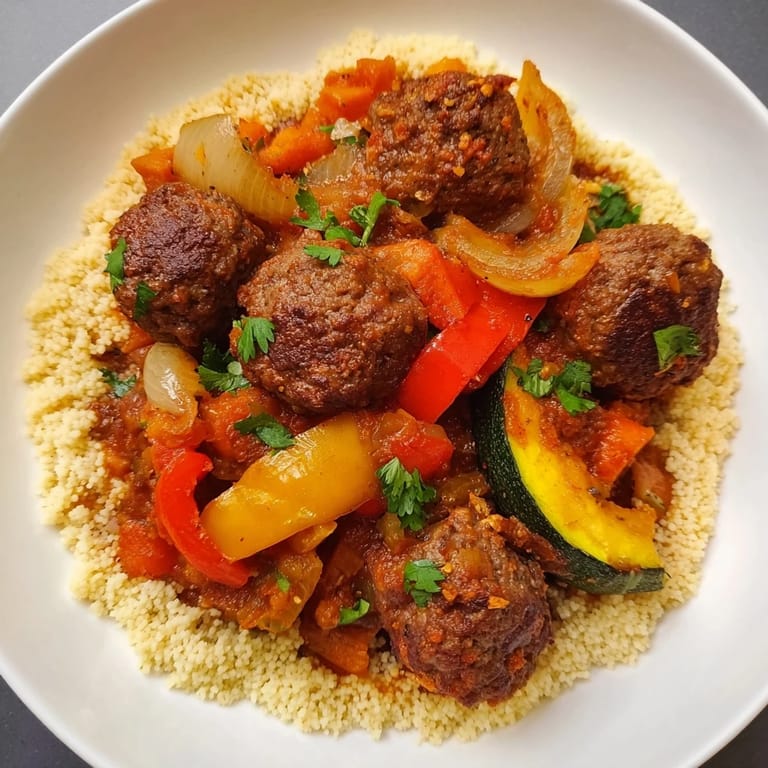
- Mound couscous on a platter or plates, spoon the kefta and vegetables and sauce over the top, and scatter fresh cilantro or parsley over everything for color and a little fresh note.
 Pin It
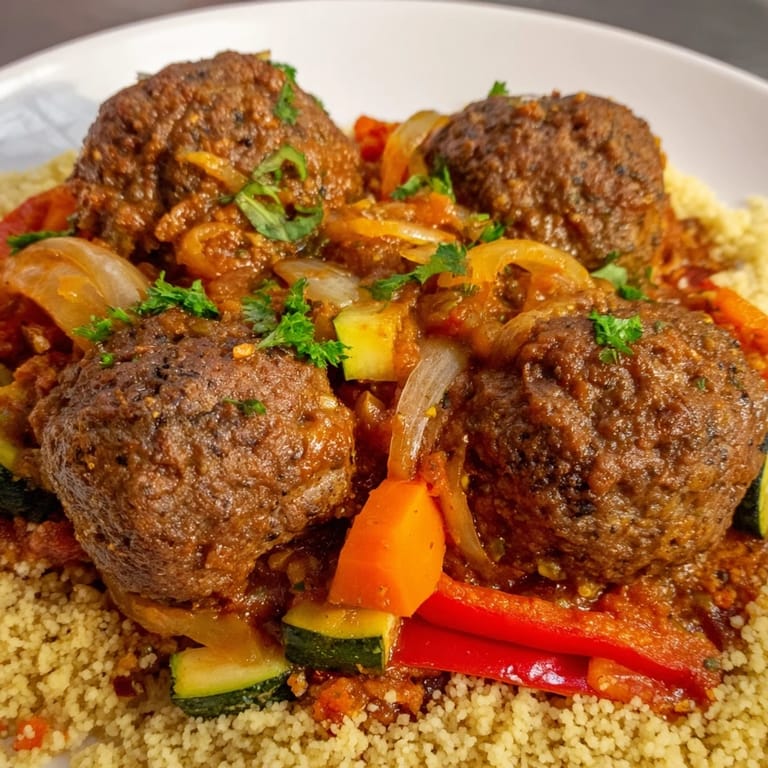
 There's a moment, usually about ten minutes in, when you lift the pot lid and the steam carries all those spices straight to your face, and you know you've made the right call. That's when this stops being a recipe and becomes a memory you're in the middle of making.
The Spice Blend and Why It Works
North African cooking isn't about individual spices shouting over each other; it's about them harmonizing in a way that sounds almost like music. The cumin and coriander form a savory base, the cinnamon adds warmth without sweetness, and the paprika brings color and a gentle pepper note. When they hit the hot vegetables together, they release oils that coat everything, and that's where the magic lives. I've made this dish with different ratios and learned that the proportions matter less than cooking them together, as a unit.
Timing and Flexibility
The beauty of this recipe is that it doesn't demand split-second timing. You can prep the kefta an hour ahead, and the sauce can simmer low and slow while you handle other things. I once made it while half-watching a soccer match and texting a friend, and it came out perfect because the dish doesn't require your constant attention, just your respect. If your vegetables are thicker or thinner, the cooking time shifts slightly, but everything will tell you when it's ready by how it looks and smells.
Variations That Still Honor the Original
I've made this with ground chicken when someone at the table didn't eat red meat, and it was lighter but still deeply flavored. I've added chickpeas for extra texture and protein, and they absorb the sauce beautifully. A friend suggested adding a tiny pinch of saffron once, and it transformed the whole thing into something almost luxurious, though it's not necessary.
- Swap the meat for ground lamb if you want deeper, earthier flavor, or stay with beef for something gentler.
- A handful of chickpeas stirred in at the end adds substance without needing to adjust anything else.
- A small pinch of saffron stirred into the warm broth before simmering brings an almost golden note that feels special.
 Pin It
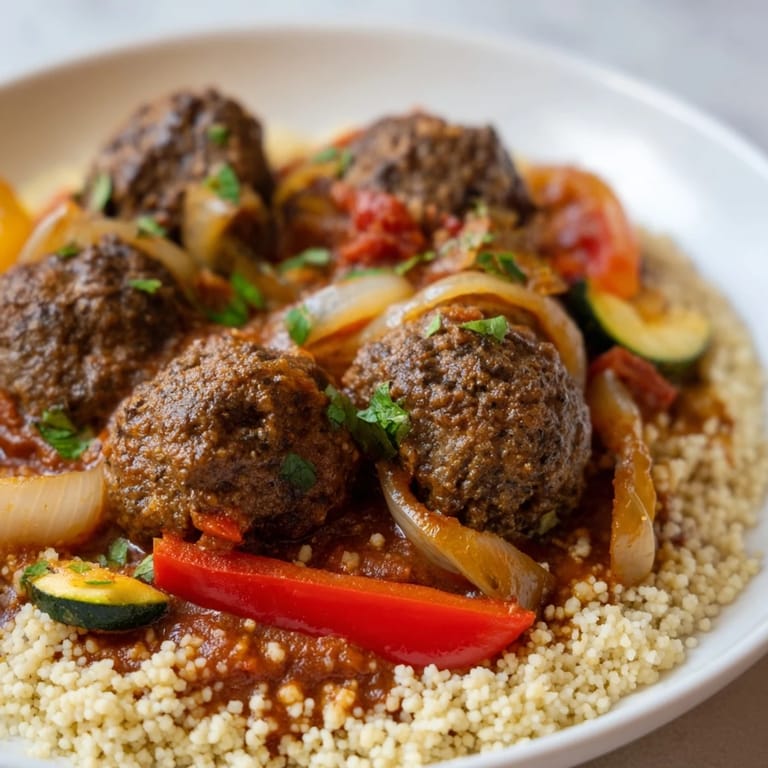
 This dish is built on the idea that good food doesn't require a degree in culinary science, just attention and patience. Make it for someone you care about, and watch what happens.
Recipe FAQs
- → What type of meat is best for kefta?
Ground beef or lamb are ideal for kefta, offering a rich flavor and tenderness. You can also try chicken or plant-based alternatives for variation.
- → How should couscous be prepared for the best texture?
Pour boiling water over couscous with a bit of salt and olive oil, then cover tightly and let it steam for 5 minutes. Fluff gently with a fork before serving.
- → Can the vegetable sauce be customized?
Yes, you can add or substitute vegetables like chickpeas for extra protein or saffron for traditional flavor depth.
- → How long should the meatballs simmer for optimal tenderness?
Simmer the meatballs in the spiced vegetable sauce for about 25 minutes, stirring gently halfway to ensure even cooking and juiciness.
- → What spices are essential in this North African dish?
Key spices include cumin, coriander, paprika, cinnamon, and turmeric, which combine to create the dish’s signature warm and aromatic profile.