 Pin It
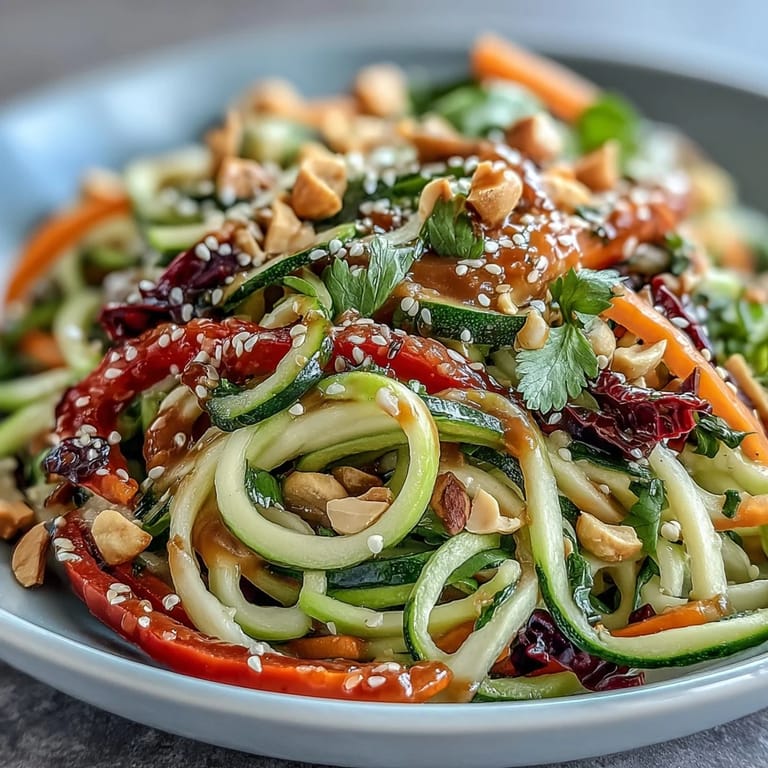
 My spiralizer sat in a kitchen drawer for months before a friend challenged me to actually use it. One humid afternoon, I pulled it out almost as a joke, but something clicked when I started feeding a zucchini through and watching those perfect green ribbons pile up. That first toss with a ginger-sesame dressing felt like discovering a secret shortcut to eating vegetables that didn't feel like obligation. Now this salad shows up whenever I need something that tastes vibrant and feels effortless.
I made this for a potluck once, slightly skeptical it would survive the drive and the table shuffle. What surprised me was watching people go back for seconds—not out of politeness, but because they were actually hungry for it. One guest asked if it was from a restaurant, and I realized that moment when a homemade dish surprises someone is exactly why I cook.
Ingredients
- Zucchini, spiralized: The backbone of this salad—choose firm, medium-sized ones that hold their shape and don't get watery.
- Carrot, spiralized: Adds natural sweetness and a satisfying crunch that contrasts beautifully with softer vegetables.
- Red bell pepper, thinly sliced: Brings sweetness and a bright pop of color that makes the whole bowl feel alive.
- Red cabbage, thinly shredded: This is your texture anchor—it stays crisp even when dressed and adds a subtle earthiness.
- Cucumber, spiralized: Keep these noodles separate until the last moment, or they'll release water and make everything soggy.
- Green onions, thinly sliced: A finishing touch that brings sharpness and prevents the salad from feeling one-note.
- Fresh cilantro, chopped: The herb that ties the whole Asian flavor profile together—don't skip it even if you think you don't like cilantro.
- Toasted sesame oil: Buy the good stuff and store it in a cool place; the flavor difference is night and day.
- Rice vinegar: Gentle and slightly sweet compared to regular vinegar, which is why it won't overpower delicate spiralized vegetables.
- Low-sodium soy sauce or tamari: Tamari is your friend if you're avoiding gluten, and honestly tastes just as good.
- Freshly grated ginger: Ground ginger tastes flat by comparison—take 30 seconds to grate it fresh and taste the difference.
- Maple syrup or honey: A tiny bit of sweetness balances the soy and vinegar without making the dressing cloying.
- Garlic, minced: One clove is enough; fresh garlic mellows as it sits in the dressing, so you won't end up with harsh raw garlic flavor.
- Lime juice: This brightens everything at the last second and makes people ask what your secret ingredient is.
- Chili flakes, optional: Add these if you like heat, but they're truly optional and won't offend anyone if you leave them out.
- Toasted sesame seeds: Buy them already toasted to save a step, and sprinkle them right before serving so they stay crisp.
- Roasted peanuts or cashews, optional: Adds protein and a contrast in texture that transforms this from side dish to light meal.
Tired of Takeout? 🥡
Get 10 meals you can make faster than delivery arrives. Seriously.
One email. No spam. Unsubscribe anytime.
Instructions
- Prep your vegetables with intention:
- Spiralize your zucchini, carrot, and cucumber, then slice your bell pepper, shred your cabbage, and chop your green onions and cilantro. Having everything prepped and sitting in one large bowl means you're halfway done before the dressing even comes together.
- Whisk the dressing until silky:
- In a separate bowl, combine your sesame oil, rice vinegar, soy sauce, ginger, maple syrup, garlic, lime juice, and chili flakes. Whisk it together until the sweetness dissolves and you get something glossy that coats the back of a spoon.
- Dress gently and let it rest:
- Pour the dressing over your vegetables and toss with a light hand—you're coating, not drowning. Let everything sit for 5 to 10 minutes while the vegetables soften slightly and the flavors start talking to each other.
- Finish and serve with personality:
- Transfer to a serving platter and scatter your toasted sesame seeds and nuts across the top right before people eat it. The moment between plating and eating is when this salad is most beautiful and crisp, so don't make it too far ahead.
 Pin It
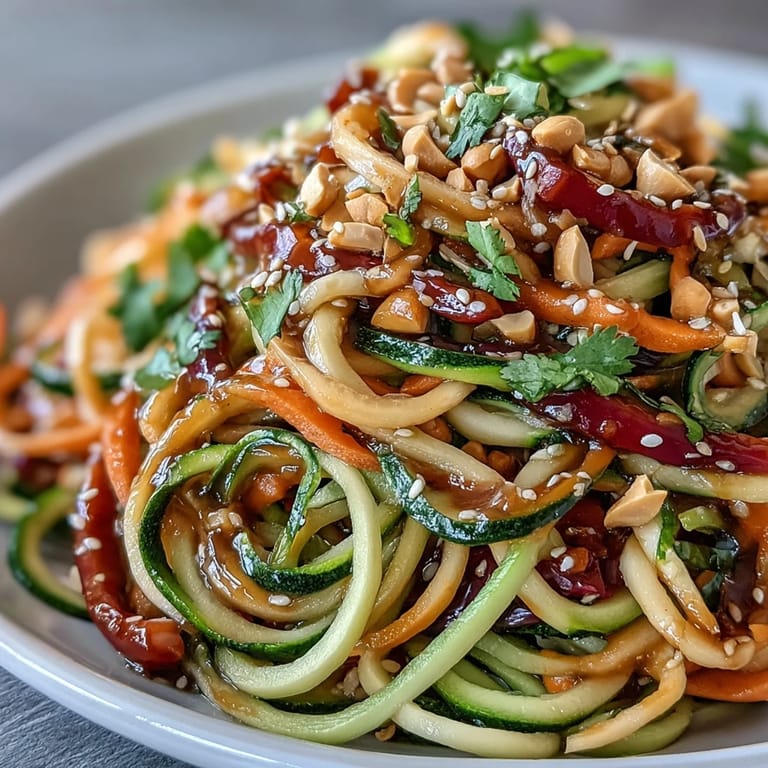
 There's something almost meditative about spiralizing vegetables—the repetitive motion, the soft sound of the blade, the way ribbons keep appearing. It's the kind of task that makes you feel like you're actually cooking something from scratch, not just assembling pre-made components.
The Magic of the Sesame-Ginger Dressing
This dressing works because it respects balance—salty, sour, sweet, and savory all playing equal parts instead of competing. The ginger brings warmth and a subtle spice that wakes up your palate, while the sesame oil wraps everything in richness without making it feel heavy. I've learned that Asian dressings live or die on freshness, which is why fresh ginger and lime juice matter more than any other ingredient.
Vegetables That Play Well Together
The secret to this salad's texture isn't just the vegetables themselves but how they're cut. Spiralized vegetables have a delicate, almost noodle-like quality that feels substantial without being heavy, while the shredded cabbage and sliced peppers add structure and keep everything from collapsing. This combination also means you get sweetness from the carrot, refreshment from the cucumber and zucchini, earthiness from the cabbage, and brightness from the peppers all in one bite.
Ways to Make This Your Own
This salad is forgiving in the best way—it invites you to swap things around based on what you have and what sounds good. You can substitute any spiralizable vegetable, add protein like tofu or edamame, or even toss in some crispy chow mein noodles if you want crunch that lasts. The framework stays the same, but the details are entirely up to you.
- Try adding thinly sliced daikon or yellow squash when you're feeling adventurous with your spiralizer.
- Baked tofu cubes or steamed edamame transform this into a complete meal that keeps you full.
- Make a double batch of the dressing and use it throughout the week on grilled vegetables or as a marinade for fish.
 Pin It
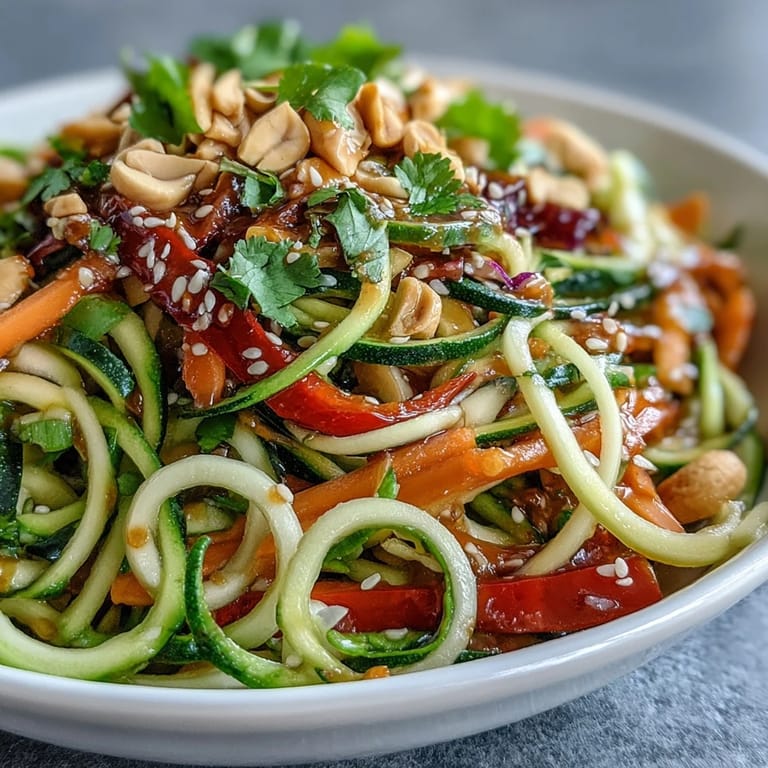
 This salad has become my answer to a thousand different moments—quick lunches, potluck obligations, moments when I need something bright. It reminds me that the best recipes are the ones you actually make.
Recipe FAQs
- → What vegetables work best for spiralizing?
Zucchini, carrots, cucumbers, yellow squash, daikon radish, and beetroot spiralize beautifully. Firm vegetables hold their shape well and create satisfying noodle-like strands perfect for tossing with dressing.
- → Can I make this dish ahead of time?
Prepare the vegetables and dressing separately up to 24 hours in advance. Store them in airtight containers in the refrigerator. Toss everything together just before serving to maintain the best texture and prevent vegetables from becoming soggy.
- → How can I add more protein to this salad?
Top with baked tofu, edamame, grilled chicken, or cooked shrimp. For plant-based options, try adding chickpeas, hemp seeds, or nutritional yeast. The neutral flavors complement the sesame-ginger dressing beautifully.
- → What can I substitute for sesame oil?
Toasted walnut oil or olive oil can work in a pinch, though you'll lose that distinct nutty flavor. For keeping the Asian profile, add a splash of soy sauce and a pinch of ground toasted sesame seeds.
- → How long will leftovers stay fresh?
Best enjoyed immediately for optimal crunch. If storing, keep dressed leftovers refrigerated for up to 1 day—the vegetables will soften but remain tasty. Undressed vegetables stay fresh for 3-4 days when stored properly.
- → Is a spiralizer necessary?
While a spiralizer creates uniform noodles, you can use a julienne peeler, mandoline, or simply cut vegetables into thin strips with your knife. The texture will vary slightly but the dish remains delicious.