 Pin It
 There's something almost meditative about watching red peppers char in the oven, their skins blistering and turning black while the kitchen fills with this sweet, smoky perfume. I discovered this roasted red pepper hummus years ago when a friend brought it to a potluck, and I remember being struck by how it tasted nothing like the plain hummus I'd been making for years. The roasting step felt like the secret handshake to something better, and once I understood that, I couldn't stop making it.
I made this for my partner during that first autumn we lived together, spreading it on crackers while we unpacked boxes in our new kitchen. He took one bite and asked if I'd made it myself, and there was something in his surprise that made me feel oddly proud of something so simple. Now it's become part of our weekend ritual, something I always have on hand when people come over unexpectedly.
Ingredients
- Red bell peppers: Two medium fresh ones give you that charred, caramelized depth, but honestly, jarred roasted red peppers save you time and work beautifully if you're in a hurry or prefer not to deal with the peeling.
- Chickpeas: One drained and rinsed can is your protein base and gives the hummus that creamy, substantial texture that makes it feel like a proper food and not just a condiment.
- Tahini: This sesame paste is non-negotiable for authentic hummus, bringing an earthy nuttiness that balances the sweetness of the peppers.
- Extra-virgin olive oil: Use the good stuff here because you'll taste every drop, both in the blend and in that final drizzle that makes it look restaurant-ready.
- Lemon juice: Fresh lemon is crucial, cutting through the richness and brightening everything in a way bottled juice simply can't match.
- Garlic, cumin, and smoked paprika: The garlic adds a sharp note, while the spices layer in warmth and that subtle smokiness that makes people ask what's in it.
- Salt and cold water: Salt brings everything into focus, and cold water is your texture control, letting you dial in the creaminess you prefer.
Tired of Takeout? 🥡
Get 10 meals you can make faster than delivery arrives. Seriously.
One email. No spam. Unsubscribe anytime.
Instructions
- Roast the peppers (if using fresh):
- Heat your oven to 425°F and place halved, seeded peppers cut side down on a baking sheet. Watch them roast for about 20 minutes until the skins are charred and blistered, almost blackened in places. Once they come out, cover them in a bowl to steam for 10 minutes, which makes the skin peel away almost effortlessly.
- Combine everything in the food processor:
- Add your roasted peppers, drained chickpeas, tahini, lemon juice, minced garlic, olive oil, cumin, paprika if you're using it, and salt. You're aiming for all of it to come together into a cohesive blend, so give yourself permission to scrape down the sides a few times.
- Blend until silky smooth:
- This is where patience pays off. Blend for longer than you think you need to, really letting the food processor work until everything transforms into something almost cloud-like. If it feels thick, add cold water one tablespoon at a time, tasting as you go.
- Taste and adjust:
- This is your moment to be honest about what's missing. Does it need more lemon brightness, more salt to bring the flavors into focus, or a whisper more garlic?
- Finish and serve:
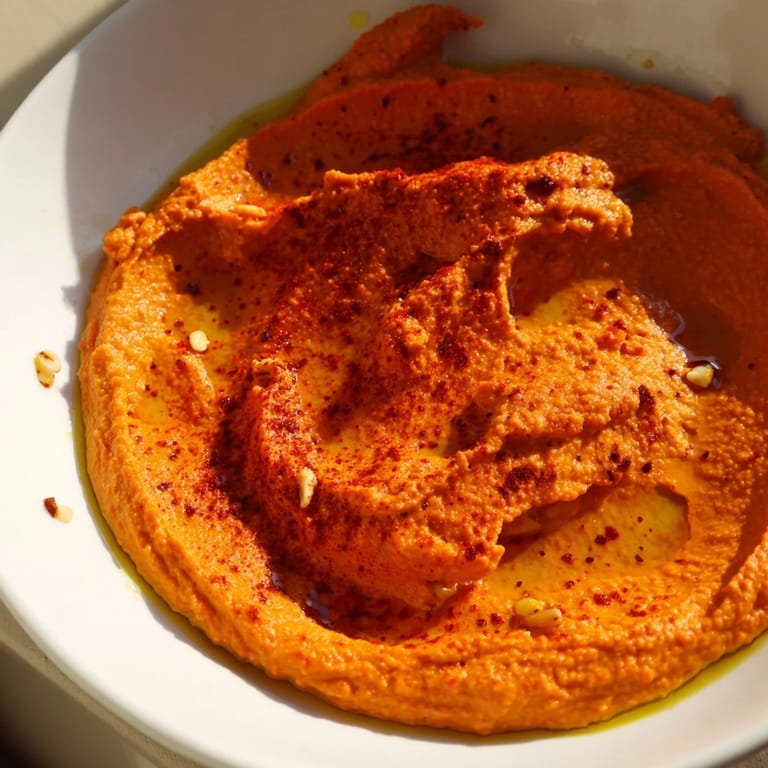
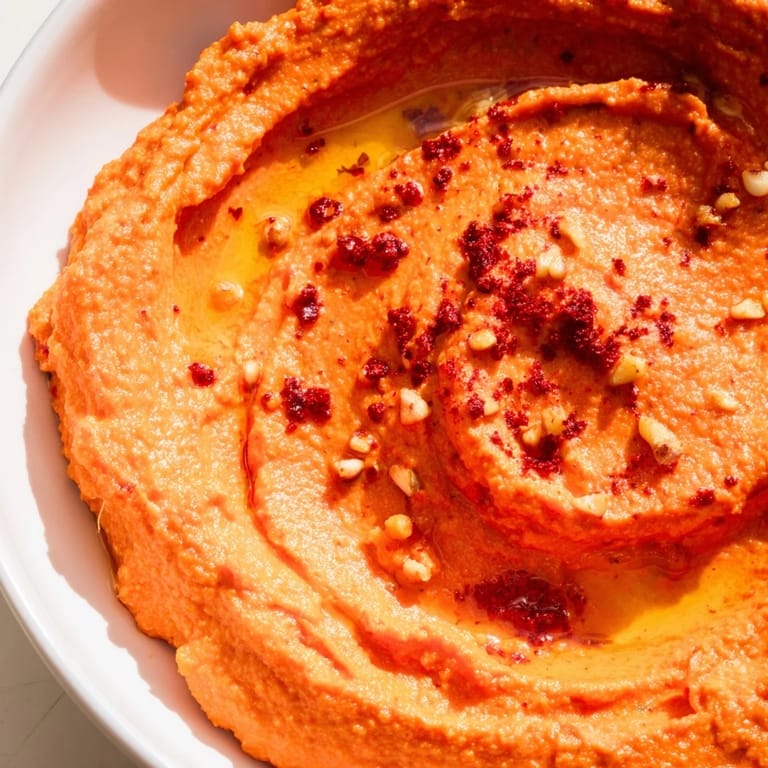
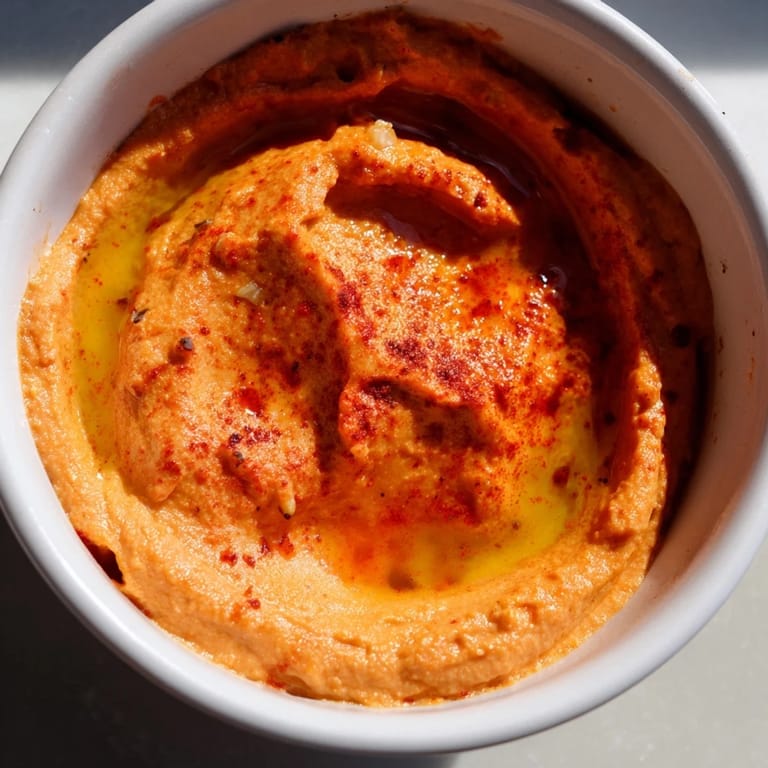
- Transfer to a bowl and make a shallow well in the center with the back of a spoon, then drizzle with good olive oil and whatever garnish speaks to you. Smoked paprika looks beautiful, or fresh parsley if you're feeling green.
 Pin It
 This hummus became the unofficial host of a dinner party I threw last spring, the one thing everyone kept returning to between courses. A neighbor I barely knew at the time came back for thirds and asked if I made it to sell, which was the kind of compliment that stuck with me for weeks. It reminded me that sometimes the simplest things we make in our kitchens are the ones that matter most to people.
When to Use Jarred Peppers vs. Fresh
Fresh roasted peppers give you control over the char level and a certain satisfaction from the full process, but jarred peppers are genuinely just as delicious and cut your total time down to maybe 10 minutes. I've brought hummus made with jarred peppers to gatherings where people couldn't tell the difference, and honestly, on weeknights when I want this but don't want to turn on the oven, I reach for jarred without apology. The real magic is in the tahini and lemon balance anyway, so don't let perfect be the enemy of actually making this.
Flavor Tweaks That Changed Everything for Me
The smoked paprika is optional on the ingredient list, but I'd argue it's essential if you want that depth that makes people lean in and ask what you did differently. A tiny pinch of cayenne transforms it into something with a gentle warmth that builds on your palate without overwhelming it. If you're sensitive to garlic or prefer something mellower, you can absolutely use roasted garlic instead of raw, which gives you the flavor without the sharp bite that lingers.
Storage and Serving Ideas
This keeps beautifully in an airtight container in the fridge for up to five days, and honestly tastes even better on day two once the flavors have had time to get to know each other. Serve it with pita bread, vegetables, crackers, or use it as a spread on sandwiches where it adds creaminess and a hint of sweetness that regular mayo can't touch. I've even stirred it into salad dressings or dolloped it onto roasted vegetables as a finishing touch.
- Make a batch when you have time and portion it into small jars for snacking throughout the week.
- Drizzle with good olive oil before serving to make it look intentional and restaurant-worthy.
- If it thickens in the fridge, add a splash of lemon juice or water to loosen it back up.
 Pin It
 Every time I make this, I'm reminded that the best recipes are the ones that become part of your rhythm, the ones you make without thinking about whether it's fancy enough or impressive enough. This one earned its place on my kitchen counter simply by being delicious, reliable, and kind to everyone it meets.
Recipe FAQs
- → Can I use jarred roasted red peppers instead of fresh?
Yes, jarred roasted red peppers work excellently and save time. Use about 1 cup drained peppers, which is equivalent to 2 medium fresh peppers. Simply drain them well and proceed with blending.
- → How do I achieve the smoothest texture?
Blend until completely smooth, scraping sides frequently. Add cold water gradually, one tablespoon at a time, until you reach your desired consistency. A food processor works better than a blender for this application.
- → What's the best way to store this hummus?
Store in an airtight container in the refrigerator for up to 5 days. Before serving, drizzle with olive oil to prevent oxidation and restore creaminess. Frozen hummus keeps for up to 3 months.
- → How can I adjust the garlic intensity?
For milder garlic flavor, roast the garlic clove first or use roasted garlic instead of raw. For bolder garlic presence, increase to 2 cloves. Remember, raw garlic strengthens over time in storage.
- → What should I serve this with?
Serve alongside warm pita bread, crackers, or fresh vegetable sticks. It's also delicious as a sandwich spread, in grain bowls, or as part of a Mediterranean mezze platter with olives, feta, and fresh herbs.
- → Is this truly vegan and gluten-free?
Yes, the base is vegan and naturally gluten-free. However, check tahini and canned chickpea labels for certification if you have strict dietary requirements, as some products may contain additives or be processed in shared facilities.