 Pin It
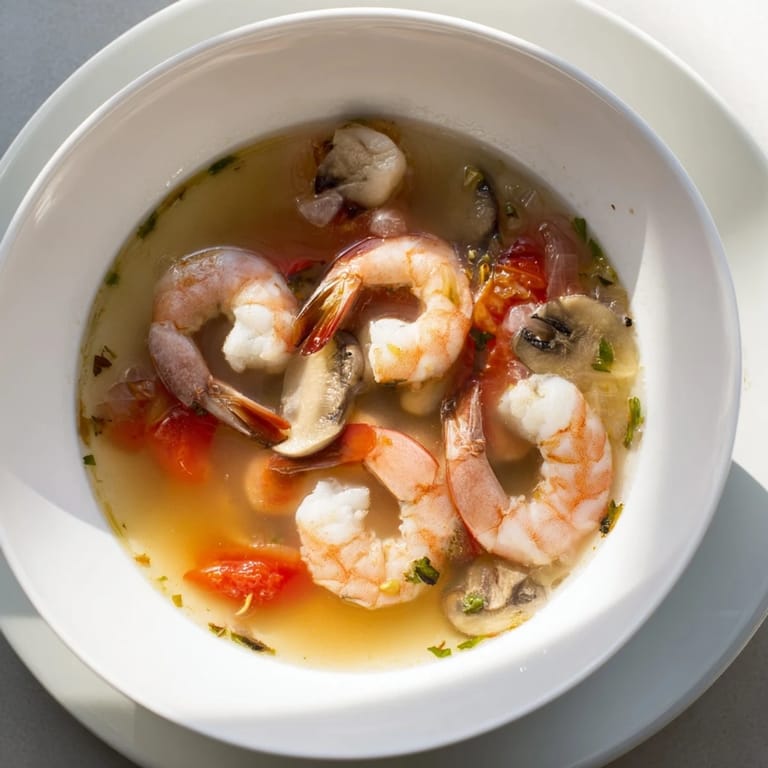
 The first time I really understood tom yum wasn't from a recipe—it was sitting in a tiny Bangkok street stall at dusk, steam rising from a clay pot while the vendor stirred in lime juice with practiced hands. The broth hit my tongue in waves: sour, spicy, fragrant, alive. Years later, I recreated that moment in my own kitchen, and somehow a pot of shrimp, lemongrass, and chilies became a way to travel without leaving home. Now whenever I need something bold and bright, this soup is my answer.
I made this for my partner on a rainy Tuesday when we both needed something warm but not heavy, something that would make us feel like we'd traveled. He stood at the stove while the lemongrass steeped, inhaling deeply and asking if we could make this every week. That's when I knew the recipe had won him over—not the perfection of it, but the way it made the kitchen smell like something foreign and wonderful.
Ingredients
- Chicken or vegetable stock (4 cups): This is your foundation, so use something you'd actually drink on its own—the better the stock, the more depth your soup will have.
- Fresh lemongrass (2 stalks): Trim the dry tops and root end, then smash the stalks to release their oils; dried lemongrass loses so much of that grassy, citrusy punch.
- Kaffir lime leaves (4 leaves): These are irreplaceable—tear them gently so their oils disperse into the broth rather than staying locked in whole leaves.
- Fresh galangal (3 slices): It's milder and more floral than ginger, but ginger works if you can't find it; slice it thin so it infuses quickly.
- Thai bird's eye chilies (2): These little bullets pack heat; start with one if you're unsure, because you can always add more heat but you can't take it back.
- Large shrimp (250 g): Peeled and deveined, they'll cook in minutes and stay tender if you don't overcrowd the pot or leave them in too long.
- White mushrooms (150 g): Slice them uniformly so they cook at the same rate and absorb the broth's flavor evenly.
- Tomatoes (2 medium): Cut into wedges so they soften and break down slightly, releasing their juice into the soup.
- Onion (1 small): Slice it thin; it'll wilt into the broth and add sweetness to balance the heat and sour.
- Fish sauce (2 tablespoons): This is umami gold, but it smells stronger than it tastes—trust the process and start here, then adjust to your taste.
- Lime juice (1 tablespoon plus more): Fresh lime is essential; bottled juice tastes flat in comparison and won't give you that bright, sharp punch.
- Sugar (1 teaspoon): Just a whisper to round out the flavors and balance the sour and spice.
- Chili paste nam prik pao (1 teaspoon, optional): This adds depth and a slight smoky heat if you want the soup to feel even more complex.
- Cilantro, green onions, and lime wedges for garnish: These aren't afterthoughts—they're the finale that brings everything into focus.
Tired of Takeout? 🥡
Get 10 meals you can make faster than delivery arrives. Seriously.
One email. No spam. Unsubscribe anytime.
Instructions
- Build your flavor base:
- Pour stock into a medium pot and bring it to a gentle simmer over medium heat. Add your smashed lemongrass, torn lime leaves, galangal slices, and sliced chilies, then let them steep for 5 to 7 minutes—you'll see the broth transform from clear to golden, and the whole kitchen will smell like a Thai market. Don't rush this step; it's where all the aromatic magic happens.
- Add the vegetables:
- Slip in your mushroom slices, tomato wedges, and onion, then let them cook for 3 to 4 minutes until they've softened and started to give their flavors to the broth. The tomatoes will begin to break down and create a subtle sweetness that balances everything.
- Cook the shrimp:
- Add your shrimp and watch them carefully—they'll turn pink and opaque in just 2 to 3 minutes, and that's exactly when you pull them out. Overcooked shrimp becomes rubbery, so set a timer if you tend to get distracted.
- Season to taste:
- Stir in fish sauce, fresh lime juice, sugar, and chili paste if you're using it, then taste a spoonful of broth and adjust—more fish sauce for depth, more lime for brightness, more chili for heat. This is your moment to make it yours.
- Finish and serve:
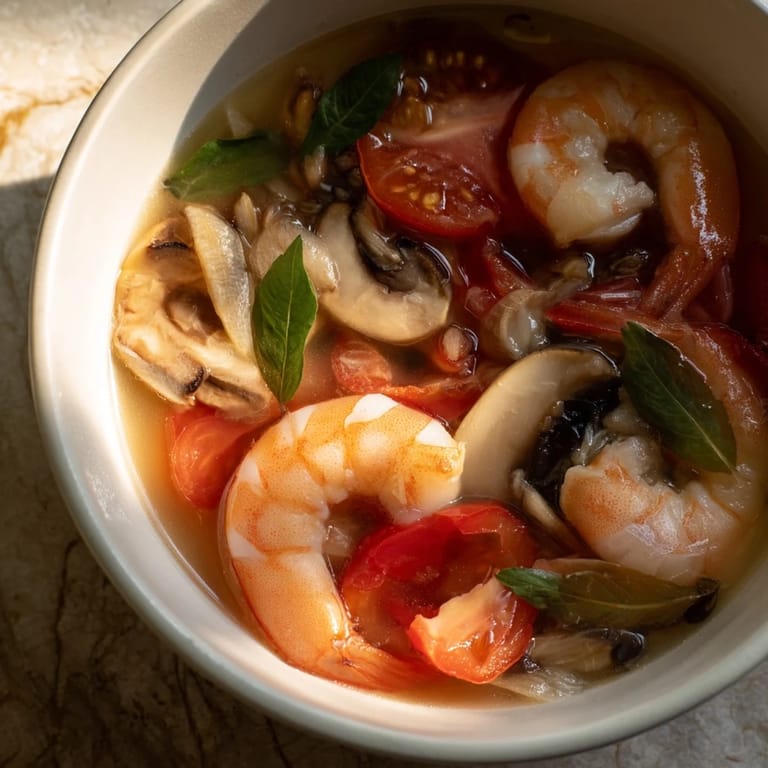
- Remove the pot from heat and discard the larger pieces of lemongrass and galangal if you prefer a cleaner bowl. Ladle the soup into bowls and crown each one with cilantro, sliced green onions, and a lime wedge for squeezing.
 Pin It
 One evening, a friend who thought she hated spicy food tried a bowl almost reluctantly, then looked up at me mid-slurp with surprise in her eyes. She went back for seconds, then asked for the recipe. That's when it clicked for me that this soup isn't about heat for the sake of it—it's about balance, about the sour and aromatic and spice working together to create something that feels alive.
The Art of Balance
Tom yum lives and dies by its balance, and it's a lesson that translates beyond this one soup. If your bowl tastes too salty, don't add more soup—squeeze in more lime juice to brighten it. If it's too sour, a pinch of sugar levels it out. If the heat is overpowering, a touch of fish sauce adds savory depth that makes your palate adjust. Learning to taste and adjust rather than start over is a skill that makes you a better cook in every kitchen.
Ingredient Sourcing and Substitutions
Finding fresh lemongrass, galangal, and kaffir lime leaves used to feel impossible to me, but most Asian markets stock them year-round, and they freeze beautifully if you want to buy in bulk. If you genuinely can't find galangal, ginger works in a pinch, though the final soup will taste slightly warmer and less floral. For a vegetarian version, swap shrimp for extra-firm tofu cubes and use soy sauce or tamari instead of fish sauce—the soup shifts character but stays delicious.
Serving and Pairings
Serve tom yum in small bowls as a starter, or pair it with jasmine rice for a light main course that feels complete and satisfying. A crisp Riesling cuts through the spice beautifully, or go with a cold lager if you prefer beer—the carbonation and slight sweetness calm the heat while letting the aromatics shine. Leftovers keep well in the fridge for 3 days, and the flavors actually deepen as it sits, so don't hesitate to make extra.
- Squeeze the lime wedge in just before you eat—fresh citrus makes every spoonful brighter.
- If you have leftovers, reheat gently so the shrimp stays tender and the herbs don't turn muddy.
- For a spice-level middle ground, start with 1 chili and taste, then add more if you want to push it further.
 Pin It
 This soup tastes like a story told by someone who knows you, who understands that sometimes you need your food to be bold and unafraid. Make it, taste it, adjust it until it feels like home.
Recipe FAQs
- → What ingredients create the distinctive flavor of Tom Yum?
Fresh lemongrass, kaffir lime leaves, galangal, chilies, and lime juice combine to create the signature hot, sour, and aromatic flavor.
- → Can I substitute shrimp for other proteins?
Yes, tofu works well for a vegetarian alternative, and you can also use other seafood or chicken depending on preference.
- → How spicy is this dish and can it be adjusted?
The heat level depends on the number of Thai bird’s eye chilies used. Adjust as desired to make it milder or more fiery.
- → What is the role of fish sauce in this preparation?
Fish sauce adds a layer of savory umami depth that balances the sour and spicy elements of the broth.
- → Is there a recommended side or pairing for this soup?
Steamed jasmine rice complements the broth well, and crisp Riesling or chilled lager pairs nicely if serving with drinks.