 Pin It
 My kitchen counter was dusted white with flour, my hands cramped from kneeling dough, and I thought maybe I'd bitten off more than I could chew. But then I cut into that first ravioli, steam escaping with a whisper, and the creamy ricotta mingled with bright spinach made every aching finger worth it. Homemade pasta isn't just food, it's a small act of defiance against convenience. There's magic in something so simple transforming under your palms. That night, I learned that patience tastes better than anything you can buy.
I made these ravioli for my sister's birthday dinner, and she cried a little when I told her I'd made the pasta from scratch. We sat around the table longer than usual that night, talking and laughing while the marinara pooled on our plates. She said it tasted like home, even though we'd never made ravioli growing up. Sometimes a dish doesn't need history to feel like a memory. It just needs heart, butter, and someone you love across the table.
Ingredients
- All-purpose flour: The foundation of your dough, choose unbleached if you can for a slightly richer flavor and better texture.
- Large eggs: They bind the dough and give it that golden hue, room temperature eggs mix more smoothly into the flour.
- Ricotta cheese: Go for whole milk ricotta, the creaminess makes all the difference and cheap versions can taste chalky.
- Fresh spinach: Wilt it down and squeeze out every drop of water or your filling will be soggy and impossible to seal.
- Parmesan cheese: Freshly grated is non-negotiable here, the pre-shredded stuff has coatings that dull the nutty sharpness.
- Egg yolk: This enriches the filling and helps bind everything into a cohesive, spoonable mixture.
- Nutmeg: Just a whisper elevates the spinach and ricotta into something that feels Italian and elegant.
- Marinara sauce: Homemade is lovely, but a good jar saves time and still tastes like you care.
- Garlic: Freshly minced and sautéed until it perfumes your kitchen, never let it brown or it turns bitter.
- Fresh basil leaves: Torn at the last second, they add a pop of color and a sweet herbal note that finishes everything perfectly.
Tired of Takeout? 🥡
Get 10 meals you can make faster than delivery arrives. Seriously.
One email. No spam. Unsubscribe anytime.
Instructions
- Make the Pasta Dough:
- Mound your flour on a clean counter and create a well in the center like a snowy volcano. Crack the eggs into the well, add salt, and use a fork to whisk them gently, slowly pulling in flour from the edges until a shaggy dough forms, then knead with your palms for 8 to 10 minutes until it's silky and springs back when poked.
- Prepare the Filling:
- Steam or sauté the spinach until it wilts into almost nothing, then let it cool and squeeze it hard in a towel until no moisture remains. Mix it with ricotta, Parmesan, egg yolk, nutmeg, salt, and pepper until the bowl looks like a creamy green cloud.
- Roll the Pasta:
- Divide the rested dough in half and keep one piece covered so it doesn't dry out. Roll the other half through a pasta machine or with a rolling pin until it's thin enough to see your hand through, about 1/16 inch thick.
- Shape the Ravioli:
- Lay one pasta sheet flat and drop teaspoons of filling two inches apart like little green hills. Brush the spaces between with water, drape the second sheet on top, and press around each mound to seal, then cut into squares and crimp the edges with a fork so nothing escapes during cooking.
- Cook the Ravioli:
- Bring a large pot of salted water to a gentle boil, not a rolling one or the ravioli might tear. Drop them in batches and watch them float to the surface after 3 to 4 minutes, then lift them out with a slotted spoon.
- Make the Marinara Sauce:
- Heat olive oil in a saucepan and sauté minced garlic just until it smells sweet and golden, about a minute. Pour in the marinara, season with salt and pepper, and let it simmer for 5 minutes to meld the flavors.
- Serve:
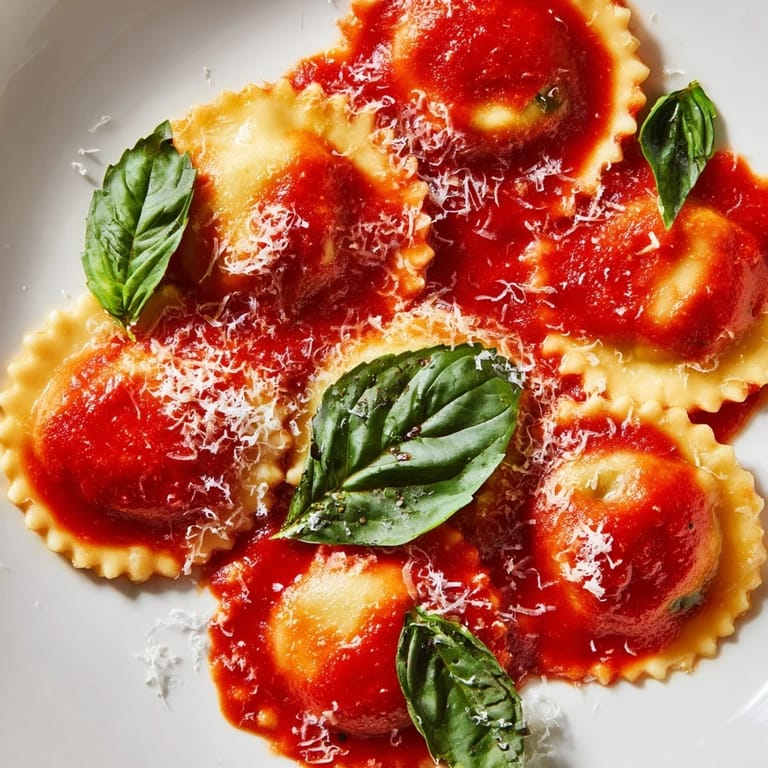
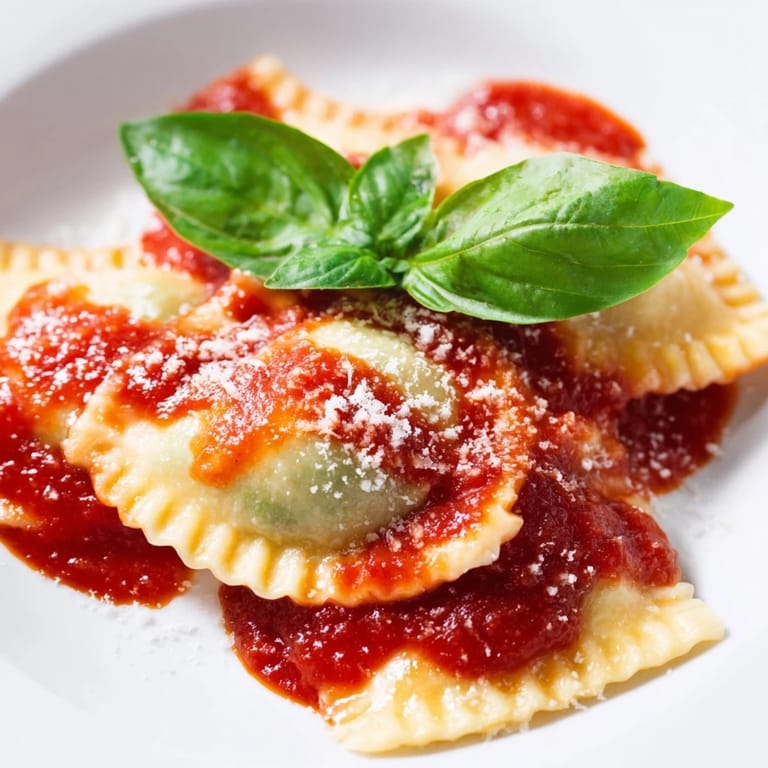
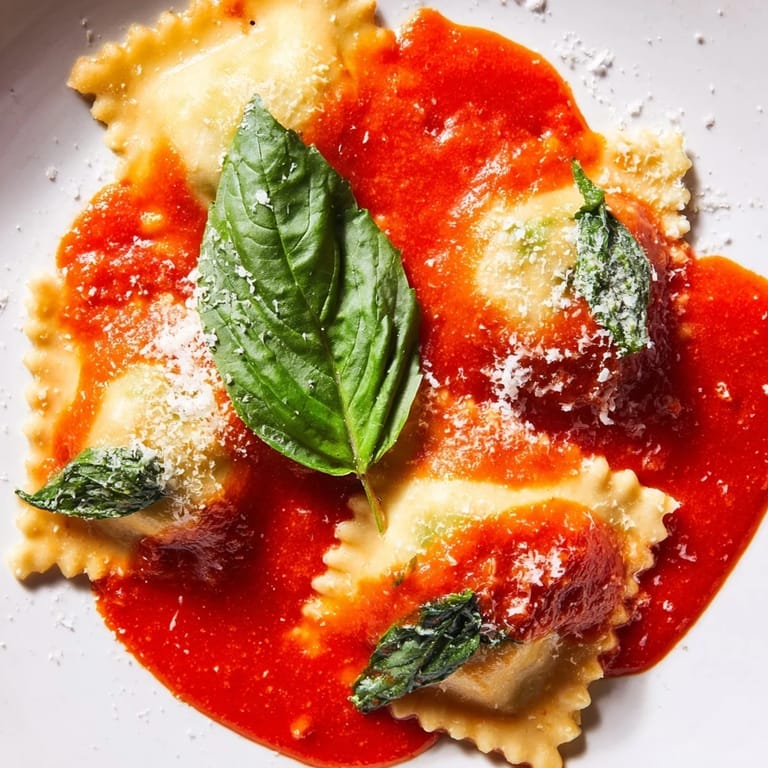
- Spoon warm sauce onto each plate, arrange the ravioli on top, and finish with more sauce, torn basil, and a snowfall of freshly grated Parmesan. Serve immediately while everything is hot and glossy.
 Pin It
 The first time I served these ravioli, my friend asked if I'd ordered them from a restaurant. I laughed and showed her the flour still stuck under my nails. We stood in the kitchen eating straight from the pot, dipping ravioli into the sauce and licking our fingers. She said she didn't know food could feel like a hug. I told her that's the whole point of cooking for people you love.
Storing and Freezing
If you're not cooking the ravioli right away, lay them on a parchment-lined baking sheet dusted with flour so they don't stick. Freeze them in a single layer until solid, then transfer to a freezer bag and they'll keep for up to three months. Cook them straight from frozen, just add an extra minute or two to the boiling time. I always make a double batch now because having homemade ravioli in the freezer feels like a secret superpower on busy nights.
Variations You Might Love
I've swapped the spinach for sautéed mushrooms and added thyme to the ricotta, and it tasted earthy and rich. You could also fold in sun-dried tomatoes or roasted red peppers for a sweeter, tangier filling. Some nights I skip the marinara entirely and toss the ravioli in brown butter with crispy sage leaves. The pasta is a blank canvas, so trust your cravings and play around.
Serving Suggestions
These ravioli love being paired with a crisp green salad dressed in lemon vinaigrette and warm, crusty bread for mopping up sauce. A glass of chilled Pinot Grigio cuts through the richness beautifully. If you want to make it a feast, start with a simple caprese salad and finish with panna cotta or tiramisu.
- Serve with extra Parmesan and red pepper flakes on the side for guests who like a little heat.
- Drizzle a tiny bit of good olive oil over the top just before serving for a glossy finish.
- Garnish with lemon zest if you want a bright, unexpected twist that wakes up the whole dish.
 Pin It
 Making ravioli by hand is a little bit of work, but it's the kind of work that makes you feel capable and proud. You'll remember the day you did this, and so will everyone who tastes it.
Recipe FAQs
- → How do I prevent the ravioli filling from leaking during cooking?
Ensure edges are completely sealed by brushing with water before pressing the pasta sheets together. Use a fork to press firmly around each filled pocket, creating a tight seal. Avoid overfilling, as this is the most common cause of leaking.
- → Can I prepare the ravioli ahead of time?
Yes, you can refrigerate uncooked ravioli for up to 24 hours on a floured baking sheet, or freeze them for up to 3 months. Cook directly from frozen, adding an extra 1–2 minutes to the cooking time.
- → What's the best way to know when ravioli is done cooking?
Ravioli floats to the surface when cooked through, typically after 3–4 minutes. Let it boil gently for another minute after floating to ensure the filling is heated through.
- → Can I use store-bought pasta sheets instead of making dough?
Absolutely. Wonton wrappers or store-bought fresh pasta sheets work well and save significant time. Adjust filling amounts to fit the sheet size.
- → How do I store leftover ravioli?
Refrigerate cooked ravioli in an airtight container with sauce for up to 3 days. Reheat gently in a saucepan with a splash of water or additional sauce over medium-low heat.
- → What wine pairs best with this dish?
A crisp white wine like Pinot Grigio complements the creamy filling and tangy marinara beautifully. The acidity cuts through the richness perfectly.