 Pin It
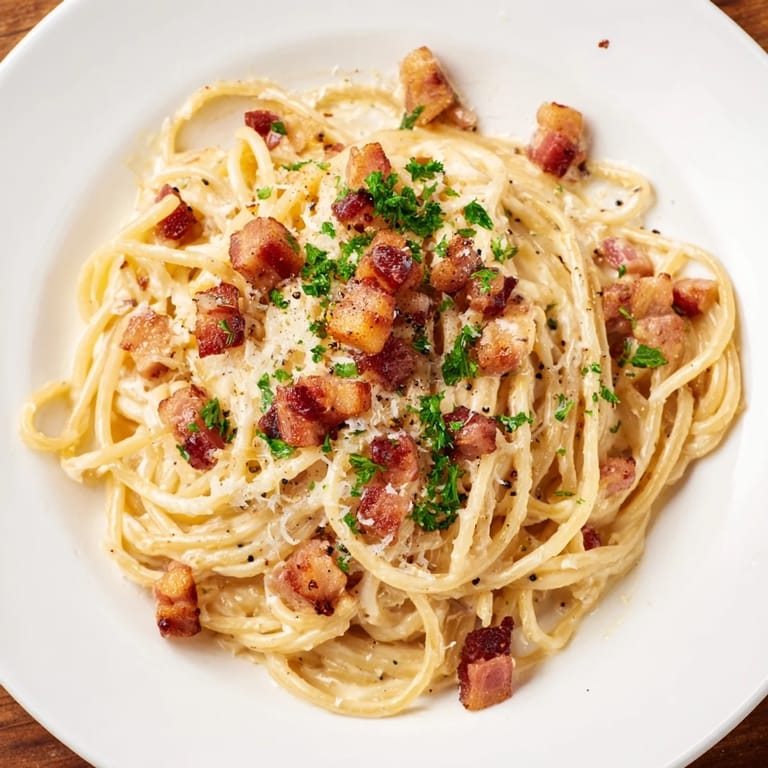
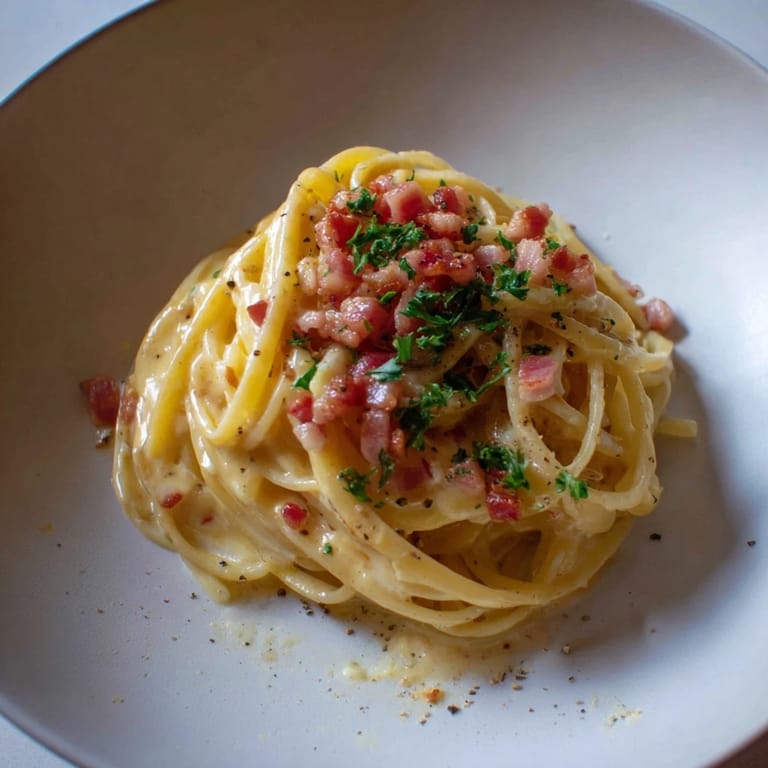
 I was standing in my tiny apartment kitchen on a Wednesday night, exhausted and convinced I had nothing to eat. Then I spotted eggs, a wedge of Parmesan, and some pancetta I'd bought on impulse. Fifteen minutes later, I was twirling the silkiest, most luxurious pasta I'd ever made at home. It felt like magic pulled from almost nothing. That night, carbonara stopped being intimidating restaurant food and became my secret weapon.
The first time I made this for my sister, she stopped mid-bite and asked if I'd ordered takeout. When I told her I'd just thrown it together, she didn't believe me until I walked her through it the next weekend. Now she makes it more than I do, and every time she texts me a photo of her plate, I feel a little proud. Food has a way of becoming a language between people, and this dish became ours.
Ingredients
- Spaghetti or linguine: Use whatever long pasta you have on hand, but make sure it's good quality because it's the backbone of the dish and you'll taste the difference.
- Eggs: They create the creamy sauce without any need for flour or roux, so use the freshest ones you can find for the richest flavor.
- Parmesan cheese: Grate it yourself right before you cook, the pre-shredded stuff doesn't melt the same way and you'll end up with a grainy sauce.
- Heavy cream: Technically optional, but it gives you a little insurance against scrambled eggs if you're still getting the hang of the technique.
- Black pepper: This isn't just seasoning, it's a key flavor, so crack it fresh and be generous.
- Pancetta or guanciale: The rendered fat becomes part of the sauce, so go for the good stuff if you can, it makes all the difference in richness.
- Parsley: A handful of fresh herbs at the end brightens everything up and makes the plate look like you actually tried.
Tired of Takeout? 🥡
Get 10 meals you can make faster than delivery arrives. Seriously.
One email. No spam. Unsubscribe anytime.
Instructions
- Boil the Pasta:
- Get your water boiling and salt it well, it should taste like the sea. Cook the pasta just until it still has a little bite, and don't forget to save some of that starchy water before you drain.
- Crisp the Pancetta:
- While the pasta bubbles away, let the pancetta sizzle in a dry skillet until the edges turn golden and the fat pools at the bottom. Pull it off the heat once it's crispy, you don't want it to keep cooking.
- Whisk the Sauce Base:
- Crack your eggs into a bowl, add the Parmesan, cream if you're using it, salt, and a storm of black pepper, then whisk until it's smooth and pale. This is your sauce, and it's going to transform in the pan.
- Toss the Pasta with Pancetta:
- Dump the hot pasta straight into the skillet with the pancetta and toss it around so every strand gets coated in that rendered fat. Work fast, the heat is your friend here.
- Add the Egg Mixture:
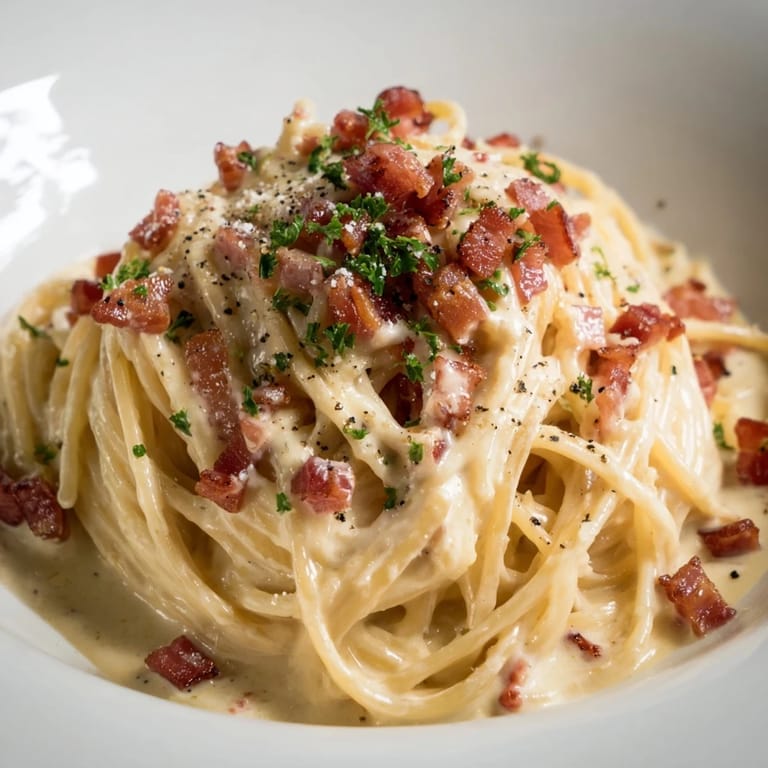
- Pull the skillet off the burner completely, then pour in your egg mixture and toss like your life depends on it. Add splashes of pasta water as you go until the sauce turns creamy and clings to the noodles instead of pooling at the bottom.
- Serve Immediately:
- Plate it up right away, hit it with more Parmesan and parsley if you like, and eat it while it's still steaming. Carbonara waits for no one.
 Pin It
 One rainy evening, I made this for a friend who'd just had a terrible day at work. We ate it straight from the skillet, standing at the counter, and for a few minutes the world felt smaller and warmer. She told me later that she thinks of that night every time she needs comfort. I think that's what a good recipe does, it becomes a feeling you can recreate whenever you need it.
How to Avoid Scrambled Eggs
The secret is all about temperature control. When you pull the skillet off the heat, the residual warmth from the pasta and the pan is enough to gently cook the eggs into a creamy emulsion. If you leave the burner on, or if you add the eggs while everything is still screaming hot, they'll seize up and turn grainy. I also like to add the egg mixture in a slow, steady stream while tossing constantly, it gives you more control and helps everything come together smoothly. Trust the process, and don't rush it.
Choosing Between Pancetta and Guanciale
Guanciale is the traditional choice, made from pork jowl, and it has this incredible melt-in-your-mouth richness that's hard to beat. Pancetta, which comes from the belly, is easier to find and still gives you that salty, porky depth. I've used both, and honestly, they're both delicious. If you can only find thick-cut bacon, go for it, just know the flavor will be a little smokier. The dish is forgiving, and the technique matters more than hunting down the exact cut of meat.
What to Serve Alongside
Carbonara is rich and satisfying on its own, so I usually keep the sides simple. A crisp green salad with lemon and olive oil cuts through the creaminess perfectly. Sometimes I'll throw together a quick arugula and shaved Parmesan situation, or roast some asparagus if I'm feeling ambitious. A glass of cold white wine, something bright like Pinot Grigio, makes the whole meal feel a little special without any extra effort.
- Serve with crusty bread to mop up every last bit of sauce on your plate.
- A handful of cherry tomatoes on the side adds a pop of freshness and color.
- Don't forget to set the table, even if it's just for yourself, it makes the meal feel intentional.
 Pin It
 This recipe taught me that the best meals don't always come from complicated techniques or long ingredient lists. Sometimes, it's just about knowing how to coax something extraordinary out of what you already have.
Recipe FAQs
- → What type of pasta works best for this dish?
Spaghetti or linguine are ideal as they hold the creamy sauce well and provide the perfect texture.
- → Can I make the sauce without cream?
Yes, for a more traditional approach, omit cream and rely on eggs and Parmesan to create a rich, silky texture.
- → How do I prevent the sauce from scrambling when adding eggs?
Remove the pan from heat before pouring in the egg mixture and toss quickly. Adding reserved pasta water helps maintain a smooth consistency.
- → What can I use if pancetta is unavailable?
Thick-cut bacon is a great substitute, offering similar crispiness and flavor.
- → Should I season the pasta water?
Yes, salting the cooking water enhances the overall flavor of the pasta and balances the dish.