 Pin It
 There's something about October that makes me crave butternut squash soup—not the Instagram-perfect version, but the kind where your kitchen fills with that nutty, caramelized aroma and you lose track of time. I discovered this recipe by accident one afternoon when I overroasted squash chunks meant for a grain bowl and thought, why not turn this into something warm? That happy mistake became my go-to comfort meal, the one I make when the weather shifts and I want something that tastes like autumn wrapped in a bowl.
I made this for my neighbor last November when she mentioned being tired of takeout soup, and watching her close her eyes on that first spoonful was worth every minute of chopping. She's asked for it three times since, which tells you something about how a simple vegetable soup can become the thing someone thinks of when they think of you.
Ingredients
- 1 large butternut squash (about 2.5 lbs), peeled, seeded, and cubed: The star of the show—roasting it first is what gives you that deep, almost caramel-like sweetness instead of a flat, watery soup.
- 1 medium yellow onion, chopped: This builds the savory base and becomes nearly invisible once blended, letting the squash shine.
- 2 cloves garlic, minced: A modest amount keeps things sophisticated without overshadowing the delicate spice notes.
- 4 cups vegetable broth: Use a good quality broth here because there's nowhere for it to hide once everything's blended.
- 2 tbsp olive oil: Split between roasting and sautéing—the fat carries all those sage and nutmeg flavors straight to your taste buds.
- 1 tsp sea salt: Start here, but taste as you go because roasting concentrates flavors.
- 1/4 tsp ground black pepper: Just enough to remind you it's there without making you cough.
- 1/2 tsp ground nutmeg: This is the secret ingredient that makes people ask what you did differently—fresh nutmeg is noticeably better if you have a grater.
- 1 tsp dried sage or 1 tbsp fresh sage: Dried works perfectly fine, but fresh sage leaves stirred in at the end taste like you put real thought into this.
- 1/4 cup heavy cream or coconut milk for swirling: Optional but highly recommended—a drizzle transforms it into something that feels indulgent.
- Roasted pumpkin seeds and fresh sage leaves for garnish: These add texture and make presentation feel intentional without extra effort.
Tired of Takeout? 🥡
Get 10 meals you can make faster than delivery arrives. Seriously.
One email. No spam. Unsubscribe anytime.
Instructions
- Get your oven ready:
- Preheat to 400°F. This temperature is the sweet spot for roasting squash—hot enough to caramelize the edges without burning them.
- Season and spread the squash:
- Toss your cubed squash with 1 tbsp olive oil, 1/2 tsp salt, and a pinch of pepper on a parchment-lined baking sheet. Don't crowd the pan; give each piece a little breathing room.
- Roast until golden:
- Roast for 30–35 minutes, turning halfway through. You're looking for caramelized edges and a fork-tender center—this is where the magic flavor happens.
- Build your base:
- Heat the remaining 1 tbsp olive oil in a large pot over medium heat. Sauté your chopped onion for 4–5 minutes until it turns translucent and soft, then add the minced garlic and cook for 1 minute more until fragrant.
- Bring it together:
- Add your roasted squash to the pot along with the sage and nutmeg. The aroma that rises up is your signal you're on the right track. Pour in the vegetable broth, bring everything to a boil, then lower the heat and let it simmer gently for 10 minutes.
- Blend to silky smoothness:
- Remove from heat and use an immersion blender to puree everything until completely smooth. If you don't have an immersion blender, work in batches with a regular blender, being careful with hot liquid.
- Taste and adjust:
- Give it a taste. This is your moment to add more salt, pepper, or even a pinch more nutmeg if you want it earthier.
- Serve with intention:
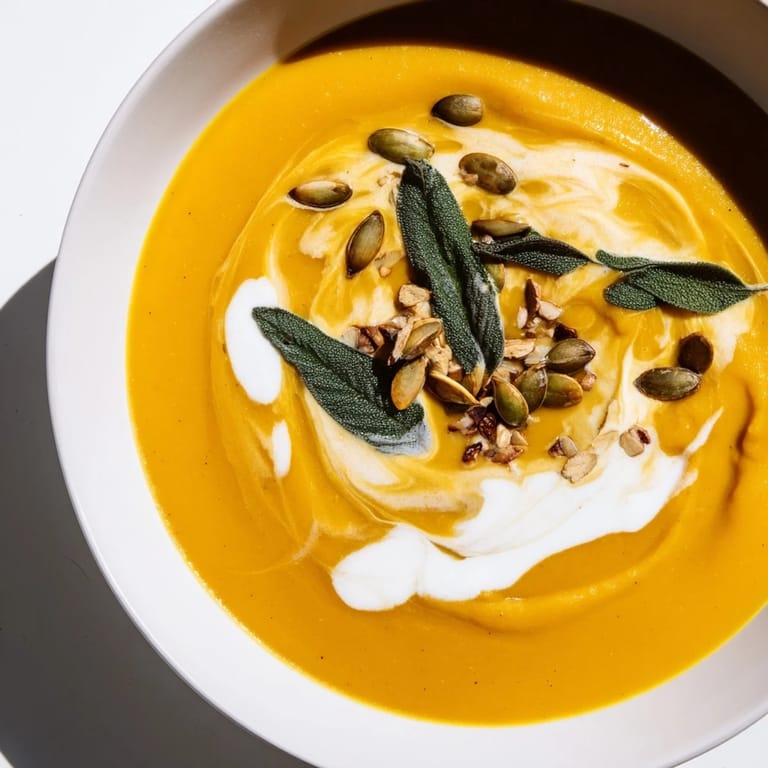
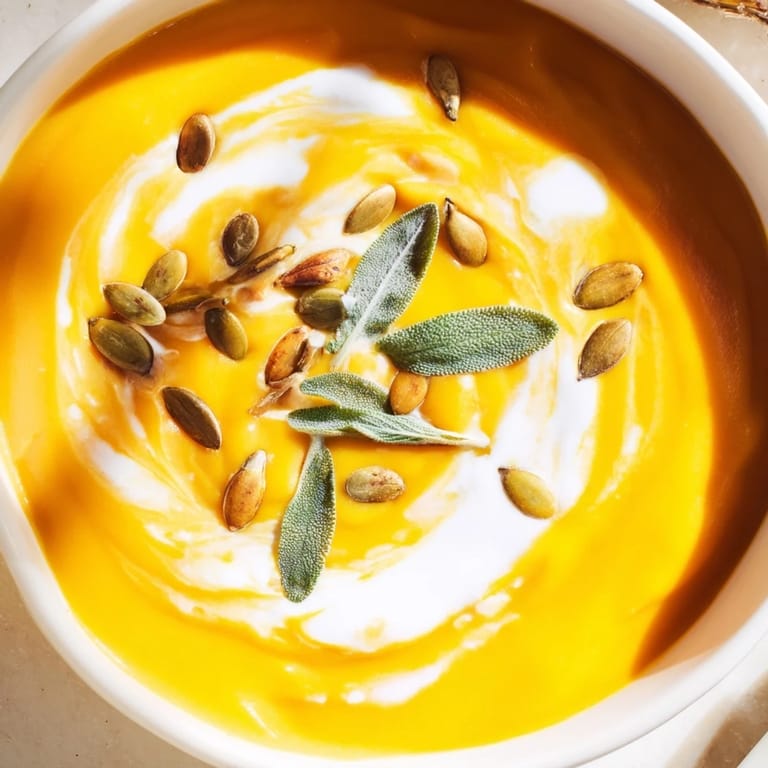
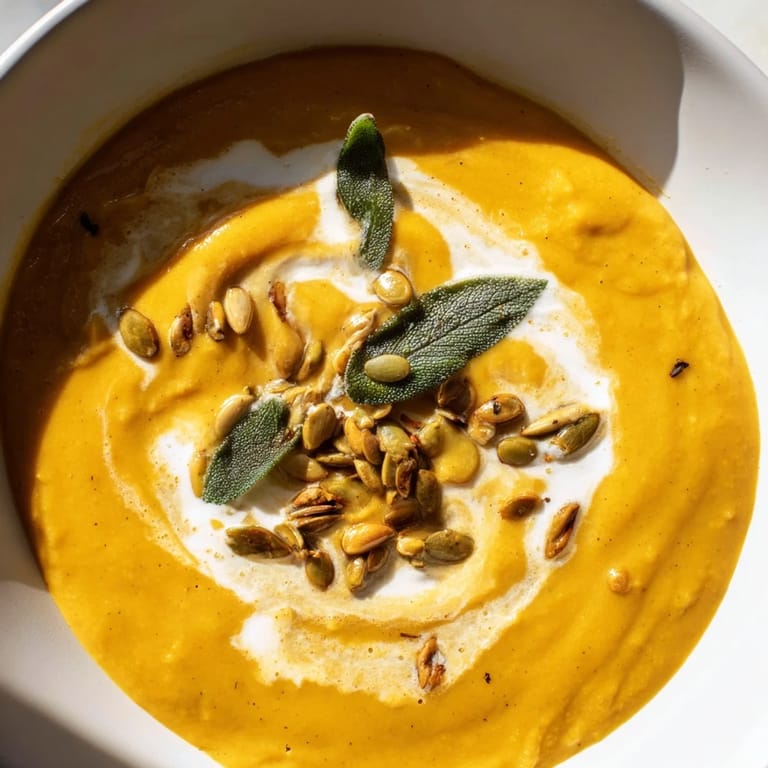
- Ladle into bowls and top with a swirl of cream or coconut milk, a handful of roasted pumpkin seeds, and a fresh sage leaf if you have it. This step takes 30 seconds but makes it look like you were born knowing how to cook.
 Pin It
 The first time someone told me this soup reminded them of home, I realized I'd accidentally created something that did what food is supposed to do—make people feel held and understood. That's the real point of cooking something this simple and this good.
Why Roasting Changes Everything
I used to make squash soup by boiling everything in broth, wondering why it always tasted a little flat and one-dimensional. The roasting step transforms those pale cubes into something with actual character—the heat pulls out the natural sugars and coaxes out this almost buttery flavor that broth alone could never achieve. It takes 35 minutes but gives you something that tastes like you've been cooking all day.
The Sage and Nutmeg Thing
These two spices feel like they were made for butternut squash, and using both together is where the sophistication comes from. Sage brings this slightly peppery, herbal note that keeps the sweetness grounded, while nutmeg adds warmth and depth that makes people pause mid-bite trying to figure out what makes it taste so complete. Don't skip either one thinking one is enough.
Making It Your Own
This recipe is a foundation, and you absolutely can build on it once you've made it a couple times. Some people add a pinch of cayenne for heat, others swirl in crispy sage leaves fried in butter, and I once added a splash of apple cider and it worked beautifully. Trust your instincts.
- For a vegan version, coconut milk swirls in just as elegantly as cream and adds its own subtle sweetness.
- Serve it with crusty bread or alongside a simple salad to make it feel like a full meal.
- This soup freezes brilliantly for up to three months, which means one afternoon of cooking can be three future meals on hard days.
 Pin It
 Butternut squash soup is one of those recipes that feels small until it becomes something that matters—comfort food in its purest form, the kind you make for people you want to take care of. Make it once and you'll have it memorized by heart.
Recipe FAQs
- → What type of squash is best for this dish?
Fresh butternut squash with firm flesh and smooth skin works best for roasting and blending into a creamy texture.
- → Can I make this without dairy?
Yes, substituting coconut milk for cream keeps the dish rich and dairy-free without compromising flavor.
- → How can I adjust the seasoning for more spice?
Add a pinch of cayenne pepper during cooking to introduce a gentle heat alongside the warm spices.
- → What is the best way to achieve a smooth texture?
Use an immersion blender directly in the pot or transfer in batches to a countertop blender for a silky finish.
- → Are there recommended garnishes for serving?
Swirl in cream or coconut milk and sprinkle roasted pumpkin seeds and fresh sage leaves for added flavor and texture.