 Pin It
 There's something about the way cream swirls into pasta that makes me think of quiet weeknight dinners, the kind where you're not trying to impress anyone, just feed yourself something that tastes like comfort. I discovered this creamy spinach orzo on an ordinary Tuesday when I had a bag of orzo sitting in the pantry and fresh spinach that needed using up before it wilted into nothing. The dish came together so naturally in one pan, the broth simmering down while the pasta drank it all in, that I've made it dozens of times since.
I remember making this for my sister when she showed up at my apartment with a suitcase and a story about a complicated week. She sat at my small kitchen table while I stirred the pot, and by the time I served her a bowl with that green fleck of spinach throughout the creamy sauce, she'd already stopped talking and started breathing a little easier. That's when I realized this dish had something beyond nourishment—it had a quiet way of making people feel cared for.
Ingredients
- Orzo pasta: These tiny rice-shaped pasta pieces absorb the creamy sauce beautifully and cook faster than larger pastas, which is why they work so well here.
- Butter and olive oil: Using both gives you the richness of butter with the slightly deeper flavor of olive oil, and together they prevent the butter from browning too quickly.
- Garlic and onion: The onion softens into the background while the garlic stays bright, creating layers of flavor that feel more complex than their minimal presence suggests.
- Vegetable broth: The liquid base that becomes your sauce, so use something you actually like drinking—cheap broth will taste cheap here.
- Whole milk or half-and-half: This brings creaminess without the heaviness of cream, though you can swap in heavy cream if you want something richer and more decadent.
- Cream cheese and Parmesan: Cream cheese melts into the sauce and makes it velvety while Parmesan adds a sharp, salty backbone that keeps the dish from feeling flat.
- Baby spinach: Fresh spinach wilts into nothing, turning the whole dish a beautiful pale green and adding earthiness and nutrition in one move.
Tired of Takeout? 🥡
Get 10 meals you can make faster than delivery arrives. Seriously.
One email. No spam. Unsubscribe anytime.
Instructions
- Build your base:
- Heat butter and olive oil together in a large skillet over medium heat until the butter froths slightly. Add your onions and let them soften into translucent sweetness, about three minutes, then add the minced garlic and cook just until fragrant—garlic can turn bitter if you're not paying attention, so trust your nose here.
- Toast the orzo:
- Stir the dry orzo into the aromatic base and let it cook for two minutes, stirring often. You're not looking for color, just a subtle nuttiness that makes the pasta taste deeper.
- Introduce the liquid:
- Pour in your broth and milk, stir everything together so nothing sticks to the bottom, and bring it all to a gentle simmer. Once it's bubbling, reduce the heat to medium-low—you want a calm simmer, not an aggressive boil that splashes liquid everywhere.
- Let it simmer and stir:
- Cook uncovered for ten to twelve minutes, stirring frequently so the pasta cooks evenly and doesn't clump up. You'll see the liquid gradually disappear into the pasta, and the whole thing will start looking like risotto before your eyes.
- Melt in the richness:
- When the pasta is tender, tear apart a spoonful of softened cream cheese and drop it into the pan, then sprinkle in your Parmesan. Stir gently until the cheeses dissolve and the sauce becomes that silky, creamy texture that's the whole point of this dish.
- Wilt the spinach:
- Add your chopped spinach in a heap and stir it through until it's bright green and soft, about a minute or two. Taste as you go and adjust salt and pepper—remember the Parmesan is already salty, so be gentle.
- Finish and serve:
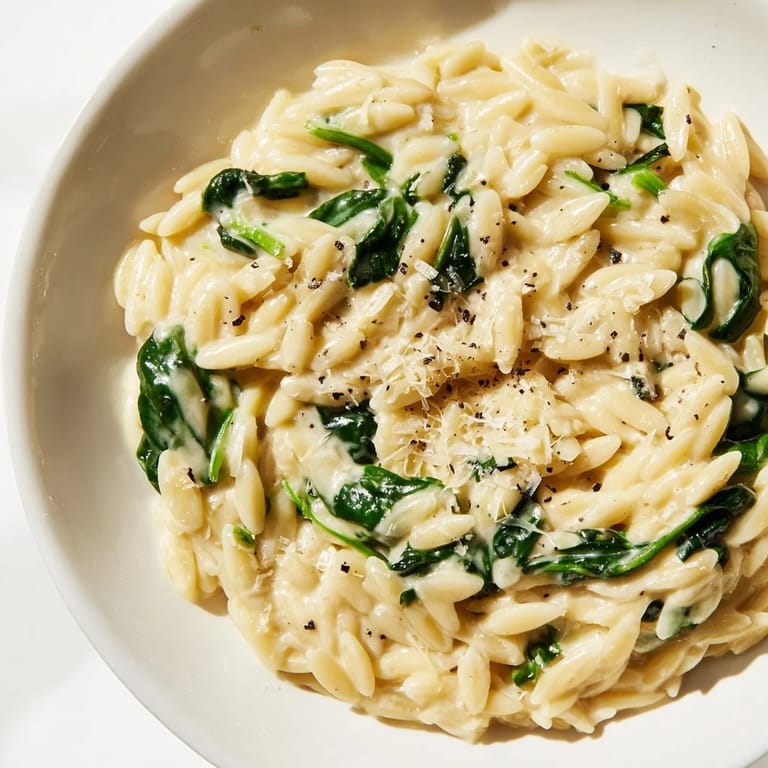
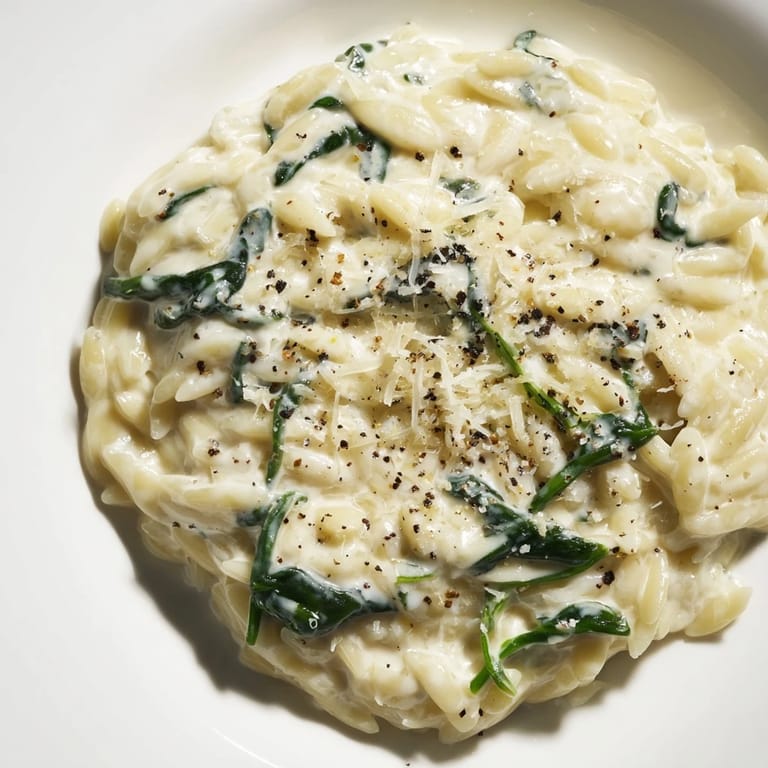
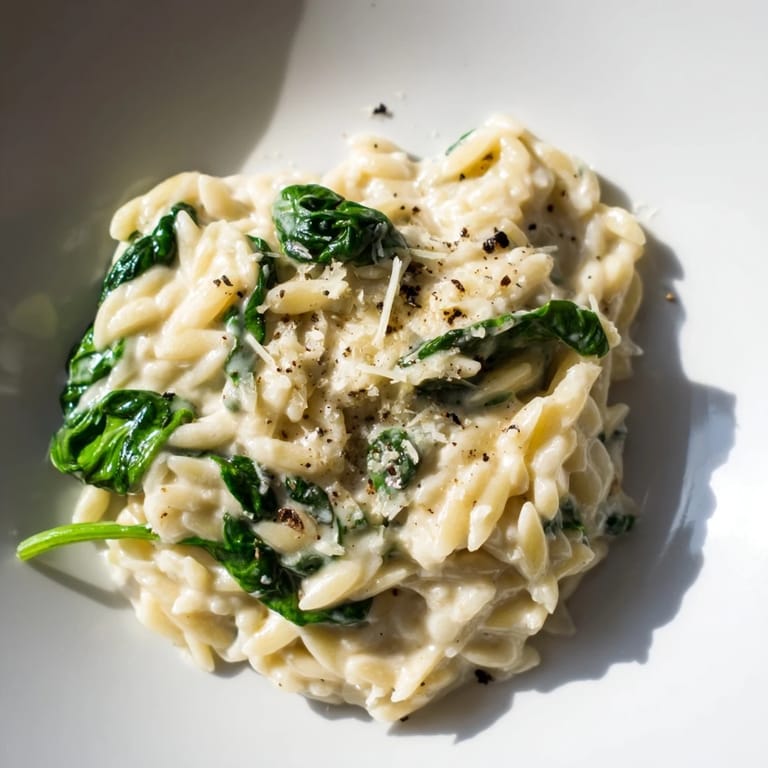
- Transfer to serving bowls while everything is still warm and creamy, then top with more Parmesan and a grind of fresh black pepper that catches the light.
 Pin It
 There's a specific moment in this recipe when you know it's going to be good: when you first pour in the broth and milk and everything smells like soft garlic and buttery comfort, and you realize you're about to eat something that tastes like a hug from someone who knows how you like things. That moment never gets old, no matter how many times I've made it.
The Cream Cheese Secret
For years I made creamy pasta sauces with heavy cream, which is fine but heavy. Then a friend mentioned using cream cheese instead, and it was one of those small shifts that changed how I cook. The cream cheese gives you that luxurious silkiness without weighing everything down, and it costs less than cream while tasting somehow more sophisticated. It also means the sauce clings to each tiny orzo piece instead of sliding off, so every bite has real flavor.
Timing and Texture
The thing about orzo that took me a while to understand is that it finishes cooking right around the same time the liquid is mostly absorbed—if you cook it too long waiting for the sauce to thicken, you'll end up with mush. The magic is in watching it as it cooks and getting to know your stove's personality. Every burner behaves slightly differently, so the first time you make this, stay nearby and notice how fast things are moving.
Variations and Additions
I've made this dish a hundred different ways depending on what was in my kitchen or what I was craving. Sometimes I'll add cooked chicken or sautéed mushrooms for protein, other times I'll stir in some sun-dried tomatoes for brightness, and once I even added a handful of fresh basil at the end for a completely different flavor profile. The base is flexible enough to welcome almost anything you might want to add, which is part of why I keep coming back to it.
- For a richer version, replace some of the milk with heavy cream or add an extra two tablespoons of butter.
- A pinch of nutmeg sounds subtle but it whispers through the whole dish and makes people ask what the secret ingredient is.
- Fresh lemon zest stirred in at the end brightens everything up and cuts through the richness in the best way.
 Pin It
 This is the kind of recipe that asks very little of you but gives back generously in comfort and taste. It's become my go-to when I want something that feels like real cooking but doesn't require real effort.
Recipe FAQs
- → What type of pasta is used in this dish?
Orzo pasta is used for its small, rice-like shape that cooks quickly and absorbs flavors well.
- → Can I substitute the dairy ingredients?
Yes, for a creamier texture, you can replace some milk with heavy cream or use dairy alternatives suited for cooking.
- → How can I add protein to this dish?
Adding cooked chicken or sautéed mushrooms enhances the protein content and adds extra flavor.
- → Is it possible to make this dish gluten-free?
Substitute regular orzo with gluten-free orzo pasta to accommodate gluten sensitivities.
- → What is the best way to cook the spinach in this dish?
Stir chopped baby spinach into the sauce last and cook just until wilted, about 1–2 minutes, to maintain its bright color and fresh taste.