 Pin It
 There's something magical about the moment when three completely different egg textures land on the same slice of toast. I discovered this breakfast by accident while experimenting with leftover eggs one Sunday morning, trying to use them all before they went bad. The result was so satisfying that it became my go-to when I wanted to feel like I'd actually cooked something impressive without much effort. That first bite—creamy scrambled, runny yolk from the fried egg, the tender soft-boiled center all at once—changed how I thought about breakfast simplicity. Now I make it whenever I want to remind myself that sometimes the best dishes come from wanting to avoid waste.
I made this for my partner during one of those mornings where they'd slept badly and felt discouraged about the day ahead. Watching their expression shift from tired to genuinely delighted as they tasted it was worth every minute at the stove. They said it tasted like someone who actually cared had made breakfast, which maybe sounds small but somehow mattered. That's when I realized this wasn't just about eggs—it was about paying attention to someone through food.
Ingredients
- 1 large slice sourdough or country-style bread: Choose bread with enough body to hold the weight of three different eggs without getting soggy; sourdough's tang plays beautifully against the richness of the eggs.
- 1 large egg for scrambling: Room temperature eggs scramble more gently and stay creamier, so take yours out a few minutes before cooking.
- 1 large egg for soft-boiling: The six-and-a-half-minute timing is crucial—any less and the white is too soft, any more and that beautiful runny center disappears.
- 1 large egg for frying: This one does the visual heavy lifting with its runny yolk, so don't skip the ice bath for the soft-boiled egg; it stops the cooking immediately and keeps that tender texture intact.
- 1 tbsp unsalted butter: Use real butter, not oil—it carries the flavor that makes scrambled eggs taste like comfort.
- 1 tsp olive oil: The oil helps the fried egg's whites crisp at the edges while keeping the yolk liquid, a trick I learned from watching it happen too many times the other way.
- Salt and freshly ground black pepper: Season each egg separately as you cook it; this prevents bland spots and lets the seasoning develop with the heat.
- Chopped fresh chives, chili flakes, microgreens (optional): These aren't really optional if you want the dish to shine—the chives add a gentle onion note, the chili flakes give a little heat spike, and the microgreens make it look like you know what you're doing.
Tired of Takeout? 🥡
Get 10 meals you can make faster than delivery arrives. Seriously.
One email. No spam. Unsubscribe anytime.
Instructions
- Toast the bread until it's golden and takes on a little character:
- Preheat your oven to 180°C (350°F) and place the bread slice directly on a baking sheet, toasting for five to seven minutes until the edges are crisp and the color deepens. The smell that fills your kitchen during this step is your signal that you're on the right track, and a properly toasted slice will hold everything without turning into mush.
- Get your soft-boiled egg to that perfect jammy center:
- Bring a small pot of water to a boil, gently lower one room-temperature egg into the water, and set a timer for exactly six and a half minutes. The moment it chimes, fish the egg out with a spoon, plunge it into ice water, and let it sit for a minute—this stops the cooking and locks in that soft, yielding yolk you're after.
- Cook the scrambled egg with patience and a light hand:
- Heat half a tablespoon of butter over medium-low heat in a nonstick skillet, whisk your egg with salt and pepper, then pour it in and stir gently and slowly with a spatula. You want this to come together in soft, creamy ribbons, not tight little curds, so resist the urge to rush and let the residual heat do some of the work after you pull it from the pan.
- Fry the third egg until the white sets but the yolk stays liquid:
- In the same skillet (give it a quick wipe), add the remaining butter and the olive oil over medium heat, crack in your egg, and watch it cook for two to three minutes until the whites are set but that center yolk still jiggles slightly when you nudge the pan. Season it as it finishes cooking so the salt has time to soak in.
- Assemble your toast into three distinct sections:
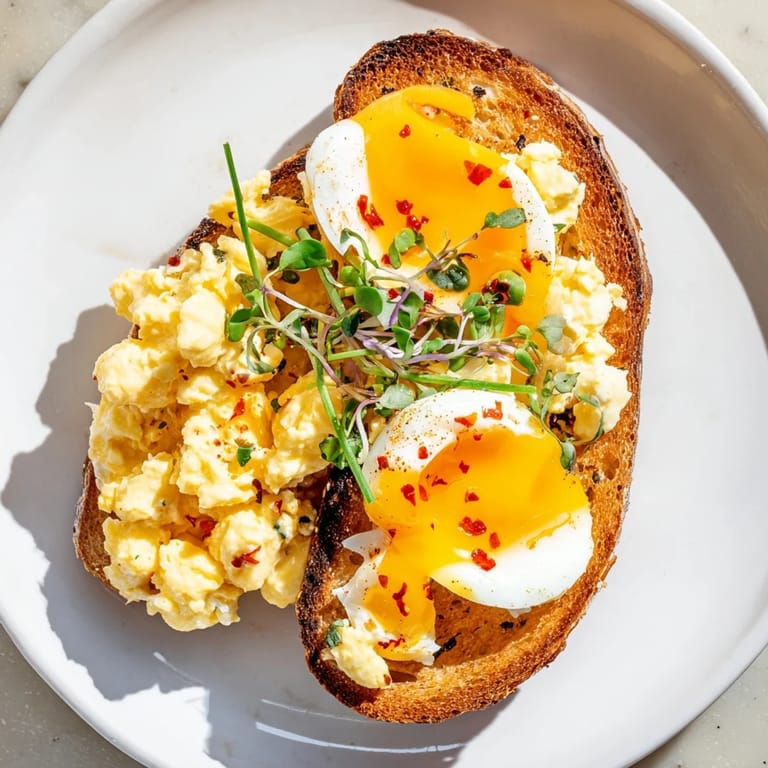
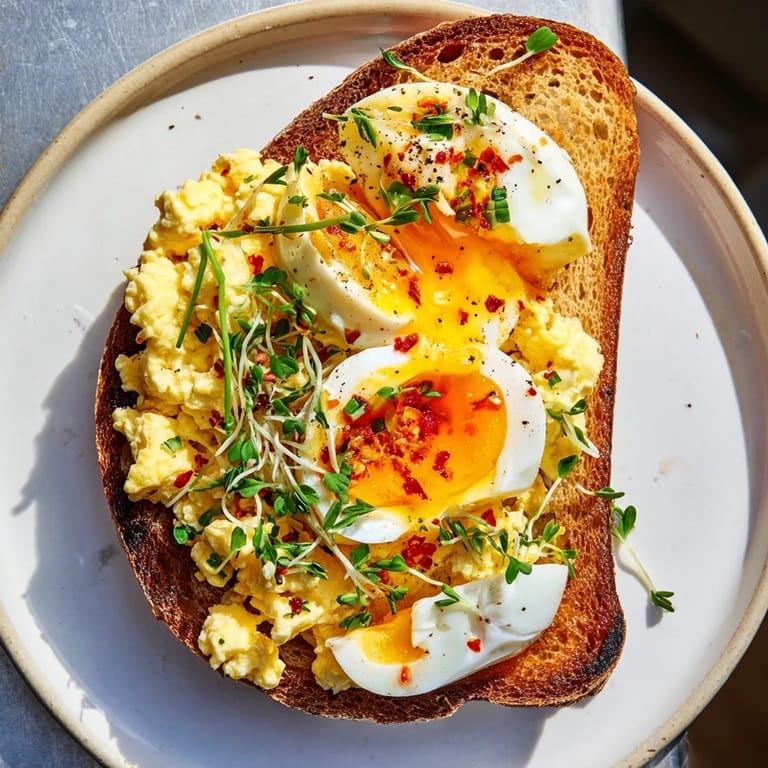
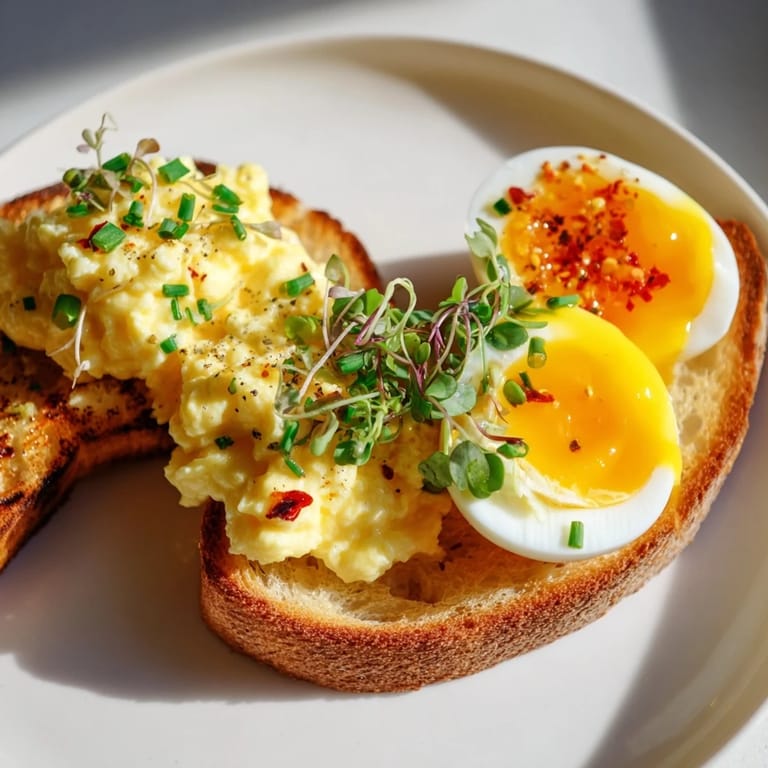
- Place the warm toasted bread on a plate and arrange each egg preparation in its own third—scrambled on the left, soft-boiled halves in the middle, fried egg on the right. This isn't just for looks; it means every bite can be different depending on which section you choose.
- Finish with garnish and a moment of appreciation:
- Scatter chives, chili flakes, and microgreens over the top, then serve immediately while everything is still warm and the yolks are still runny. Eat it right away, no delays—this dish is best enjoyed in the moment.
 Pin It
 There's a quiet satisfaction in this breakfast that has nothing to do with how impressive it looks. It's the moment when you realize you've made something nourishing and thoughtful from three eggs and a slice of bread, and no one needed to spend hours cooking. Maybe that's why I keep making it—because it proves that good food doesn't require stress or complications, just intention.
Why This Breakfast Works So Well
The genius of this toast is that you're tasting three completely different egg textures in one bite, which keeps your palate engaged and makes breakfast feel like an actual event. Scrambled eggs provide creaminess and richness, the soft-boiled brings that tender, slightly runny center that feels luxurious, and the fried egg on top gives you that satisfying moment when the yolk breaks and runs across everything else. It's controlled chaos on a single plate, and once you see how well they play together, you'll understand why this keeps showing up on Instagram and in trendy brunch spots. The toast acts as both canvas and anchor, holding everything together and adding earthiness that grounds the richness of the eggs.
The Technique That Makes It Click
The real skill here isn't in the cooking itself—it's in the timing and the willingness to cook three separate dishes in quick succession. Each egg needs its own moment of attention and its own temperature and texture, which means you're genuinely cooking three different recipes that just happen to land on the same plate. The first time I made this, I kept second-guessing my timing because I wanted to do everything simultaneously, but that's when things go wrong. Once I accepted that I was doing them in sequence and stopped trying to cheat the clock, it became almost meditative—scoop the soft-boiled egg, wipe the pan, start the fried egg, finish the scrambled. By the time the toast is done, everything else is ready.
Making It Your Own
This is one of those dishes that actually benefits from riffing on it because the foundation is so solid. I've added avocado slices alongside the soft-boiled egg halves, scattered smoked salmon under the fried egg, even wilted a handful of spinach into the scrambled portion when I wanted something green and more substantial. The beauty is that none of these additions compete with the eggs—they're all pretty respectful neighbors that know not to hog the spotlight. Some mornings I skip the garnishes entirely when I'm going for simplicity, and other times I layer on the chives and chili flakes like I'm trying to prove something. There's no wrong version, which is probably why I keep making it.
- Swap sourdough for gluten-free bread if you need to, or use whatever good bread you have on hand because the toast technique matters more than the type.
- Try poaching an egg instead of frying it for a lighter option, or fold one egg into an omelette for a different texture experience.
- Add fresh herbs like dill or tarragon, grated cheese, crispy bacon crumbles, or even a drizzle of hot sauce to personalize your version.
 Pin It
 This breakfast is proof that you don't need a crowded recipe or fancy ingredients to make something memorable. It's just about paying attention to what you're cooking and letting each component be exactly what it's supposed to be.
Recipe FAQs
- → What cooking methods are used for the eggs?
The eggs are prepared using scrambling, soft-boiling, and frying techniques to create a variety of textures and flavors.
- → Can I substitute the bread for dietary preferences?
Yes, gluten-free bread can be used instead of sourdough or country-style bread to accommodate gluten sensitivities.
- → What garnishes enhance the flavors?
Chopped fresh chives, chili flakes, and microgreens add freshness and subtle spice to the dish.
- → How do I achieve a perfectly soft-boiled egg?
Boil the egg gently for about 6½ minutes, then cool in ice water to stop cooking before peeling.
- → Is it possible to vary the egg styles?
Yes, you can experiment by replacing one or more egg preparations with poached eggs or an omelette for variety.