 Pin It
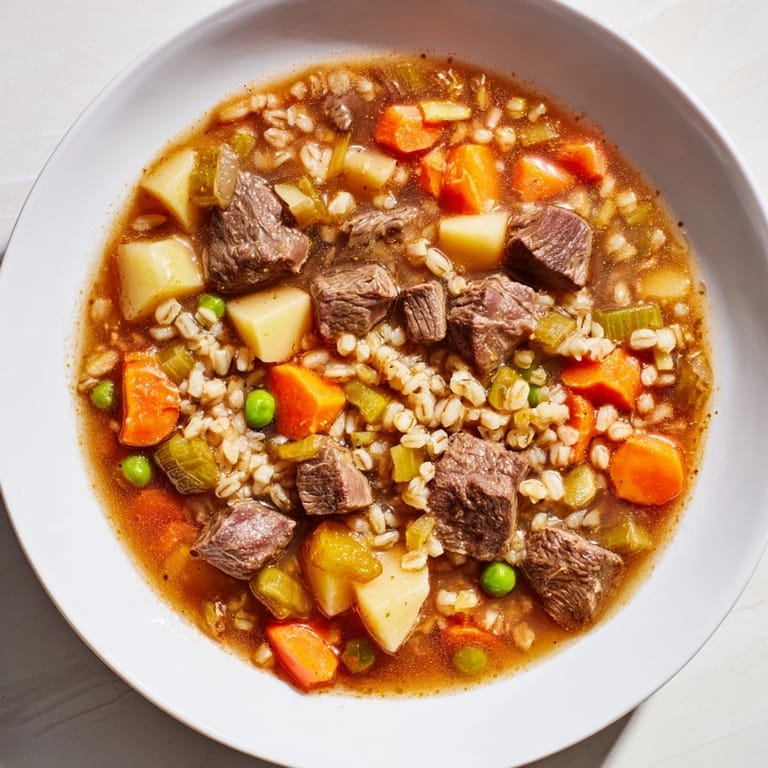
 The first bowl I ever made ended up too salty because I forgot the barley would soak up so much broth. My neighbor knocked just as I was panicking, tasted it anyway, and said it was the best thing she'd had all week. That's when I learned this soup forgives almost anything. The beef gets so tender it falls apart on your spoon, and the barley turns creamy without any fuss. Now I make it every time the weather turns cold or someone needs comfort in a bowl.
I brought this to a potluck once in a slow cooker, and three people asked for the recipe before I even sat down. One guy came back for thirds and told me it reminded him of his grandmother's kitchen. That's the thing about beef and barley—it carries memories you didn't know you had, just from the smell of it simmering on the stove.
Ingredients
- Beef stew meat: Look for chuck roast cut into cubes, it has enough marbling to stay juicy through the long simmer.
- Olive oil: Use enough to coat the bottom of the pot so the beef gets a good sear without sticking.
- Onion: Yellow or white both work, just make sure it's diced small so it melts into the broth.
- Carrots: Peel them or don't, but slice them thick so they hold their shape and don't turn to mush.
- Celery: The stalks add a subtle bitterness that balances out the sweetness of the carrots.
- Garlic: Fresh cloves are worth it here, the jarred stuff just doesn't bloom the same way in hot oil.
- Russet potato: It breaks down a little as it cooks, which helps thicken the soup naturally.
- Frozen peas: Add them at the very end so they stay bright green and don't get gray.
- Diced tomatoes: The juices are just as important as the chunks, so don't drain the can.
- Pearl barley: Rinse it under cold water first to get rid of any dust or debris.
- Beef broth: Low-sodium gives you more control over the salt, especially if you're adjusting at the end.
- Water: It stretches the broth without watering down the flavor too much.
- Bay leaves: They add a woodsy depth you can't quite name, but you'd miss it if it wasn't there.
- Dried thyme and oregano: These two together smell like Sunday dinner at someone's house you wish was yours.
- Black pepper and salt: Start with less salt than you think and taste halfway through, the barley drinks it up.
- Fresh parsley: A handful of green at the end makes the whole bowl look alive.
Tired of Takeout? 🥡
Get 10 meals you can make faster than delivery arrives. Seriously.
One email. No spam. Unsubscribe anytime.
Instructions
- Brown the beef:
- Heat the oil until it shimmers, then add the beef in a single layer without crowding the pot. Let it sit untouched for a couple minutes so it gets a dark crust, then turn the pieces and brown the other sides. Pull the beef out and set it aside on a plate.
- Soften the vegetables:
- Toss the onion, carrots, and celery into the same pot with all those browned bits stuck to the bottom. Stir them around for five minutes until the onion turns translucent and the celery starts to smell sweet.
- Wake up the garlic:
- Add the garlic and stir it constantly for about a minute until the kitchen smells like someone's already eating dinner. Don't let it turn brown or it'll taste bitter.
- Build the soup:
- Put the beef back in, then add the potatoes, tomatoes with all their juice, barley, bay leaves, thyme, oregano, salt, and pepper. Pour in the broth and water, and give everything a good stir so nothing sticks to the bottom.
- Simmer low and slow:
- Bring it all to a rolling boil, then turn the heat way down, cover the pot, and let it bubble gently for an hour and a half. Stir it every twenty minutes or so to keep the barley from clumping.
- Finish with peas:
- When the beef is fork-tender and the barley is plump, stir in the frozen peas and let them cook for ten minutes. Taste the broth and add more salt or pepper if it needs it.
- Serve hot:
- Fish out the bay leaves, ladle the soup into big bowls, and sprinkle fresh parsley on top if you have it.
 Pin It
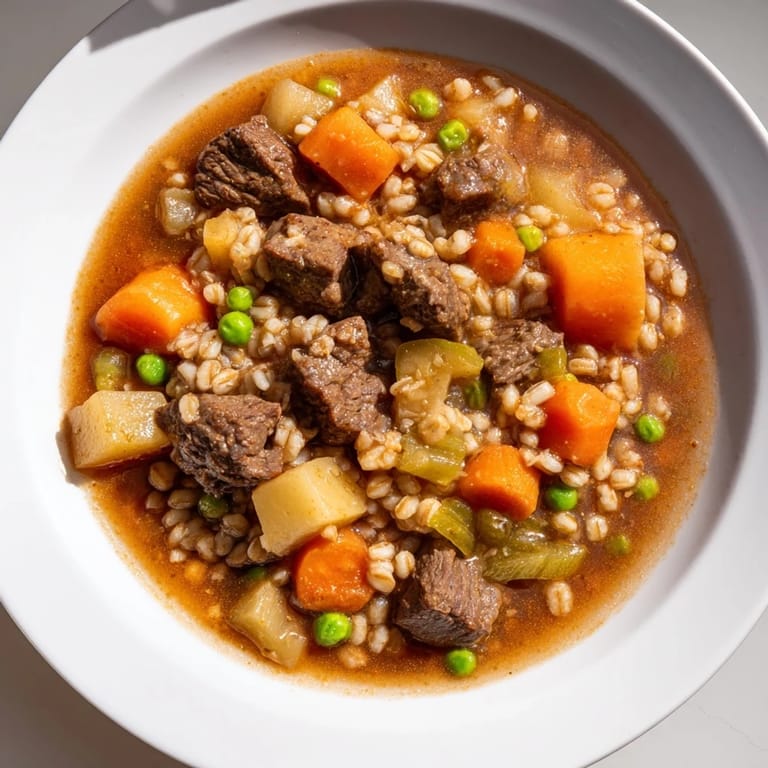
 My dad used to eat this standing at the stove, straight from the pot with a wooden spoon, saying he was just tasting it. By the time we sat down, half of it was gone and he'd have this guilty grin on his face. Now I do the same thing when no one's looking, and I finally understand why he couldn't wait.
Making It Your Own
If you can't do gluten, swap the barley for brown rice or quinoa and add it about forty-five minutes before the soup is done so it doesn't get mushy. A splash of Worcestershire sauce halfway through adds a deep, almost meaty richness that makes people ask what your secret is. Sometimes I throw in a handful of chopped kale in the last ten minutes, and it wilts down into the broth without changing the soul of the soup.
Storage and Reheating
This soup keeps in the fridge for three days in a sealed container, and honestly it tastes better on day two when everything has married together. You can freeze it in portions for up to two months, just know the potatoes might get a little grainy when you thaw them. Reheat it gently on the stove with a splash of broth, and don't rush it or the barley will stick to the bottom.
What to Serve It With
A hunk of crusty bread is all you really need, something with a good chew that can soak up the broth at the bottom of the bowl. Sometimes I'll put out a simple green salad with lemon and olive oil just to cut through the richness. If you want to go all out, a sharp cheddar on the side and some butter for the bread turns this into a full-on feast.
- Use a heavy pot with a tight lid so the steam doesn't escape and dry out the soup.
- If your carrots are thin, cut them in bigger chunks so they don't disappear.
- Taste the soup before you serve it, because every stove and pot is a little different and yours might need a pinch more salt.
 Pin It
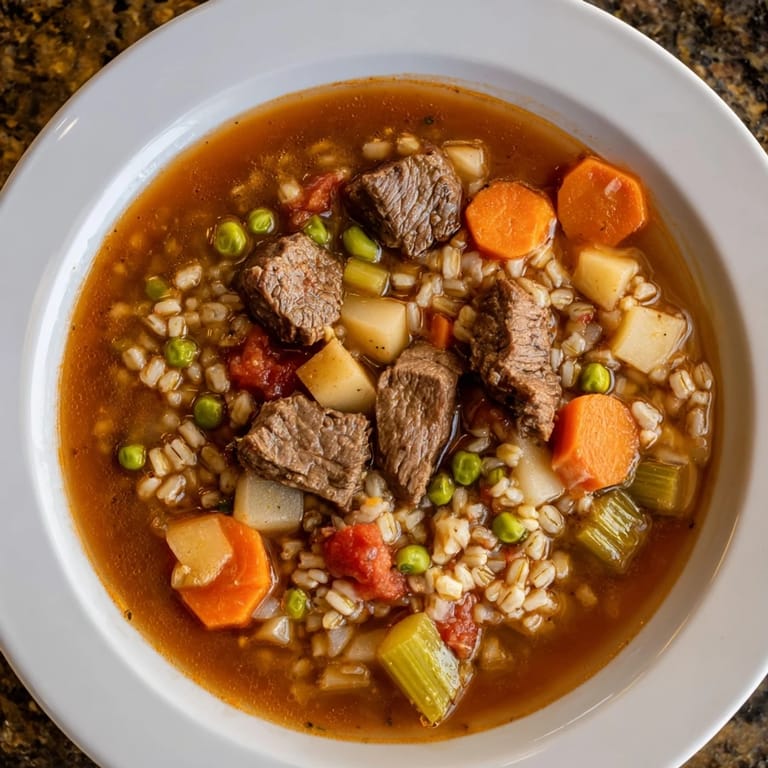
 This soup has pulled me through cold nights, bad days, and evenings when I just needed something that felt like a hug. I hope it does the same for you.
Recipe FAQs
- → What cut of beef works best for this soup?
Stew meat or chuck roast cut into cubes is ideal as it becomes tender and flavorful when simmered slowly.
- → Can I make this soup gluten-free?
Yes, replacing pearl barley with brown rice or quinoa makes the soup suitable for a gluten-free diet.
- → When should I add the peas during cooking?
Frozen peas should be stirred in the last 10 minutes of cooking to retain their color and texture.
- → What herbs enhance the flavor of this soup?
Bay leaves, thyme, and oregano provide a savory depth to the broth and complement the beef and vegetables well.
- → How can I intensify the flavor of the broth?
A splash of Worcestershire sauce added before simmering adds a deeper, savory dimension to the soup.