 Pin It
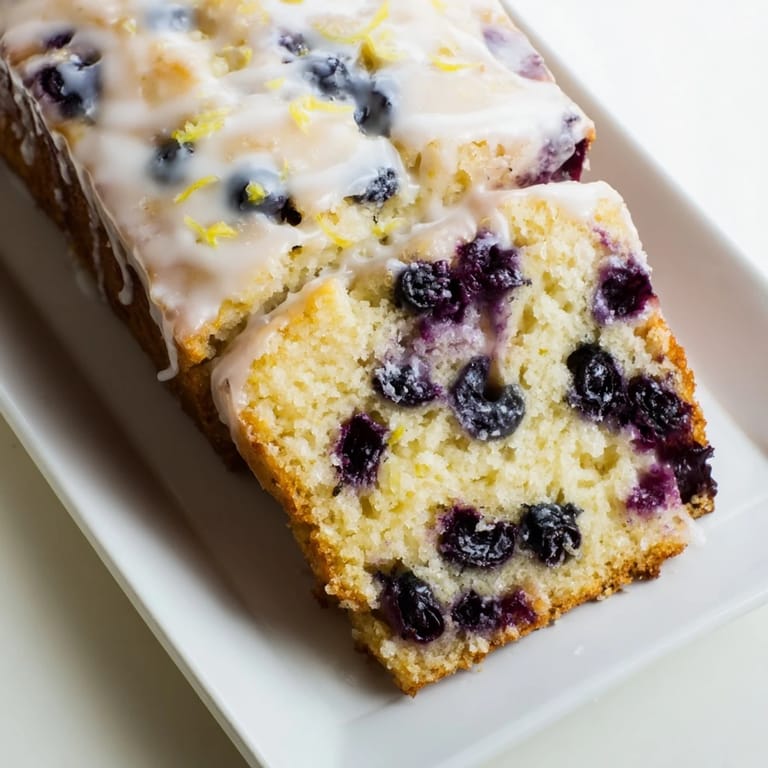
 The first time I made this lemon blueberry loaf, I was trying to prove that not everything needs a stand mixer and three bowls. A friend had texted me a video of someone blending an entire cake in sixty seconds, and I was skeptical—but curious enough to test it. Ten minutes later, the batter was done, the blueberries were folded in, and I had this nagging feeling I'd forgotten something important. Turns out, the simplicity was real. That loaf came out of the oven golden and tender, the kitchen filling with this bright, almost floral lemon scent that made everyone stop what they were doing.
I served this at a small brunch last spring, and my mom's friend asked for the recipe before she'd even finished her slice. What struck me was how she described it—not as cake, but as something she could eat for breakfast without guilt. That's when I realized this loaf occupies this beautiful middle ground between indulgence and practicality, tart enough to feel fresh, tender enough to feel special.
Ingredients
- Eggs: Two large ones, room temperature if you can remember, though honestly it doesn't make a huge difference since everything's going in the blender anyway.
- Plain Greek yogurt: The full-fat version makes this noticeably richer and more tender than low-fat, and the tanginess is what makes the lemon sing.
- Vegetable oil: This keeps the crumb impossibly soft—butter would make it denser, which defeats the purpose of this whole blender situation.
- Lemon zest: Finely grated from fresh lemons, not the bottled stuff, because the oils in fresh zest are what give you that bright, almost perfumy quality.
- Fresh lemon juice: Squeeze it yourself if you can; it's sharper and more alive than bottled, and it really does matter here.
- Vanilla extract: A background note that keeps everything from tasting one-dimensional.
- All-purpose flour: Nothing fancy needed, just the standard stuff you probably have on hand.
- Granulated sugar: This provides structure and moisture; don't skip it or swap it for honey or anything experimental.
- Baking powder and baking soda: Together they give you a tender crumb without being too cakey or too dense, and they work with the acidity in the yogurt and lemon.
- Fine sea salt: Just a small pinch to balance the sweetness and sharpen the lemon flavors.
- Fresh blueberries: Frozen works perfectly fine and sometimes is actually better because they're frozen at peak ripeness, but if you use fresh, make sure they're not the watery ones.
- Powdered sugar and lemon juice for glaze: Optional but worth it—the glaze adds a delicate sweetness and another lemon note that feels like the finish line.
Tired of Takeout? 🥡
Get 10 meals you can make faster than delivery arrives. Seriously.
One email. No spam. Unsubscribe anytime.
Instructions
- Prep your pan and heat your oven:
- Set the oven to 350°F and grease a 9x5-inch loaf pan, then line it with parchment so the cake slides out like it was meant to. This step takes thirty seconds but saves you from the frustration of cake stuck to edges.
- Blend the wet ingredients:
- Crack your eggs into the blender with the yogurt, oil, lemon zest, lemon juice, and vanilla, then blend until completely smooth and pale. This should take about a minute, and you'll notice how the lemon zest releases its oils and the mixture becomes almost frothy.
- Add and pulse the dry ingredients:
- Pour in the flour, sugar, baking powder, baking soda, and salt, then pulse gently just until combined—this is the crucial moment where restraint matters. Stop as soon as you don't see flour streaks; overmixing makes the crumb tough and defeats the entire purpose.
- Fold in the blueberries:
- Toss the blueberries with that tablespoon of flour (this prevents them from sinking to the bottom), then gently fold them into the batter with a spatula, being careful not to crush them or activate the blender again. A few purple streaks in the batter are fine and actually lovely.
- Pour and bake:
- Transfer the batter to the pan, smooth the top gently, then slide it into the oven for 50 to 55 minutes. If the top starts browning too fast around minute 35, just tent it loosely with foil and keep going—this prevents the crust from hardening before the inside is done.
- Cool with patience:
- Let it rest in the pan for ten minutes so it sets slightly, then turn it out onto a wire rack to cool completely. This waiting period is annoying but necessary, and your reward is a cake that doesn't fall apart when you slice it.
- Glaze if you like:
- Whisk powdered sugar with lemon juice until smooth, then drizzle it over the cooled loaf for a light sweet finish. The glaze hardens slightly as it sits, creating a delicate crust.
 Pin It
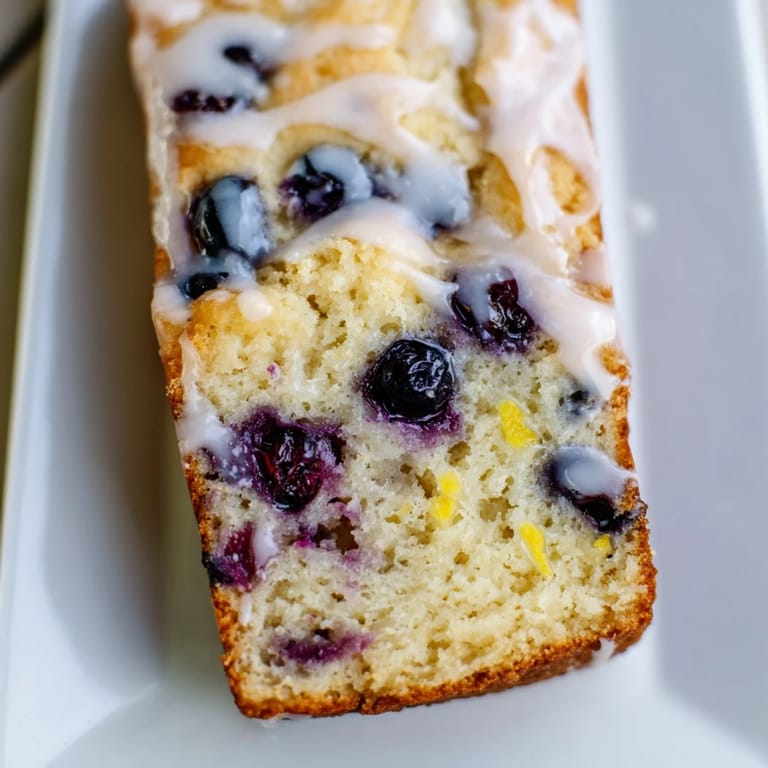
 This cake became the thing I bake when I want to feel competent without stressing. There's something almost meditative about blending everything in ninety seconds flat, then knowing that in under an hour you'll pull out something that looks like you spent all morning on it. The blueberries in the batter catch the light, the lemon aroma fills your whole kitchen, and suddenly you have something to offer people that feels thoughtful and homemade.
Why Lemon and Blueberry Work Better Than You Might Think
The tartness of lemon and the subtle sweetness of blueberries create this perfect tension that keeps the cake from feeling heavy or one-note. The lemon doesn't overpower; it just brightens everything, making each bite feel fresher than it has any right to be. This is why this particular combination has stayed popular for decades—it's not trendy, it's just right.
The Blender Method Actually Matters
Using a blender instead of mixing by hand does something specific to the crumb structure. The blending aerates the batter differently than traditional mixing, which creates a tender, almost delicate texture that you can't quite replicate with a bowl and whisk. It's not just convenient; it's actually the secret to why this cake turns out so moist and fine-crumbed.
Serving Suggestions and Storage
This loaf is perfect on its own with coffee or tea, and it stays moist for three days wrapped loosely on the counter. You can also toast a slice and serve it warm with whipped cream or Greek yogurt for a casual dessert, and it pairs beautifully with Earl Grey or chamomile tea.
- Wrap leftovers in parchment paper and store at room temperature for up to three days, or freeze for up to a month.
- This is excellent as a grab-and-go breakfast or lunchbox treat, tender enough that it won't fall apart but substantial enough to feel satisfying.
- If you want to make it feel more elegant, dust the top with a tiny bit of additional lemon zest right after glazing while it's still wet.
 Pin It
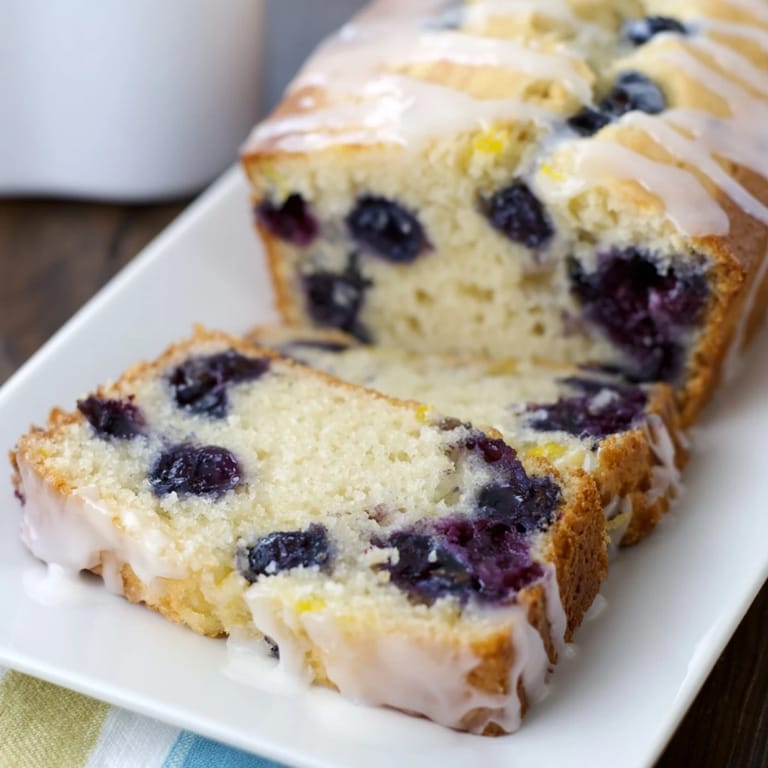
 This cake has quietly become the one I make when I want to feel like I know what I'm doing in the kitchen, and that's no small thing. It's proof that sometimes the easiest path produces something genuinely worth sharing.
Recipe FAQs
- → How do I prevent blueberries from sinking?
Toss blueberries with a tablespoon of flour before folding them gently into the batter. This helps suspend them evenly throughout the loaf.
- → Can I substitute Greek yogurt with a dairy-free option?
Yes, coconut yogurt works well as a dairy-free alternative without compromising moisture or texture.
- → What’s the best way to keep the loaf moist?
Using yogurt and vegetable oil ensures a tender, moist crumb. Avoid overmixing the batter to prevent dryness.
- → How do I make the lemon glaze?
Whisk powdered sugar with fresh lemon juice until smooth and drizzle over the cooled loaf to add bright citrus flavor.
- → Can I freeze the loaf?
Yes, allow the loaf to cool completely before wrapping tightly and freezing. Thaw at room temperature when ready to enjoy.