 Pin It
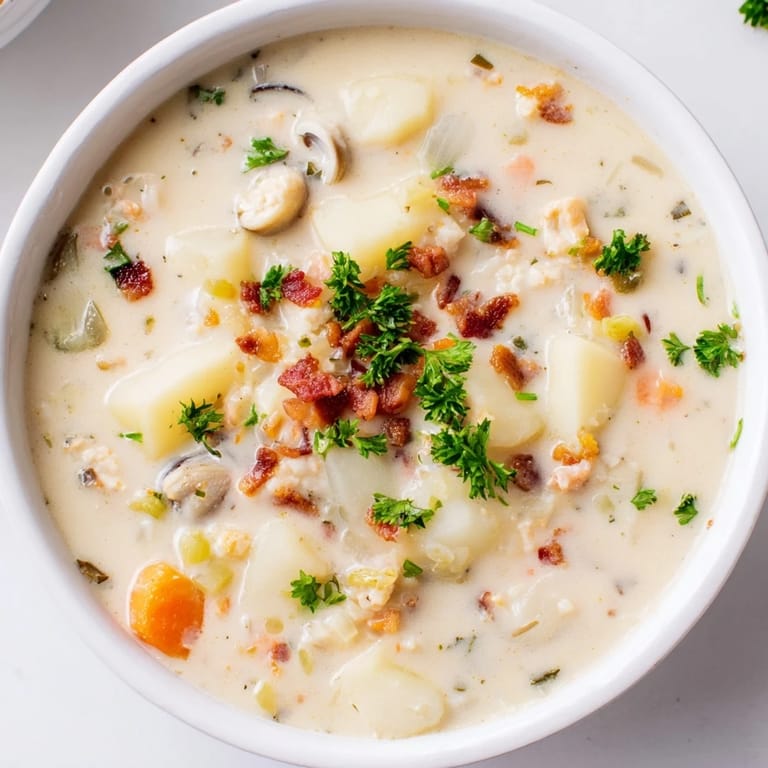
 There's a particular silence that falls over a New England kitchen when you're making clam chowder for the first time—the moment when those littleneck clams crack open in the steam and release their briny, ocean-sweet perfume into the air. I wasn't expecting that smell to transport me somewhere; I was just following a recipe from a friend's grandmother, trying to get it right. But something about that steam rising from the pot, the tender clams already falling away from their shells, made me understand why this soup has survived centuries in coastal kitchens. It's not fancy or complicated. It's honest.
I made this for my dad on a gray November afternoon, and he barely looked up from his bowl—not because it wasn't good, but because he was already halfway through his second serving. He grew up eating chowder from diners along the Massachusetts coast, and I was terrified I'd get it wrong. When he finally set down his spoon and smiled, all those minutes of chopping vegetables and watching for that precise moment when the potatoes turn fork-tender suddenly felt worth it.
Ingredients
- Fresh littleneck clams (2 lbs): These are your foundation—they're meaty enough to stand up to cream without disappearing, and their briny liquid is what makes this chowder sing. Buy them from a fishmonger if you can; they tell you which ones are fresh.
- Bottled clam juice (1 cup): This is your safety net in case your clam steaming liquid isn't quite enough, and it adds another layer of ocean flavor without any fishy bite.
- Russet potatoes (2 medium): They break down slightly as they cook, which thickens the soup naturally while still leaving tender chunks.
- Yellow onion, celery, carrot (1 each, finely chopped): This trio is your flavor backbone—they soften into the background but make everything taste more like home.
- Garlic (2 cloves, minced): Just enough to whisper its presence without overpowering the delicate clams.
- Heavy cream and whole milk (1½ cups and 1 cup): The cream is essential, but the milk keeps it from becoming heavy—you want richness, not a sauce.
- Unsalted butter (2 tbsp): It carries flavor better than the bacon fat alone and helps build your roux.
- All-purpose flour (2 tbsp): Your roux thickener—whisk it in gently so you don't end up with lumps.
- Bacon (2 slices, diced): The smoke and salt it brings makes people wonder what secret ingredient you're hiding.
- Bay leaf and dried thyme: Bay brings structure, thyme brings memory—use them but remember to fish out that bay leaf before serving.
- Salt, pepper, and fresh parsley: Taste as you go near the end; the clam juice is salty, so you might need less than you think.
Tired of Takeout? 🥡
Get 10 meals you can make faster than delivery arrives. Seriously.
One email. No spam. Unsubscribe anytime.
Instructions
- Prepare the clams:
- Rinse each clam under cold water and scrub the shell with a brush—you're not just cleaning, you're waking them up. Add them to a large pot with 2 cups of water, cover, and let the steam work its magic for 5 to 7 minutes until they open like little books ready to tell their story.
- Cool and shuck:
- Let the open clams rest for a minute so you don't burn your fingers, then remove the meat, chop it into rough pieces, and set it aside—the reserved cooking liquid is liquid gold, so strain it carefully into a bowl.
- Render the bacon:
- Dice your bacon and cook it in the Dutch oven over medium heat until it's crisp and the fat is shimmering. This fat is going to carry your flavor forward, so don't rush it.
- Build the base:
- Add butter to the bacon fat, then stir in your finely chopped onion, celery, carrot, and garlic. Let them soften for about 5 minutes, until the kitchen smells like someone's grandmother is cooking—you'll know it when you smell it.
- Make the roux:
- Sprinkle the flour over the softened vegetables and stir constantly for about 1 minute. You're creating a sandy paste that will thicken your chowder without lumps—this moment matters.
- Add the liquids:
- Slowly pour in your reserved clam cooking liquid and the bottled clam juice, stirring as you go and scraping up any brown bits stuck to the bottom of the pot. Those bits are concentrated flavor.
- Cook the potatoes:
- Add the diced potatoes, bay leaf, and thyme, then bring everything to a simmer. Watch for the moment when a fork slides through a potato piece with no resistance—that's your signal, usually around 10 to 12 minutes.
- Bring it together:
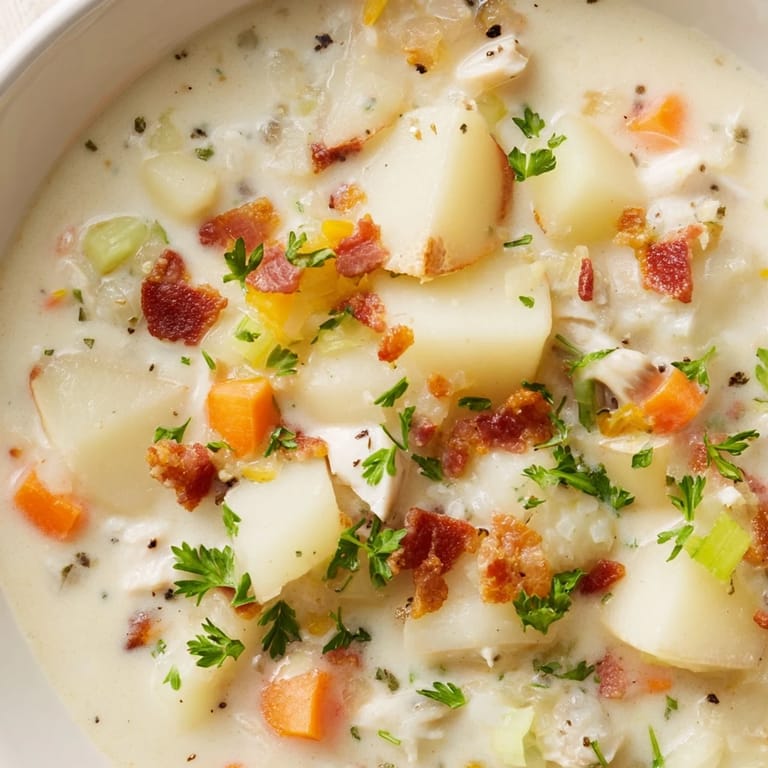
- Reduce the heat to low, then add the chopped clams, crispy bacon, cream, and milk. Stir gently and let it simmer for 5 to 10 minutes—never boil, because boiling will toughen your clams and break the cream.
- Final taste:
- Remove the bay leaf, taste for salt and pepper, and adjust. The clam juice has already salted things, so you might only need a few generous grinds of pepper.
 Pin It
 There's a moment in chowder-making—right after you add the cream and the soup turns from golden-brown to pale and beautiful—when you feel like you've unlocked something. My neighbor wandered over one afternoon because the smell had drifted into her kitchen, and she sat at my counter tasting a spoonful while I finished cooking. She got quiet the way people do when food reminds them of someone or somewhere they've loved. That's when I knew it wasn't just chowder anymore.
The Science of Creaminess
The magic of New England clam chowder lives in how the roux, clam liquid, and cream come together to create something silky without being heavy. The roux isn't just a thickener—it emulsifies, which means it helps the fat and liquid get along instead of separating later. That's why you stir gently when the cream goes in, and why low heat matters. If you've ever made a soup that broke and looked greasy on top, a roux that wasn't cooked long enough was probably the culprit. This recipe forgives a lot, but it rewards patience.
Clams and Seasons
There's an old saying that you should only eat clams in months with an R in them, but that's less about the clams being bad and more about them being at their sweetest and most tender during cooler months. I've made this in summer and winter, and I swear you can taste the difference—summer clams still work, but autumn and winter clams have a subtle sweetness that makes the soup feel less like a recipe and more like a tradition. If you're buying clams, ask your fishmonger what came in that day and what's in season. They'll steer you right.
Variations and Experiments
I've played with this recipe more times than I should admit, and while the classic version is perfection, there are a few gentle tweaks worth trying. Some people mash a few of the cooked potatoes against the side of the pot to make the broth thicker and creamier, which changes the texture into something almost porridge-like and deeply comforting. Others swap in half-and-half instead of cream and milk for a lighter version that lets the clam flavor shine through more brightly. And then there's the adventurous move—a dash of hot sauce or smoked paprika stirred in at the very end—which some people love and others think is sacrilege.
- For a Manhattan-style version, substitute tomatoes and broth for the cream; it's a different soup but built on the same foundation.
- If you want even more depth, save your bacon fat separately and use it the next day to sauté mushrooms for a completely different meal.
- Oyster crackers are the traditional float, but some people tear in chunks of buttered sourdough bread instead.
 Pin It
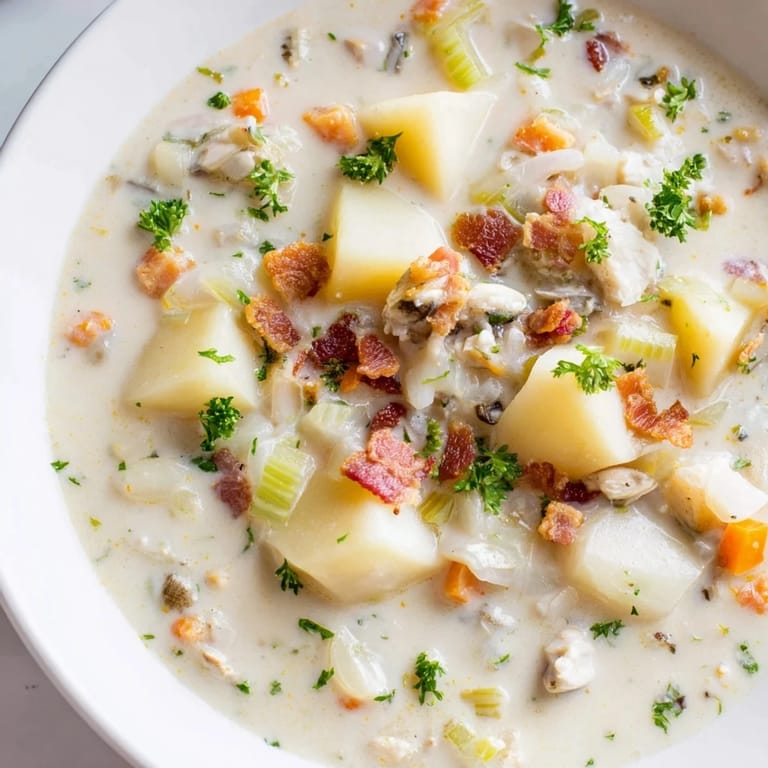
 This chowder is the kind of recipe that becomes a quiet tradition if you let it—something you make when people you love are coming over, or on a day when the weather turns and you want the kitchen to feel warm. It asks very little of you except care and attention, and it gives back comfort in every spoonful.
Recipe FAQs
- → How should I clean the littleneck clams before cooking?
Rinse clams under cold water and scrub their shells well to remove any grit or debris before steaming to open.
- → Can I use bottled clam juice instead of clam cooking liquid?
Yes, bottled clam juice works well to maintain the rich seafood flavor when fresh clam liquid is unavailable.
- → What thickening agent is used in the chowder?
A roux made by cooking all-purpose flour with butter helps thicken the chowder and creates a smooth, creamy base.
- → Can I substitute heavy cream for a lighter option?
For a lighter texture, half-and-half can replace cream and milk partially or fully to reduce richness.
- → What is the best way to serve this chowder?
Serve hot garnished with fresh parsley and optionally with oyster crackers for added texture and traditional pairing.
- → Is it necessary to remove the bay leaf before serving?
Yes, removing the bay leaf ensures no tough, fibrous texture remains while keeping its subtle herbal aroma.