 Pin It
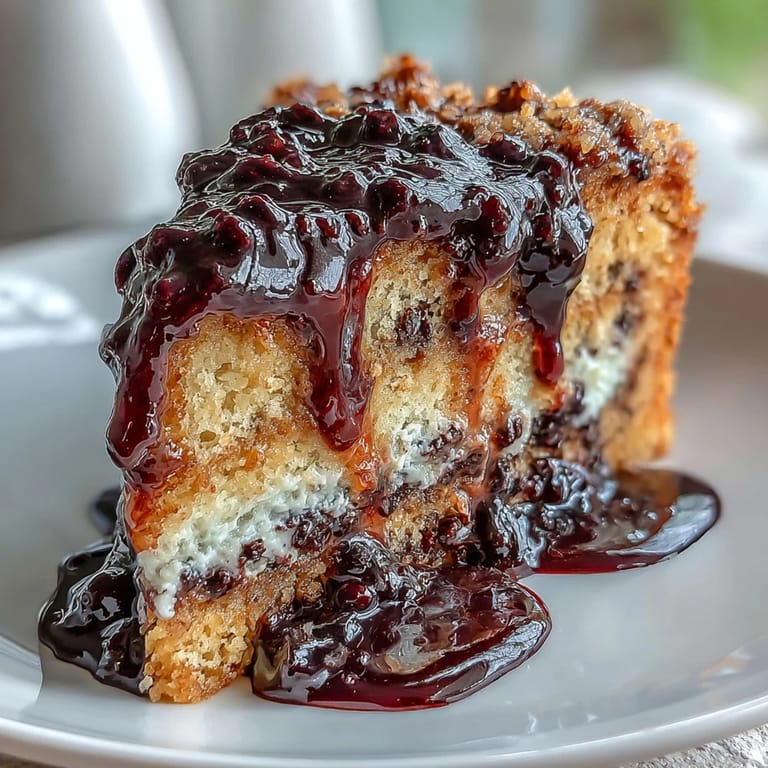
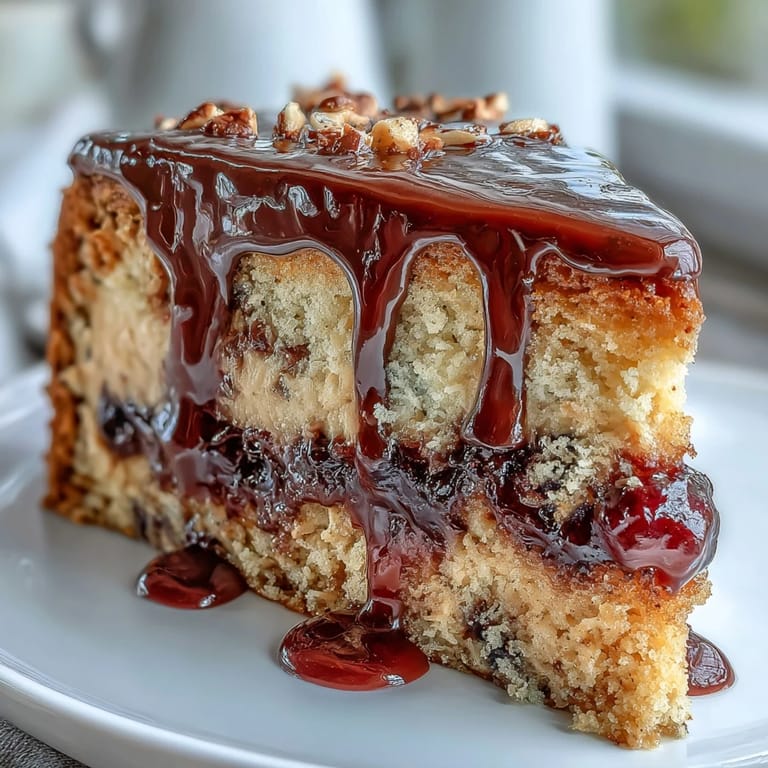
 My friend Sarah showed up one afternoon with a jar of black currants from her farmers market haul, and I had no idea what to do with them. She mentioned a dessert she'd eaten in London, something that played with childhood flavors but made them elegant. That's when it clicked: what if I took the simplicity of a peanut butter and jelly sandwich and turned it into cake? The result was this impossibly moist peanut butter cake with a tart black currant center and sauce that somehow tastes like nostalgia and sophistication at the same time.
I made this for my book club last month, and one person actually stopped mid-sentence to ask for the recipe. There's something about the combination that makes people pause and really taste it, not just eat it. The cake stayed moist for days, and honestly, it was even better on day two when the flavors had settled into each other.
Ingredients
- All-purpose flour (1 1/2 cups): The base that keeps everything tender; don't overmix once you add this or you'll lose that delicate crumb.
- Baking powder (1 tsp) and baking soda (1/2 tsp): This combination is key because peanut butter is dense, and you need both to get proper rise without the cake becoming rubbery.
- Salt (1/4 tsp): Brings out the peanut butter flavor so it doesn't taste one-dimensional.
- Unsalted butter and creamy peanut butter (1/2 cup and 3/4 cup): Use good quality peanut butter with no added sugar if you can find it; cheaper versions can make the cake oddly grainy.
- Granulated sugar (1 cup): Balances the earthiness of the peanut butter without overwhelming it.
- Eggs (2 large): Bring them to room temperature or the batter won't emulsify properly and you'll get a dense, oily cake.
- Vanilla extract (1 tsp): A small amount that quietly supports everything else.
- Whole milk (1/2 cup): Alternating it with flour creates a tender crumb; cold milk from the fridge works fine.
- Black currant jam (1/2 cup): The tart center that makes this cake memorable; it stays in place because you're sandwiching it between two cake layers.
- Fresh or frozen black currants (1 cup): For the sauce; frozen works beautifully and you don't need to thaw them.
- Lemon juice (1 tsp): The secret ingredient that brightens the sauce and keeps it from tasting flat or one-note.
Tired of Takeout? 🥡
Get 10 meals you can make faster than delivery arrives. Seriously.
One email. No spam. Unsubscribe anytime.
Instructions
- Set your stage:
- Preheat to 350°F and prepare your 8-inch cake pan with butter and parchment paper. Whisking flour with baking powder, baking soda, and salt together first prevents lumps and ensures even distribution.
- Build the base:
- Beat softened butter and peanut butter until completely smooth and creamy, about 2 minutes. This is where the texture of your cake is born, so don't skip ahead.
- Lighten the mixture:
- Add sugar gradually and beat until the mixture looks pale and fluffy, which takes about 3 minutes and means air is being incorporated. Add eggs one at a time, waiting for each to fully combine before adding the next, then mix in vanilla.
- Bring it together gently:
- Alternate adding the flour mixture and milk, starting and ending with flour, stirring just until no streaks of white remain. Overmixing at this point develops gluten and makes the cake tough, so restraint is your friend here.
- Layer the magic:
- Spread half the batter into the pan, then spoon jam evenly over it leaving a half-inch border so it won't squeeze out during baking. Top with remaining batter and smooth it gently so it covers the jam.
- Bake with confidence:
- Bake 30 to 35 minutes until a toothpick comes out clean; the top should be golden and spring back when you gently touch it. Cool in the pan for 10 minutes, then turn out onto a wire rack so steam can escape and the cake sets properly.
- Make the sauce:
- Combine black currants, sugar, and water in a saucepan and let it bubble away until thick and syrupy, about 8 to 10 minutes. The mixture will look thinner than you expect but thickens as it cools; lemon juice added at the end keeps it bright.
- Finish and serve:
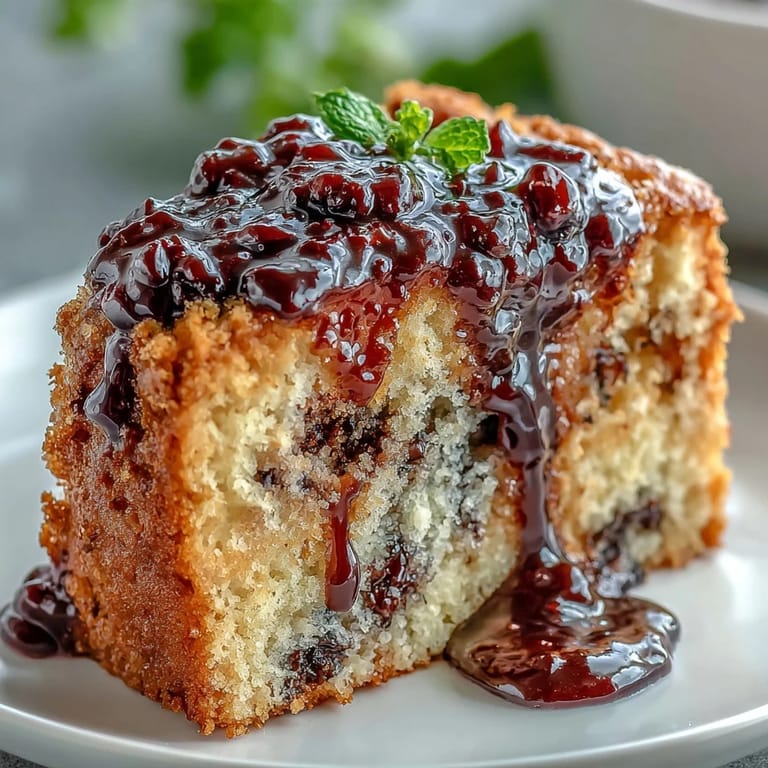
- Slice the cooled cake and drizzle generously with sauce so the tartness hits every bite alongside the peanut butter richness.
 Pin It
 I watched my mom taste this cake and her face did that thing where she looked surprised and then thoughtful, and I realized that some foods take us back to a moment without being heavy about it. This cake does that; it's playful but also somehow nostalgic, which is the hardest thing to achieve in a dessert.
The Black Currant Surprise
Black currants aren't as common in American baking as raspberries or blackberries, which means most people have never experienced how sharp and almost wine-like they taste. That tartness is exactly why this cake works; it cuts through the richness of peanut butter and keeps you from feeling overwhelmed halfway through a slice. If you can't find black currants, you can use the jam alone, but I'd encourage you to seek them out at least once because they change the whole dynamic of the dessert.
Making It Your Own
This cake is forgiving enough that you can experiment without ruining it. Some people brush the cooled cake layers with simple syrup before assembling to add extra moisture, which is lovely if you like things very tender. Others have tried swapping the black currant jam for seedless raspberry or blackberry, and the cake is equally delicious, though you lose that specific tartness that makes it memorable.
Serving and Storage
Slice this cake with a warm knife dipped in hot water and wiped clean between cuts, and the layers stay neat instead of crumbling. It keeps well for three days covered loosely on the counter, and the flavors actually deepen on day two. The sauce can be made a day ahead and rewarmed gently, which takes one stress off your plate if you're entertaining.
- Pair it with cold milk for a playful nod to the sandwich inspiration, or with a dessert wine if you want to feel fancy.
- If you have leftover sauce, drizzle it over vanilla ice cream or plain yogurt for a quick second dessert.
- This cake isn't overly sweet, so it works as an afternoon snack with coffee as much as it does as a dinner finale.
 Pin It
 This cake proved to me that the best desserts are the ones that surprise you by being exactly what you didn't know you wanted. Make it once and it becomes a keeper.
Recipe FAQs
- → Can I use natural peanut butter instead of creamy?
Natural peanut butter can work, but it may affect the cake's texture slightly. Since natural peanut butter separates and has a higher oil content, the cake might be denser. If using natural variety, stir it thoroughly and consider reducing the butter by 1-2 tablespoons to compensate.
- → What other fruit preserves work well?
Raspberry, blackberry, or strawberry preserves all make excellent substitutes. The key is choosing something tart to balance the rich peanut butter. Apricot or fig preserves offer a more sophisticated twist. Avoid overly sweet options as they won't provide enough contrast.
- → How should I store this cake?
Store at room temperature for up to 2 days, covered loosely with plastic wrap or in a cake dome. For longer storage, refrigerate for up to 5 days, though bring to room temperature before serving for best texture. The sauce can be refrigerated separately and gently reheated.
- → Can I make this cake gluten-free?
Yes, substitute the all-purpose flour with a 1-to-1 gluten-free flour blend containing xanthan gum. The texture will be nearly identical. Ensure all other ingredients, including baking powder and vanilla, are certified gluten-free if needed for strict dietary requirements.
- → Is the black currant sauce essential?
While the cake is delicious on its own, the black currant sauce elevates it by adding moisture and concentrated fruit flavor. If currants aren't available, a simple berry coulis using raspberries or blackberries works beautifully. You could also serve with powdered sugar dusting instead.