 Pin It
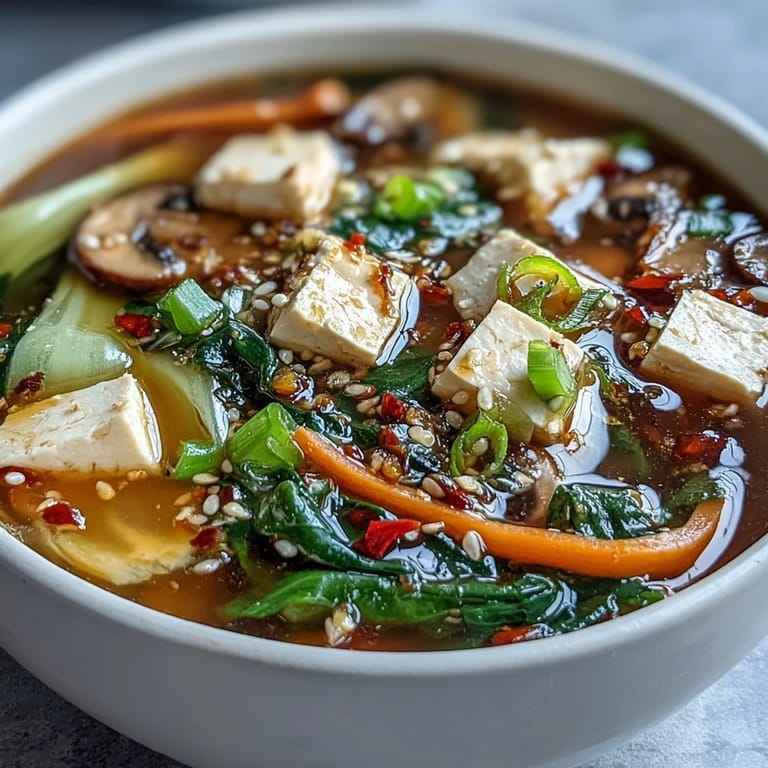
 There's something about a steaming bowl of tofu and vegetable soup that made me realize soup doesn't need to be complicated to be memorable. I was in my kitchen on a quiet Tuesday evening, looking for something light but satisfying, when I grabbed silken tofu almost by accident and found myself building this delicate broth around it. The first spoonful felt like a small discovery—how could something so simple taste so thoughtfully balanced? Now whenever I make it, that same feeling of calm contentment returns, like I'm cooking for someone I genuinely care about.
I made this for my neighbor who had just moved in, and watching her face light up when she tasted that first spoonful made me understand why certain soups become rituals. She kept asking what made it taste so clean and bright, and I realized it was the combination of fresh ginger hitting your palate first, followed by the whisper of sesame oil. Since then, it's become the soup I make when I want to say hello to someone without making a big production of it.
Ingredients
- Low-sodium vegetable broth (1.5 liters): This is your foundation, so choose one you'd actually drink on its own—the soup's delicate flavor depends on it not overpowering everything else.
- Soy sauce or tamari (2 tablespoons): Use tamari if you're keeping this gluten-free, and remember that a little goes a long way since the broth stays light.
- Fresh ginger, thinly sliced (1 tablespoon): Slicing instead of mincing keeps the pieces visible and lets them infuse without disappearing, giving you that moment of warmth with each sip.
- Garlic, minced (2 cloves): Mince it finely so it distributes evenly and doesn't leave sharp bites of raw garlic hiding in the broth.
- Sesame oil (1 teaspoon): This is a small amount but it's the secret that makes everything taste intentional and aromatic rather than plain.
- Carrot, julienned (1 medium): Cut them thin and uniform so they cook in exactly the right time and look elegant in the bowl.
- Shiitake mushrooms, sliced (100 g): These bring an earthy depth that transforms the broth from simple to sophisticated.
- Baby bok choy, chopped (100 g): It wilts in seconds, so add it near the end to keep it tender-crisp rather than mushy.
- Red bell pepper, thinly sliced (1 small): The color matters as much as the flavor here—it makes the soup look alive and vibrant.
- Spring onions, sliced (2): Keep some white and some green separated so you can add them at different times and capture both their sharpness and their mild sweetness.
- Silken tofu, cubed (300 g): Handle it gently after opening the package, and cube it generously so each piece feels substantial but still silky.
- Fresh cilantro, sesame seeds, and lime wedges (optional garnishes): These finish the soup with brightness and texture, making each bowl feel personalized rather than uniform.
Tired of Takeout? 🥡
Get 10 meals you can make faster than delivery arrives. Seriously.
One email. No spam. Unsubscribe anytime.
Instructions
- Build your base with aromatics:
- Heat sesame oil in a large pot over medium heat, then add minced garlic and sliced ginger, stirring constantly for 1 to 2 minutes until the kitchen fills with that unmistakable fragrant warmth. You'll know it's ready when the raw garlic smell transforms into something deeper and more welcoming.
- Create the foundation broth:
- Pour in the vegetable broth and soy sauce, stirring gently to combine, then let it come to a gentle simmer rather than a rolling boil. This keeps the flavors delicate instead of concentrated.
- Start with vegetables that need time:
- Add carrot, shiitake mushrooms, and bell pepper slices all at once, then let them simmer for exactly 5 minutes. This timing matters because you want them tender but still with a subtle crunch.
- Add the quick-cooking vegetables:
- Stir in bok choy and spring onions (both white and green parts), cooking for another 2 to 3 minutes until they just turn tender. Watch them carefully because they change texture quickly.
- Introduce the tofu with care:
- Gently add the silken tofu cubes to the simmering broth and let them warm through for about 2 minutes, stirring only when necessary to avoid breaking them apart. This is the moment where patience pays off.
- Taste and season thoughtfully:
- Take a spoon and taste the broth, then adjust with a bit more soy sauce if it needs depth or a splash of broth if it feels too intense. Trust your palate rather than following the recipe blindly.
- Serve with intention:
- Ladle the soup into bowls, making sure each one gets a fair share of tofu and vegetables, then finish with fresh cilantro, a sprinkle of toasted sesame seeds, and a squeeze of lime if you'd like that brightness. Hot bowls make a difference, so warm them first if you have time.
 Pin It
 One afternoon I was feeling overwhelmed and made this soup almost without thinking, letting my hands move through the familiar motions while my mind quieted down. By the time I sat down to eat it, something had shifted—the simple act of slicing ginger and watching vegetables soften in broth had reminded me that taking care of yourself through food is its own kind of meditation.
Flavor Building and Balance
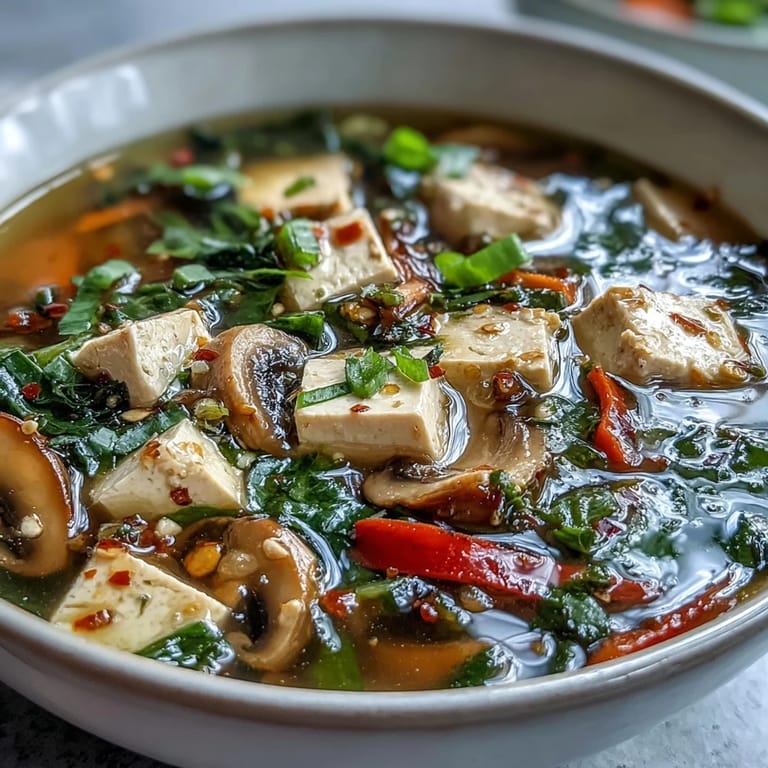
The magic in this soup isn't in any single ingredient but in how they speak to each other. Ginger and garlic announce themselves first, sesame oil adds a subtle richness that lingers on your palate, and the vegetables create layers of sweetness and earthiness. The tofu acts as a gentle anchor, absorbing the broth's flavor while staying soft enough that it practically dissolves on your tongue. What makes this work is the ratio—nothing drowns out anything else, which means the broth stays the star rather than becoming a vehicle for overpowering flavors.
Customization Without Losing the Soul
The beauty of this soup is that it welcomes changes without becoming unrecognizable. I've added snow peas when I wanted crunch, swapped shiitake for enoki when I was in a different mood, and even dropped in napa cabbage when I wanted something heartier. A dash of chili oil before serving transforms the whole experience if you're craving heat, or you could add a slice of fresh chili and let people control their own spice level. The core remains honest and adaptable, which is what makes it feel like a recipe you keep making rather than one you try once and forget.
Serving Suggestions and Kitchen Wisdom
Warm your bowls before serving if you want the soup to stay hot longer—it's a small detail that somehow makes everything taste more intentional. Serve it as a light dinner on its own, or pair it with steamed dumplings or a simple rice bowl if you want something more substantial. The lime wedges and cilantro aren't just decorations; they're flavor insurance, adding brightness that cuts through the richness of the sesame oil.
- If you're cooking for someone with a soy allergy, use tamari and double-check your vegetable broth to make sure it's truly soy-free.
- Make the broth base in the morning and store it in the fridge, then just add the tofu and quick-cooking vegetables when you're ready to eat for a faster weeknight version.
- This soup freezes well if you leave the tofu out and add it fresh after thawing, since tofu changes texture when frozen and thawed.
 Pin It
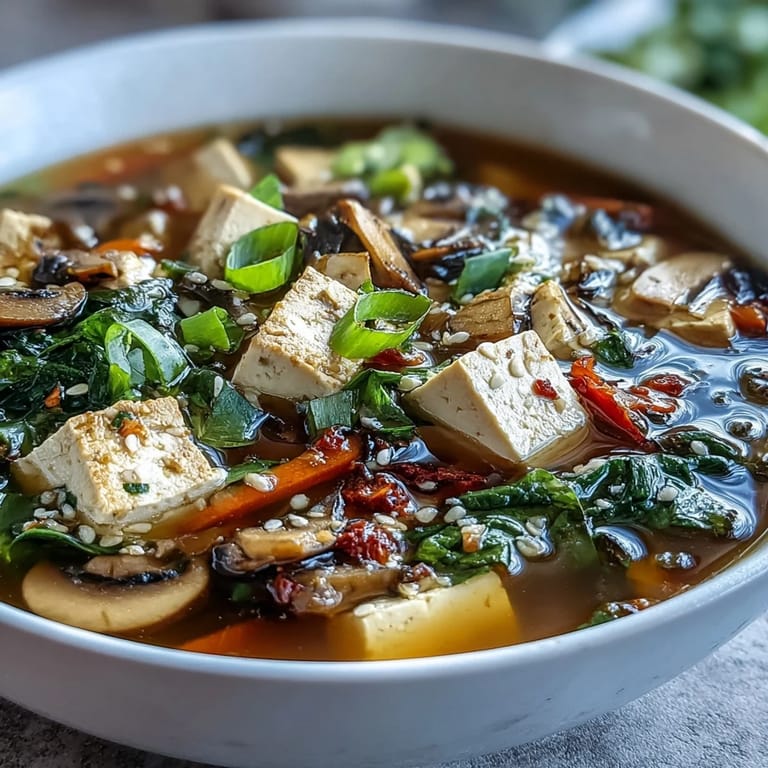
 This soup has become my go-to answer when someone asks what I'm making for dinner because it asks so little of you but delivers something that feels genuinely nourishing. I hope it becomes something you return to, too.
Recipe FAQs
- → What type of tofu works best?
Silken tofu creates the smoothest, most delicate texture, though firm tofu provides more substance if you prefer heartier pieces that hold their shape better during simmering.
- → Can I make this gluten-free?
Yes, simply substitute regular soy sauce with tamari. All other ingredients are naturally gluten-free, making this an easy allergen-friendly option.
- → How do I prevent tofu from breaking apart?
Add tofu cubes gently during the last few minutes of cooking and avoid vigorous stirring. The silken variety is delicate, so a light touch preserves its structure.
- → What vegetables can I substitute?
Snow peas, napa cabbage, enoki mushrooms, or spinach work beautifully. The base formula adapts well to whatever fresh produce you have available.
- → Can I add protein beyond tofu?
While tofu provides 8g of protein per serving, you could add edamame, rice noodles for extra bulk, or serve alongside your favorite protein for a more substantial meal.
- → How long does this soup keep?
Store in an airtight container for up to 3 days. The tofu will continue absorbing flavors, though texture may soften slightly. Reheat gently on the stovetop.