 Pin It
 There's something about a pot of minestrone that fills a kitchen with pure comfort. I stumbled onto this recipe on a gray October afternoon when my neighbor brought over a thermos of her version, still steaming, and I realized how much I'd been missing that simple, honest bowl of soup. The way it smells as it simmers—all herbs and tomato and soft vegetables—became my signal that everything was going to be okay. Now I make it constantly, sometimes adding whatever vegetables are lingering in my crisper drawer, sometimes sticking exactly to this version. It's the kind of recipe that gets better the more you make it, because you start to trust your instincts with it.
I served this to my book club on a Wednesday night, and four people asked for the recipe before they'd even finished their bowls. What I love most is how it feels generous—hearty enough to be a full meal, but light enough that you don't feel heavy afterward. That balance is harder to achieve than it sounds, and it's why this soup has earned a permanent spot in my rotation.
Ingredients
- Olive oil: Use good quality here—it's one of the few ingredients you actually taste on its own.
- Onion, carrots, and celery: This is your flavor foundation, the holy trinity that makes everything else sing.
- Garlic: Fresh minced garlic makes all the difference; jarred loses its punch in a long simmer.
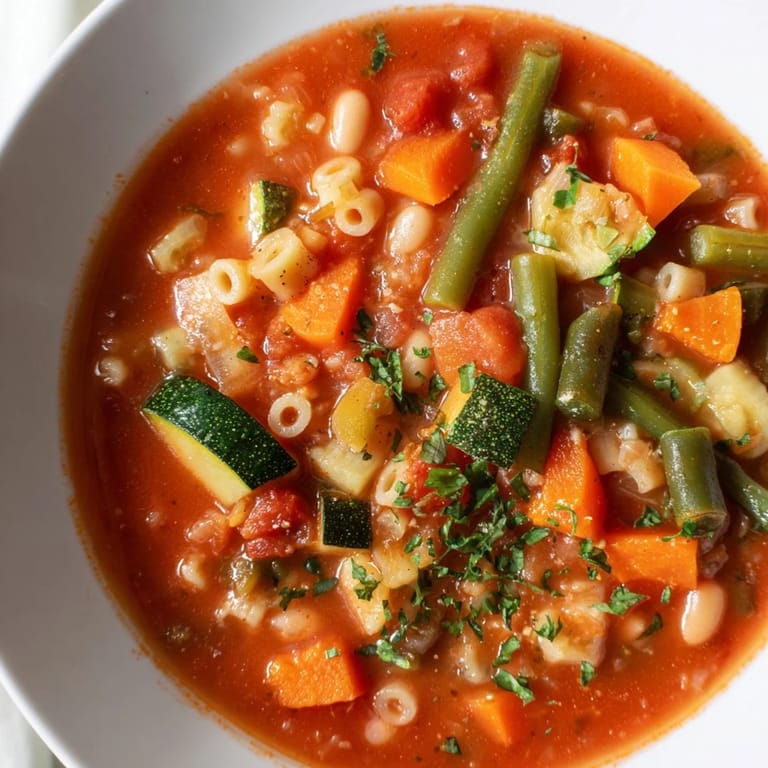
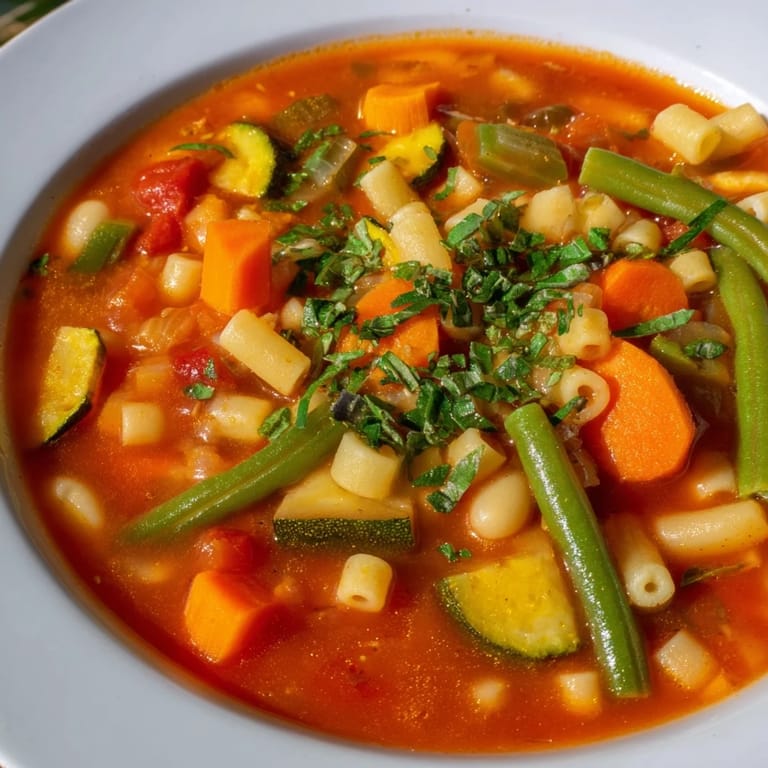
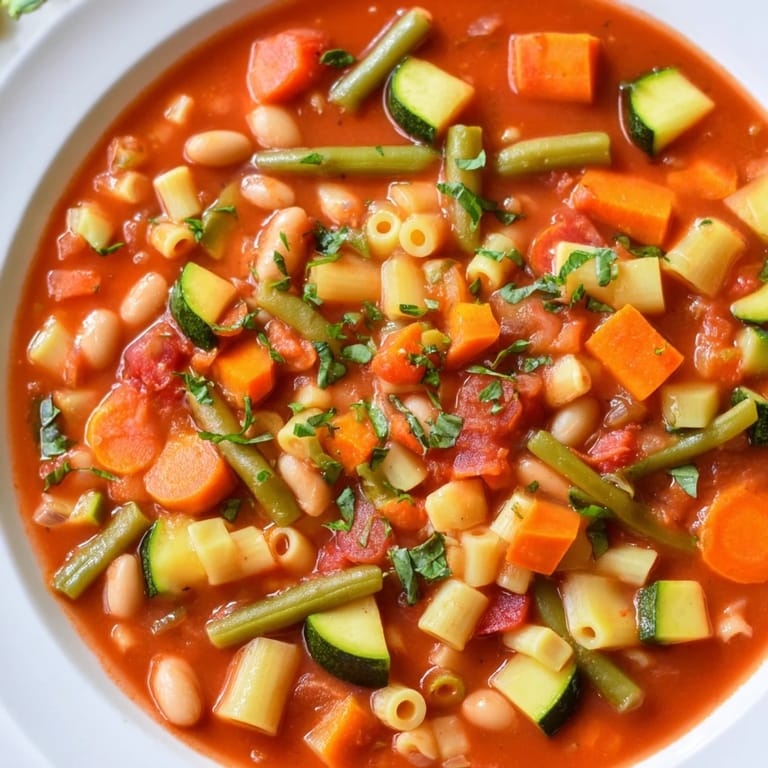
- Zucchini and green beans: They add texture and brightness without overpowering the broth.
- Diced and crushed tomatoes: Both types—the diced keeps structure, the crushed makes the broth silky.
- Vegetable broth: Low-sodium is best so you control the salt level as you cook.
- Oregano and thyme: Dried herbs work beautifully here; fresh would actually fade into the background.
- Tomato paste: Just two tablespoons deepens the tomato flavor without making it acidic.
- Small pasta: Ditalini holds the broth better than long pasta ever could.
- Cannellini beans: They're creamy without being heavy, and they cook perfectly at this soup's pace.
- Fresh basil and parsley: Always add these at the very end so they keep their bright, alive taste.
- Parmesan cheese: Optional but honestly, a small handful grated on top changes everything.
Tired of Takeout? 🥡
Get 10 meals you can make faster than delivery arrives. Seriously.
One email. No spam. Unsubscribe anytime.
Instructions
- Build your aromatics:
- Heat the olive oil in your pot over medium heat, then add the onion, carrots, and celery. Let them soften together for about five minutes—you'll know they're ready when the onion turns translucent and the whole kitchen smells like the start of something good.
- Add depth and texture:
- Stir in the minced garlic, zucchini, and green beans, cooking for just three minutes so the garlic doesn't brown. You want everything to smell fragrant and alive.
- Create the broth:
- Pour in both kinds of tomatoes, the vegetable broth, herbs, salt, pepper, red pepper flakes, and tomato paste. Stir everything until it's fully combined, then turn up the heat and let it come to a boil.
- Let it simmer:
- Once it's boiling, lower the heat and let it simmer uncovered for fifteen minutes. This is when the flavors actually get to know each other and the vegetables soften completely.
- Finish the soup:
- Add the pasta and beans directly to the pot and simmer for another ten to twelve minutes, stirring occasionally, until the pasta is tender and the beans have warmed through.
- Season and brighten:
- Stir in all that fresh basil and parsley, then taste it. Adjust the salt and pepper if it needs it—every batch is slightly different depending on your broth.
 Pin It
 There was a Sunday morning when my daughter asked for seconds of this soup, which almost never happens with her and vegetables. That's when I realized this recipe isn't just food—it's proof that simple things done well actually matter. She tasted the care in it, even if she couldn't name why.
Variations That Work
Once you've made this soup once, you'll start noticing how flexible it is. I've thrown in chopped kale in winter, added fresh spinach in spring, and even experimented with a splash of white wine instead of some of the broth. The skeleton of the recipe stays the same, but the soul changes slightly each time. That's what makes it the kind of recipe you keep coming back to—it grows with you.
The Bread That Matters
I've learned that how you serve minestrone is almost as important as how you make it. Crusty bread on the side isn't just tradition—it's practical. You'll want something to tear into, something to soak up the broth that clings to your spoon. A chunk of good bread transforms this from a soup into a moment.
Storage and Reheating
This soup keeps beautifully in the refrigerator for up to four days, which is exactly why it's perfect for meal prep or those nights when you want dinner without the stress. The flavors actually improve as they sit, and reheating is as simple as warming it gently on the stove. I always taste it again before serving because sometimes it needs just a pinch more salt after a day of resting.
- Store it in an airtight container and it'll taste even better tomorrow than today.
- If you're freezing it, leave out the pasta and add fresh pasta when you reheat it.
- A good soup is the gift you give yourself on a busy week.
 Pin It
 Make this soup when you need to feel grounded, or when someone else needs it. It's that kind of food.
Recipe FAQs
- → What type of pasta works best?
Small shapes like ditalini or elbow macaroni hold up well and blend nicely with the vegetables and beans.
- → Can I make it gluten-free?
Yes, substitute regular pasta with gluten-free varieties and ensure all broth ingredients are gluten-free.
- → When should fresh basil be added?
Stir fresh basil in at the end of cooking to preserve its bright flavor and aroma.
- → Is it possible to add more greens?
Yes, spinach or kale can be added near the end for extra nutrients and color.
- → How to adjust seasoning for spice preference?
Crushed red pepper flakes can be added or omitted according to desired heat level.