 Pin It
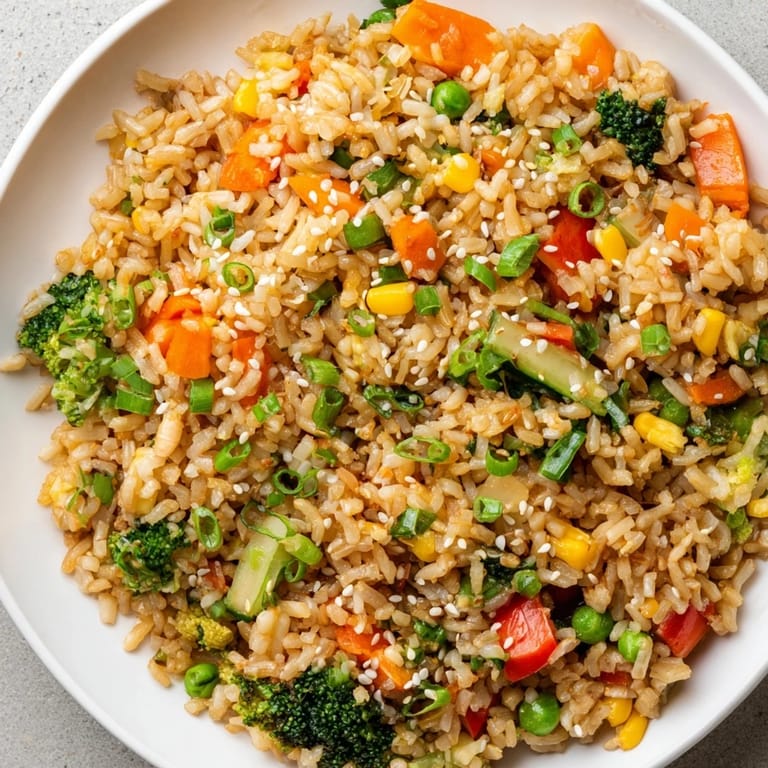
 The wok was smoking hot, and I was tossing rice with more confidence than I probably should have had. My friend had just taught me the trick about using day-old rice, and suddenly everything clicked. The grains separated beautifully instead of turning into a gummy mess. I stood there, spatula in hand, realizing I'd been doing it wrong for years.
I made this on a Tuesday night when my sister came over unannounced. She watched me chop everything while we caught up, and by the time we sat down, she'd already declared it better than our usual spot. The kitchen smelled like garlic and sesame, and we ate straight from the wok because I didn't feel like doing extra dishes. It became our thing after that, the meal we made when we just wanted to talk and eat something good without fuss.
Ingredients
- Cooked jasmine or long-grain rice (3 cups, day-old and cold): This is the secret to fried rice that actually fries instead of steams. Cold rice from the fridge has dried out just enough to get crispy edges and stay separate.
- Carrots (1 cup, diced): They add sweetness and a satisfying crunch if you don't overcook them. I like cutting them small so they cook evenly with everything else.
- Bell pepper (1 cup, diced): Any color works, but I lean toward red or yellow for a little extra sweetness and a pop of color.
- Frozen peas (1 cup, thawed): Frozen peas are perfect because they're already blanched, so they just need a quick toss to warm through without turning mushy.
- Broccoli florets (1 cup, small): Break them into tiny pieces so they cook fast and get a little char on the edges.
- Sweet corn kernels (1/2 cup): Fresh, canned, or frozen all work fine. They bring a hint of sweetness that balances the salty soy sauce.
- Green beans (1/2 cup, chopped): I chop them into half-inch pieces so they blend right in with the other vegetables.
- Green onions (3, sliced): Use both the white and green parts, and save a handful of the green tops for garnish at the end.
- Garlic (2 cloves, minced): Fresh garlic is non-negotiable here. It hits the hot oil first and sets the tone for everything.
- Ginger (1-inch piece, minced): Fresh ginger adds that warm, slightly spicy note that makes fried rice taste authentic.
- Soy sauce (3 tbsp): This is your main seasoning, so use a good quality one. Tamari works perfectly if you need it gluten-free.
- Sesame oil (1 tbsp): A little goes a long way. It adds a nutty richness that pulls everything together at the end.
- Vegetable oil (1 tbsp): You need something with a high smoke point for stir-frying. Canola or sunflower oil both work great.
- Toasted sesame seeds (1 tsp, optional): They add a toasty crunch and make the dish look more finished.
- White or black pepper (1/2 tsp): White pepper is traditional and has a sharper bite, but black pepper works just fine.
- Salt (to taste): You might not need much since soy sauce is already salty, but taste at the end and adjust.
Tired of Takeout? 🥡
Get 10 meals you can make faster than delivery arrives. Seriously.
One email. No spam. Unsubscribe anytime.
Instructions
- Heat the wok:
- Pour the vegetable oil into a large wok or skillet and crank the heat to medium-high. Let it get really hot until it shimmers and almost starts to smoke.
- Bloom the aromatics:
- Toss in the garlic and ginger, stirring constantly for about 30 seconds. You'll know it's ready when the smell fills your kitchen and they just start to turn golden.
- Stir-fry the hearty vegetables:
- Add the carrots, bell pepper, broccoli, green beans, and corn all at once. Keep everything moving in the pan, stirring and tossing for 3 to 4 minutes until the vegetables are tender but still have some bite.
- Add the quick-cooking vegetables:
- Stir in the peas and most of the green onions, saving a little for garnish. Cook for just 1 minute to warm them through.
- Toss in the rice:
- Turn the heat up to high and add the cold rice. Use your spatula to break up any clumps and keep tossing for 2 to 3 minutes until every grain is hot and starting to get a little crispy.
- Season and finish:
- Drizzle the soy sauce and sesame oil over everything, then sprinkle with pepper. Toss it all together until the rice is evenly coated and everything looks glossy.
- Adjust and serve:
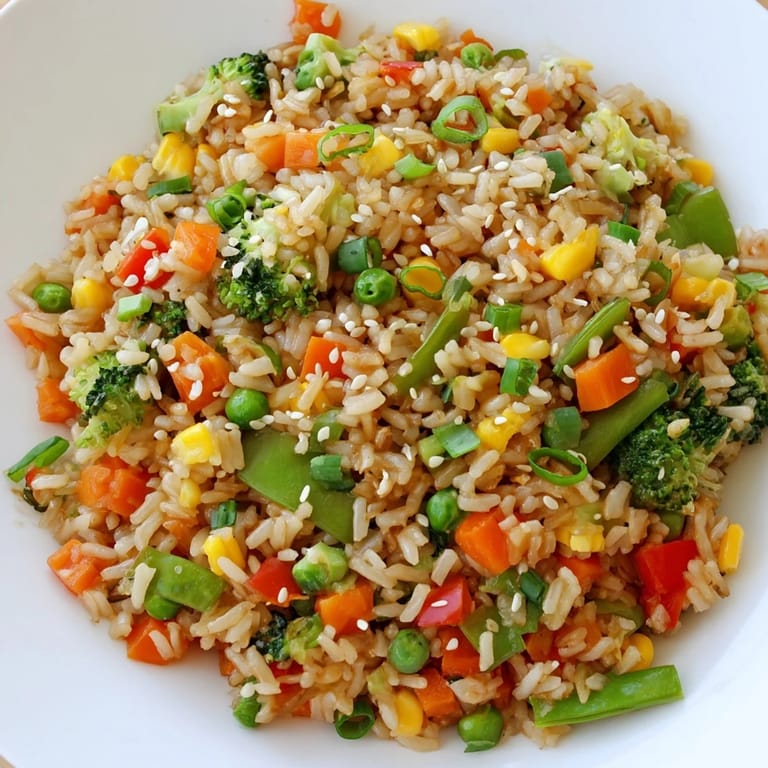
- Taste a spoonful and add more salt or soy sauce if needed. Take it off the heat, scatter the reserved green onions and sesame seeds on top, and serve it hot.
 Pin It
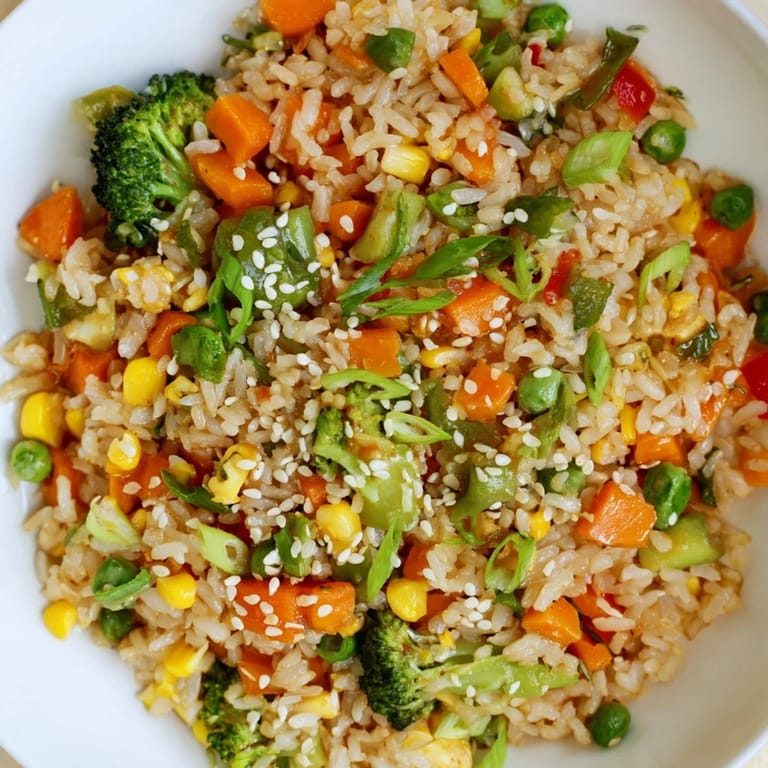
 One night I made this for a potluck, and it disappeared before anything else on the table. People kept asking if I'd ordered it from somewhere. I didn't tell them how easy it was or that I'd used whatever random vegetables I had left over from the week. Sometimes the simplest things are the ones people remember.
Making It Your Own
The beauty of fried rice is that it's more of a method than a strict recipe. I've made it with mushrooms, zucchini, snap peas, and even shredded cabbage when that's what I had. If you want protein, scramble a couple of eggs right in the wok before you add the vegetables, or toss in some cubed tofu. For a spicy version, stir in a spoonful of chili garlic sauce or scatter fresh sliced chilies over the top. It's one of those dishes that gets better the more you make it your own.
Getting the Texture Right
The difference between good fried rice and great fried rice is all about texture. Cold, day-old rice is the foundation because the grains have dried out just enough to fry without falling apart. When you add it to the wok, don't stir it constantly. Let it sit for a few seconds at a time so the bottom layer gets crispy and golden. That slight char is what makes it taste like it came from a restaurant kitchen. If your rice is clumping, break it up with your hands before it even hits the pan.
Serving and Storing
I usually serve this straight from the wok while it's still piping hot. It's great on its own, but it also works as a side next to grilled tofu, stir-fried noodles, or even a simple soup. Leftovers keep well in the fridge for up to three days, and they reheat beautifully in a hot skillet with a splash of oil. Sometimes I think it tastes even better the next day when all the flavors have had time to settle in.
- Reheat in a skillet instead of the microwave to bring back that crispy texture.
- Add a fried egg on top of leftovers for an easy next-day lunch.
- Double the recipe if you're feeding a crowd because it goes faster than you think.
 Pin It
 This is the kind of recipe that makes you feel capable in the kitchen, even on the nights when you're tired and don't feel like cooking. It's fast, it's flexible, and it always delivers.
Recipe FAQs
- → Why is day-old rice recommended?
Day-old or cold rice has less moisture, preventing the finished dish from becoming soggy. Fresh warm rice tends to clump and absorb too much sauce. Store cooked rice in the refrigerator uncovered to allow moisture to evaporate.
- → Can I use fresh rice instead?
Yes, but spread freshly cooked rice on a plate and let it cool completely before using. This removes excess steam and moisture, giving you better texture and separation of grains during stir-frying.
- → What vegetables work best for substitution?
Mushrooms, zucchini, snap peas, bok choy, and water chestnuts are excellent alternatives. Choose vegetables with similar cooking times and cut them uniformly for even cooking. Keep softer vegetables like zucchini separate if they cook faster.
- → How do I add protein to this dish?
Scrambled eggs stirred in at the end or tofu cubes added with the vegetables work perfectly. For non-vegetarian versions, try diced chicken, shrimp, or ham. Add protein after stir-frying vegetables but before the rice.
- → Is this gluten-free?
Regular soy sauce contains gluten. Use tamari or certified gluten-free soy sauce as a replacement for a gluten-free version. Always check sesame oil and other condiment labels, as hidden gluten can appear in processed ingredients.
- → How can I make this spicier?
Add chili sauce, sriracha, or fresh sliced chili peppers during the garlic and ginger stage for heat. Red pepper flakes work too. Start with a small amount and adjust to your preferred spice level before serving.