 Pin It
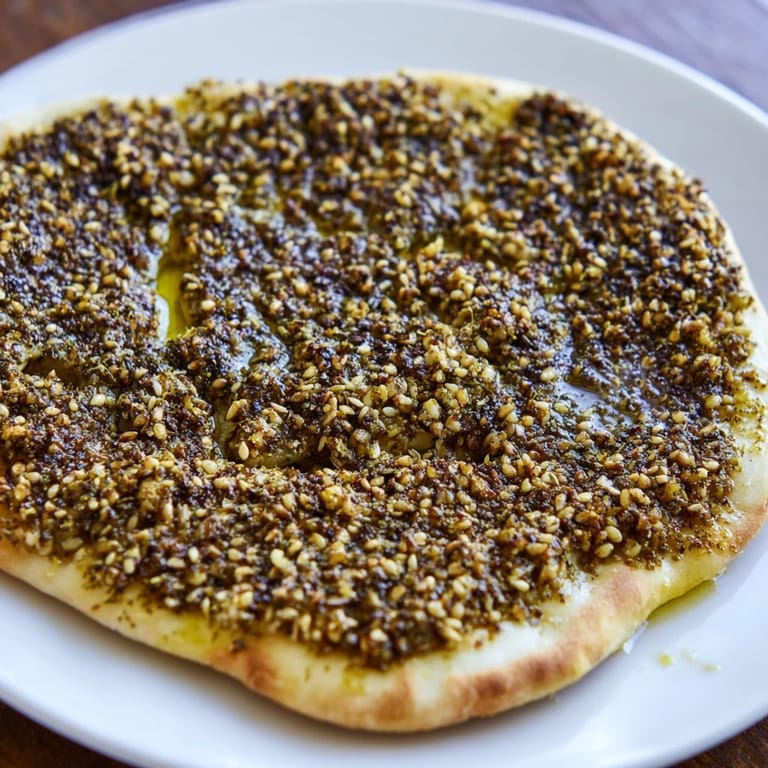
 The first time I made zaatar bread was on a whim, standing in my kitchen with a jar of zaatar I'd picked up from a market months earlier and honestly forgotten about. I was craving something warm and aromatic, something that didn't require much thought but would still feel special, and when I opened that jar and breathed in—all those herbs, the tang, the earthiness—I knew exactly what I needed to do. Two hours later, my kitchen smelled like a Levantine kitchen, and I understood why this bread shows up on so many tables across the Levant, not as an afterthought but as something people genuinely look forward to.
I made these once for a small gathering on a cool evening, and I remember my neighbor leaning against the counter, picking up a warm piece and just closing her eyes while she ate it—no conversation, just that moment of quiet appreciation with good bread in hand. That's when I realized this recipe wasn't just about feeding people, it was about creating one of those small kitchen moments that lingers after the meal is over.
Ingredients
- All-purpose flour (2 cups): This is your foundation, and it needs to be measured right—too much and your bread gets dense, too little and it spreads into a pancake instead of holding its shape.
- Instant dry yeast (1 teaspoon): Make sure it's fresh; old yeast will leave you with flatbread that stays stubbornly flat instead of puffing slightly in the oven.
- Sugar and salt (1 teaspoon each): The sugar wakes up the yeast, while the salt grounds the flavor and keeps the dough from tasting one-dimensional.
- Warm water (2/3 cup): Warm, not hot—if it burns your finger, it'll kill the yeast and your bread won't rise properly.
- Olive oil (2 tablespoons for dough, 1/3 cup for topping): Use good quality oil for the topping; it's the bridge between the bread and the zaatar, and it matters.
- Zaatar spice blend (1/4 cup): This is the star—a combination of dried herbs, sumac, and sesame that tastes bright and slightly tangy.
- Toasted sesame seeds (2 tablespoons): Buy them already toasted if you can; it saves a step and ensures they're fragrant and ready to go.
Tired of Takeout? 🥡
Get 10 meals you can make faster than delivery arrives. Seriously.
One email. No spam. Unsubscribe anytime.
Instructions
- Mix your dry base:
- In a large bowl, combine your flour, yeast, sugar, and salt—this distribution matters because it ensures the yeast gets evenly distributed throughout and doesn't clump up when water hits it.
- Bring it together:
- Drizzle in the olive oil first, then add warm water gradually while stirring, watching as the shaggy mixture slowly becomes a cohesive dough. Stop when it just comes together; you can always add a splash more water if it's too stiff.
- Knead until smooth:
- Work the dough on a lightly floured surface for about 5-7 minutes, and you'll feel it transform under your hands from rough and sticky to smooth and elastic—this is the moment when you know it's ready to rest.
- First rise:
- Oil a bowl lightly, place your dough inside, cover it with a damp cloth to keep it from drying out, and let it sit in a warm spot for about an hour until it's roughly doubled in size.
- Shape and rest:
- Divide the dough into four pieces, roll each into a ball, then gently flatten into a round about 6-7 inches across—if the dough springs back, let it relax for a minute before flattening again.
- Prepare the topping:
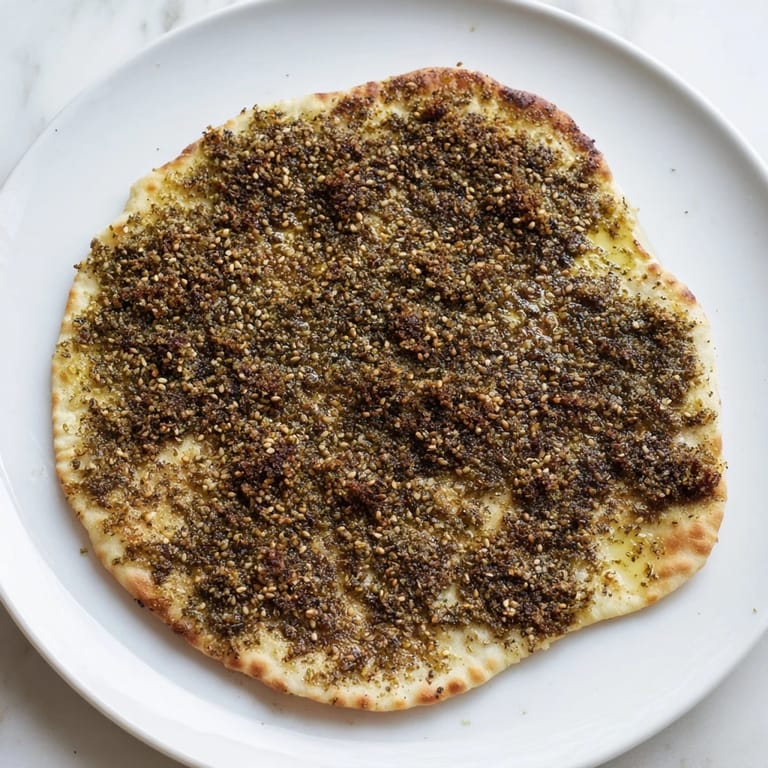
- Mix your zaatar, sesame seeds, and olive oil in a small bowl until you have a slightly loose paste that will spread easily without tearing your dough.
- Top and bake:
- Spread the zaatar mixture generously across each round, leaving a small border, then bake at 220°C (425°F) for 12-15 minutes until the edges turn golden and crisp.
 Pin It
 There's something about the smell of zaatar bread in the oven that stops conversations mid-sentence. My kids used to emerge from their rooms without being asked when that smell started drifting through the house, drawn by something almost magnetic about the combination of herbs and toasted sesame. Food that can do that—that can call people to the table without words—that's when I knew I was making something worth repeating.
The Magic of Zaatar
Zaatar isn't just one thing; it's a blend that varies from region to region, family to family, which means there's a little bit of personality baked into every jar. The tartness comes from sumac, the earthiness from various dried herbs like thyme or oregano, and the nuttiness from sesame—together they create something that tastes familiar and exotic at the same time. Once you understand what zaatar is doing, you'll start thinking of it differently, reaching for it in places beyond just bread.
Serving and Storing
These breads are best within a few hours of baking while the crust still has some crispness, but they're still good the next day wrapped in foil and gently warmed. Serve them with labneh and olives if you want to keep it traditional, or with hummus and fresh vegetables if you want something lighter.
Building Flavor Layers
The real secret to zaatar bread isn't any single ingredient—it's understanding how olive oil acts as a vehicle for the spice blend, how the heat of the oven brings out the toasted sesame character, and how the crust provides that crucial textural contrast. Once you make these connections, you start thinking about how to apply them elsewhere in the kitchen.
- If you like heat, a light pinch of chili flakes stirred into your zaatar mixture adds a gentle warmth without overpowering the herbs.
- Keep your zaatar in an airtight container away from light and heat so it doesn't lose its vibrancy over time.
- These freeze beautifully for up to three weeks, and you can refresh them in a warm oven for just a couple of minutes.
 Pin It
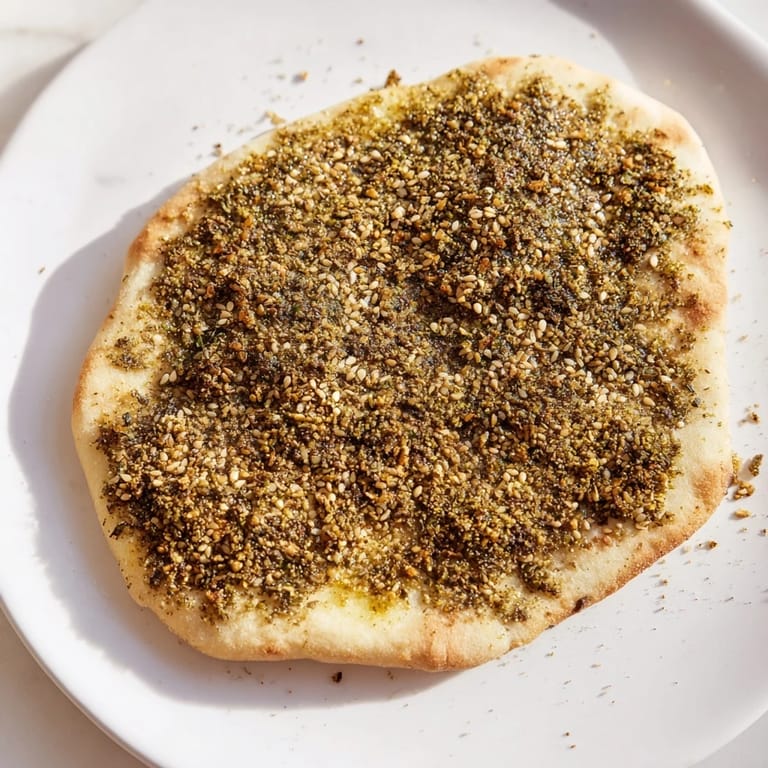
 This bread reminds me that sometimes the best cooking is the simplest kind, where you're not fighting with multiple techniques but just letting good ingredients speak for themselves. Every time I make it, it tastes like home, no matter where I'm actually standing.
Recipe FAQs
- → What is zaatar?
Zaatar is a traditional Middle Eastern spice blend usually containing thyme, sumac, sesame seeds, and other herbs, offering a tangy, aromatic flavor.
- → Can I make the flatbread vegan?
Yes, this flatbread is naturally vegan, using plant-based ingredients such as olive oil and no animal products.
- → How do I achieve a fluffier texture?
Allow the shaped dough to rest for 10 minutes before adding the topping to enhance softness and rise.
- → What are ideal serving suggestions?
Serve warm or at room temperature alongside fresh vegetables, olives, labneh, hummus, or baba ganoush for a balanced meal.
- → Can I add heat to the topping?
Yes, adding a pinch of chili flakes to the zaatar mixture will provide a spicy kick without overpowering the flavors.