 Pin It
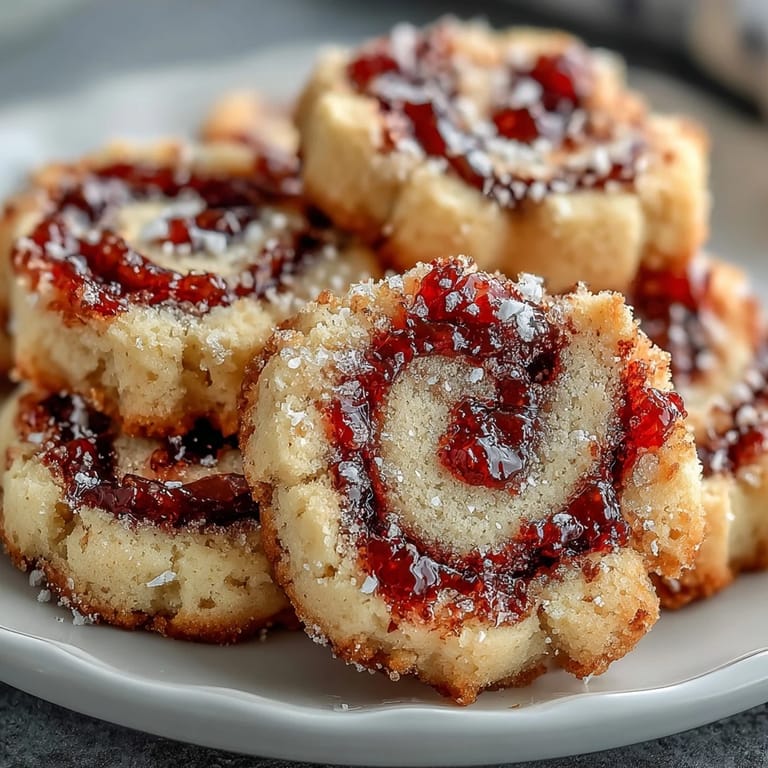
 The smell of butter browning at the edges always brings me back to a quiet Sunday afternoon when I had more jam than I knew what to do with. I rolled out shortbread dough for the first time in years, pressed my thumb into each round, and filled the wells with raspberry preserves my neighbor had dropped off. The cookies emerged golden and glossy, their centers still wobbly with fruit. I ate three before they cooled.
I brought a tin of these to a book club once, and they disappeared before we even opened the novel. Someone asked if I'd trained at a bakery. I laughed and admitted I'd learned the hard way that cold dough slices cleaner and bakes more evenly. The compliments felt earned, not lucky.
Ingredients
- Unsalted butter (1 cup, softened): The backbone of shortbread, it should be soft enough to cream but not melted or the dough will spread too thin in the oven.
- Powdered sugar (1/2 cup): Dissolves more smoothly than granulated, giving the cookies a melt-in-your-mouth tenderness without graininess.
- Vanilla extract (1 teaspoon): A small pour that deepens the buttery flavor and makes the whole kitchen smell like a bakery.
- All-purpose flour (2 cups): The structure that holds everything together, measure it by spooning into the cup and leveling off to avoid dense cookies.
- Salt (1/4 teaspoon): Just enough to balance the sweetness and let the raspberry jam shine through.
- Raspberry jam or preserves (1/3 cup): Choose one with visible seeds for texture, or go seedless if you prefer a smoother swirl.
- Granulated sugar (2 tablespoons, optional): A final sparkle on top that catches the light and adds a subtle crunch.
Tired of Takeout? 🥡
Get 10 meals you can make faster than delivery arrives. Seriously.
One email. No spam. Unsubscribe anytime.
Instructions
- Prep Your Oven and Sheets:
- Set the oven to 350°F and line two baking sheets with parchment so nothing sticks. This step saves you from scraping burnt sugar later.
- Cream the Butter and Sugar:
- Beat the softened butter and powdered sugar with an electric mixer until the mixture looks pale and fluffy, about 2 to 3 minutes. You want it light as clouds.
- Add Vanilla:
- Pour in the vanilla extract and mix just until it disappears into the butter. The scent will fill the room.
- Combine Flour and Salt:
- Whisk the flour and salt together in a separate bowl, then add it to the butter mixture in two or three additions. Mix only until the dough comes together or it will turn tough.
- Shape and Chill the Dough:
- Turn the dough onto a floured surface and roll it into a log about 1.5 inches across, then wrap it tightly in plastic wrap and refrigerate for at least 30 minutes. Cold dough slices cleanly and holds its shape.
- Slice into Rounds:
- Unwrap the chilled log and cut it into 1/4-inch slices with a sharp knife, wiping the blade between cuts if it gets sticky. Arrange the rounds on your prepared sheets with an inch of space around each.
- Make the Indentations:
- Press the back of a teaspoon gently into the center of each cookie to create a shallow well. Don't press all the way through or the jam will leak.
- Fill with Jam:
- Spoon about half a teaspoon of raspberry jam into each indentation, resisting the urge to add more. Overfilled cookies bubble over and lose their shape.
- Bake Until Golden:
- Slide the sheets into the oven and bake for 12 to 15 minutes, watching for light golden edges. The centers may look soft but they firm up as they cool.
- Cool in Stages:
- Let the cookies rest on the baking sheets for 5 minutes to set, then transfer them to a wire rack. They'll crisp up as the air circulates.
- Dust with Sugar:
- Once completely cool, sprinkle granulated sugar over the tops if you want a little extra sparkle and crunch. It's optional but pretty.
 Pin It
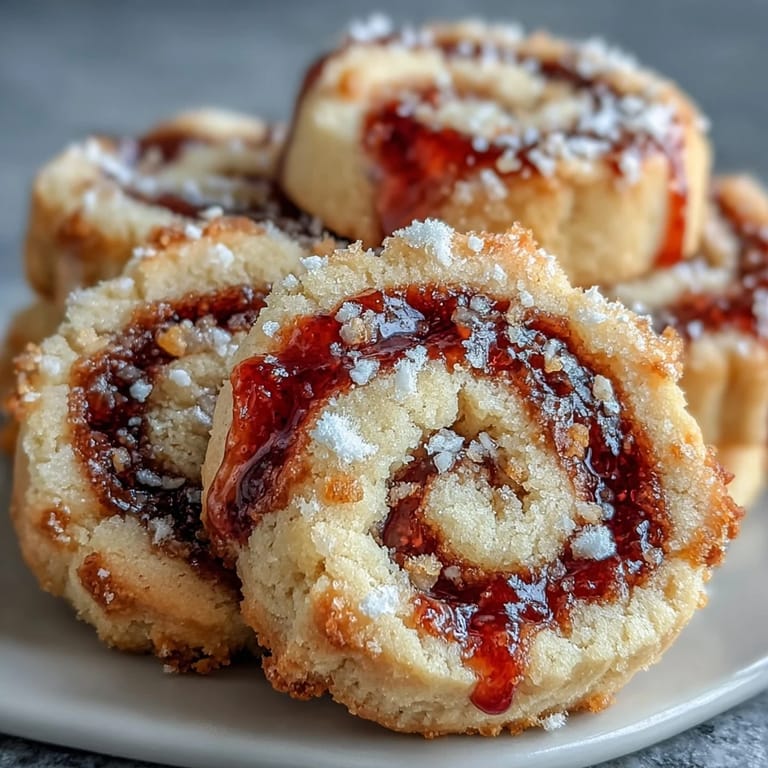
 A friend once told me these cookies reminded her of her grandmother's kitchen in Yorkshire, even though I'd never set foot there. She said it was the way the jam pooled and caramelized at the edges. I realized then that some flavors carry memories we didn't know we had.
Storing and Gifting
These keep beautifully in an airtight container for up to a week, though mine rarely last that long. I like to tuck them into a tin lined with wax paper and tie it with string when I need a last-minute gift. The jam stays glossy and the shortbread holds its crumble, even days later.
Flavor Variations
Raspberry is classic, but I've swapped in apricot preserves, fig jam, and even lemon curd with great results. A pinch of lemon zest folded into the dough before chilling adds a bright note that pairs especially well with berry fillings. Sometimes I press a sliver of almond into the center before adding the jam for a little crunch.
Troubleshooting and Tips
If your cookies spread too much, the butter was likely too warm or the dough didn't chill long enough. If the jam leaks out, you overfilled the wells or pressed too deep. Both are easy fixes once you know what to watch for.
- Use a bench scraper to lift sticky dough off the counter without tearing it.
- Rotate your baking sheets halfway through for even browning if your oven has hot spots.
- Let the jam cool to room temperature before spooning it in if you want cleaner edges.
 Pin It
 These cookies never fail to impress, whether you're serving them with afternoon tea or packing them up as a gift. They taste like care, and that's something people always remember.
Recipe FAQs
- → Can I use different fruit jams?
Absolutely. Strawberry, apricot, blackberry, or red currant preserves all work beautifully. The key is choosing a jam with good fruit content and balanced sweetness.
- → Why must the dough chill before slicing?
Chilling firms the butter, creating clean slices that hold their shape during baking. Without this step, the rounds would spread too much and lose their distinct circular form.
- → How do I know when they're done baking?
Look for lightly golden brown edges while the centers remain pale. The jam should be bubbling gently. They'll continue firming slightly as they cool on the baking sheet.
- → Can I freeze the dough?
Yes. Wrap the log tightly in plastic then foil before freezing for up to 3 months. Thaw in the refrigerator overnight before slicing and baking.
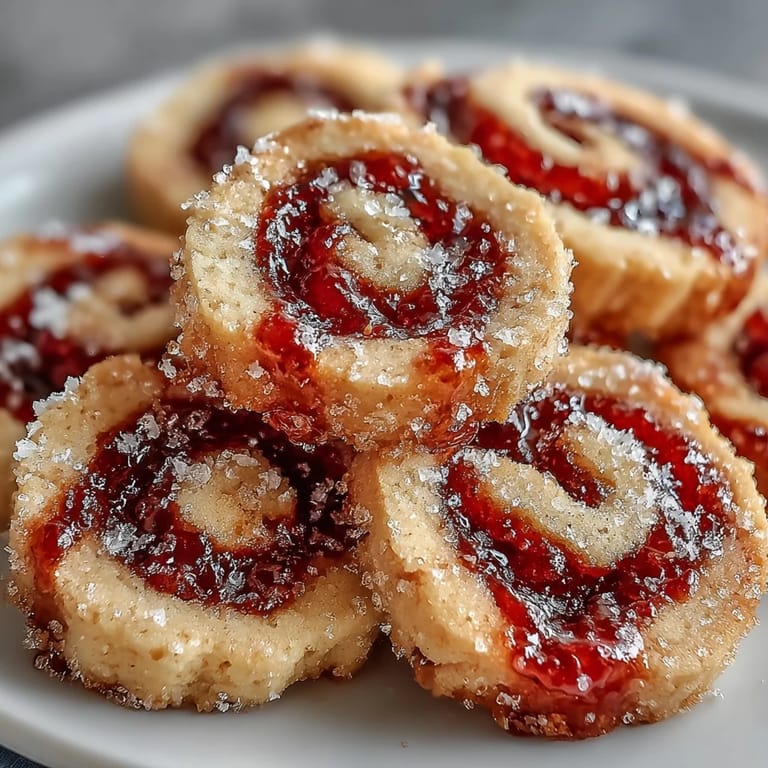
- → What creates the swirl effect?
The jam naturally ripples and swirls as it bakes, creating that beautiful marbled pattern. Placing jam in the center indentation allows it to spread outward while the shortbread edges stay clean.