 Pin It
 My neighbor stopped by one Tuesday evening with a container of homemade teriyaki sauce she'd been perfecting, and we decided on a whim to throw together whatever vegetables we had in the fridge. That spontaneous dinner became something I found myself craving every week, so I eventually reverse-engineered her recipe and made it my own. What started as a quick fix for a busy night turned into the kind of meal I now make when I want something that feels both comforting and bright. The magic is in how the sauce clings to every noodle and vegetable, making even the simplest ingredients taste intentional and delicious.
I made this for my roommate during a snowstorm when we were both stuck inside, and she literally sat at the kitchen counter watching the entire process, asking questions about why the sauce needed that cornstarch slurry. By the time I plated it, she was already reaching for chopsticks, and we ended up eating straight from the wok while standing by the window watching the snow fall. That's when I realized this wasn't just a recipe—it was the kind of food that brings people close without any fuss.
Ingredients
- Egg noodles (300g): These cook faster than dried pasta and have a tender texture that soaks up sauce beautifully, though rinsing them under cold water keeps them from clumping together.
- Broccoli florets (2 cups): The key is blanching them just until they turn bright green—any longer and they become mushy instead of crisp.
- Carrots (2 medium, julienned): Cut them as thin as possible so they cook quickly and add a natural sweetness that plays well with the sauce.
- Green onions (2, sliced): Some go into the wok, some stay fresh for garnish—the contrast between cooked and raw adds texture.
- Soy sauce (1/4 cup): Use a good quality one if you can; the difference between cheap and decent soy sauce is honestly night and day.
- Mirin (2 tbsp): This brings a subtle sweetness and silky mouthfeel that honey alone can't replicate, though dry sherry works in a pinch.
- Honey or maple syrup (2 tbsp): Either works, but maple syrup gives a slightly deeper flavor if that's your preference.
- Rice vinegar (1 tbsp): The acid cuts through the sweetness and keeps everything from feeling cloying.
- Brown sugar (1 tbsp): Just a touch more depth than white sugar would give you.
- Sesame oil (2 tsp): A little goes a long way—this stuff is potent and fragrant, so don't be tempted to double it.
- Garlic (2 cloves, minced): Fresh garlic makes all the difference; jarred is fine in emergencies but not ideal.
- Ginger (1 tsp, grated): A microplane grater is your friend here—it releases the oils and distributes the flavor evenly.
- Cornstarch slurry (1 tbsp cornstarch + 2 tbsp water): This thickens the sauce so it clings to the noodles instead of pooling at the bottom.
- Toasted sesame seeds (2 tbsp): Toast them yourself if you have time—the difference between raw and toasted is significant.
Tired of Takeout? 🥡
Get 10 meals you can make faster than delivery arrives. Seriously.
One email. No spam. Unsubscribe anytime.
Instructions
- Get your noodles ready:
- Bring a large pot of salted water to a rolling boil and cook the egg noodles according to the package timing, usually around 4-5 minutes. Drain them through a strainer and run cold water over them while stirring gently with your fingers to keep them from sticking together.
- Blanch the vegetables:
- Fill a pot with salted water and bring it to a boil, then drop in the broccoli and carrots for just 2-3 minutes—you want them bright and tender but still snappy when you bite into them. Drain and set aside; they'll finish cooking later when they hit the hot sauce.
- Build the sauce:
- In a small saucepan over medium heat, pour in the soy sauce, mirin, honey, rice vinegar, brown sugar, and sesame oil, then add the minced garlic and grated ginger. Let it come to a gentle simmer, and you'll start smelling something incredible—that's when you know you're on the right track.
- Thicken it up:
- Give your cornstarch slurry a quick stir to recombine it (the cornstarch settles), then pour it slowly into the simmering sauce while stirring constantly. It'll thicken noticeably after about a minute, and you want it glossy but not gelatinous—think of the consistency of light syrup.
- Bring it all together:
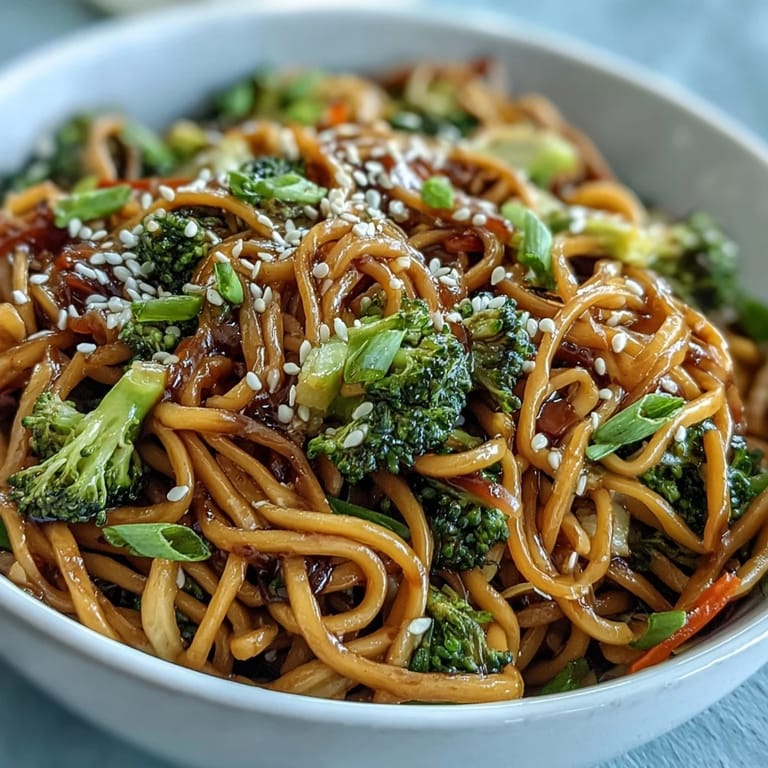
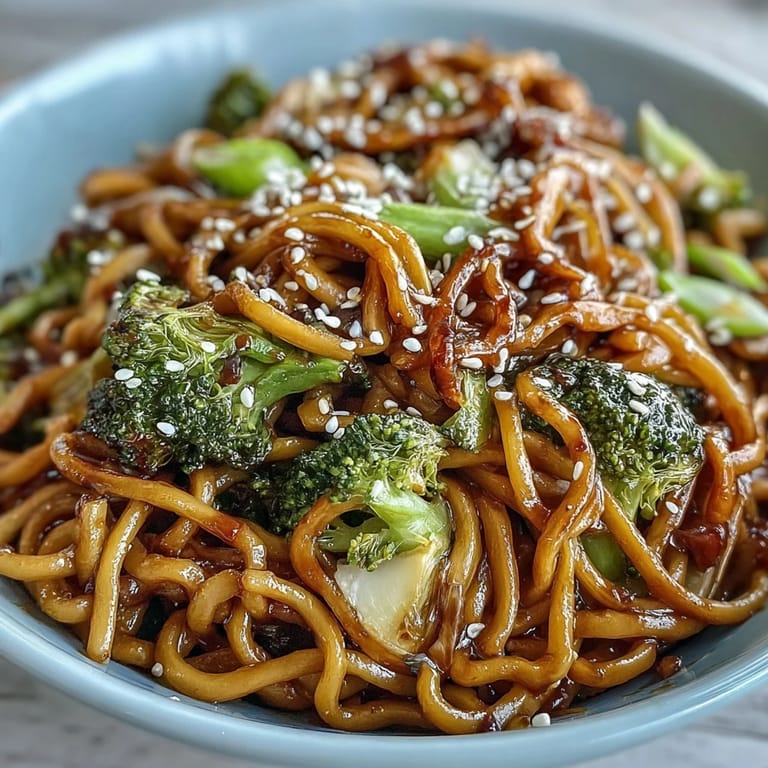
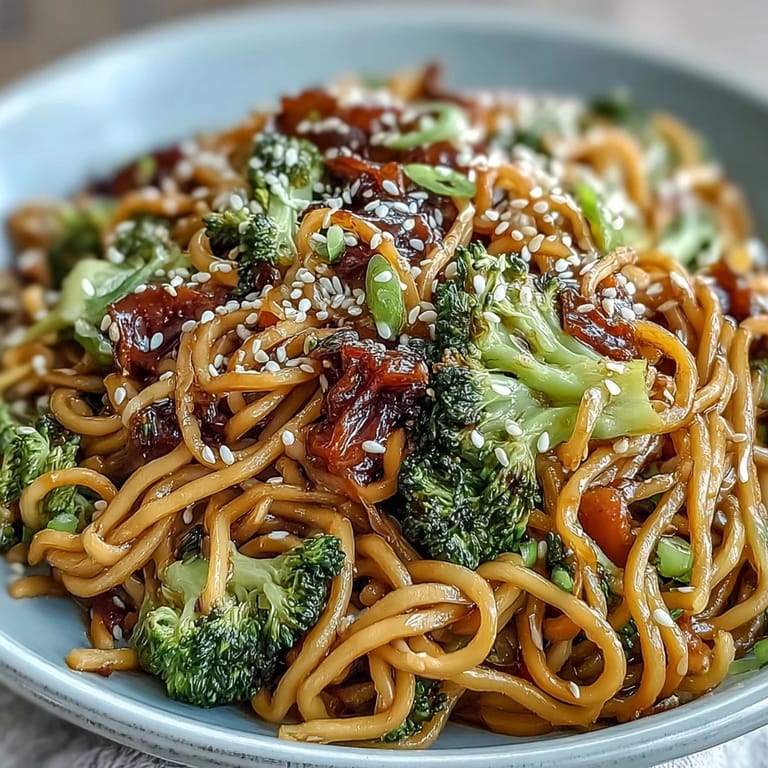
- Heat a wok or large skillet over medium-high heat and add the cooked noodles, blanched vegetables, and sliced green onions, then pour the teriyaki sauce over everything. Toss continuously for a minute or two until the heat redistributes and every strand and floret is coated in that beautiful glaze.
- Plate and finish:
- Divide the noodle mixture among bowls and sprinkle generously with toasted sesame seeds and extra fresh green onion—the raw green onion on top adds a brightness that really brings the whole thing to life.
 Pin It
 Last month, my kid came home from school and ate this straight from the container cold the next day, then asked why we couldn't have it for dinner again. That's when I knew I'd finally cracked something that works for both rushed weeknights and the times when you actually want people to linger at the table.
The Sauce Is Everything
The teriyaki sauce is what transforms simple ingredients into something that feels restaurant-quality, and it's worth taking a moment to get the balance right. That mix of salty, sweet, tangy, and umami is what makes people go back for seconds without understanding why it's so good. I learned this the hard way by trying to simplify it once—using only soy sauce and honey—and the result was flat and one-dimensional. Now I respect the recipe and let each ingredient do its job.
Customizing Your Bowl
Once you understand the base, this dish becomes endlessly flexible depending on what you're in the mood for or what's actually in your kitchen. I've added everything from snap peas to bok choy to thin-sliced mushrooms, and they all work beautifully because the sauce is strong enough to carry them. The vegetable quantity can shift without breaking the recipe—it's really about ratios and the confidence to trust your instincts.
Making It Ahead and Storage
This dish is genuinely better the next day when the sauce has time to settle into every crevice, making it ideal for meal prep or brown-bagging to the office. Store the noodles and vegetables together in an airtight container, and they'll keep for up to three days in the refrigerator. You can eat it cold straight from the container or reheat it gently in a wok with a splash of water if you want it warm again—just don't use a microwave, which makes the noodles weirdly rubbery.
- Make the sauce the day before if it helps with timing; it tastes even better after the flavors have melded overnight.
- Cook the noodles and vegetables separately and store them that way so nothing gets mushy before you eat it.
- Keep toasted sesame seeds in a separate container and sprinkle them on right before serving so they stay crispy instead of absorbing moisture from the sauce.
 Pin It
 This is the kind of recipe that quietly becomes a regular in your rotation, the one you make when you want something delicious without the drama. Every time I plate it, I'm reminded that good cooking doesn't require complicated techniques or a long list of ingredients—it just requires paying attention and respecting the process.
Recipe FAQs
- → Can I make this dish vegan?
Absolutely. Substitute wheat or rice noodles for the egg noodles, and use maple syrup instead of honey. The teriyaki sauce remains just as delicious and cohesive.
- → How do I store leftovers?
Store in an airtight container in the refrigerator for up to 3 days. Reheat gently in a skillet with a splash of water to refresh the sauce coating.
- → What protein additions work well?
Crispy tofu cubes, sliced tempeh, or grilled chicken breast make excellent protein additions. Add them during the final toss step so they absorb the teriyaki glaze.
- → Can I use other vegetables?
Snap peas, bell peppers, shiitake mushrooms, or baby bok choy all work beautifully. Just adjust cooking times so everything stays tender-crisp.
- → Is the sauce spicy?
No, the teriyaki sauce focuses on sweet and savory flavors. If you'd like heat, add sriracha, red pepper flakes, or fresh chili during the sauce preparation.