 Pin It
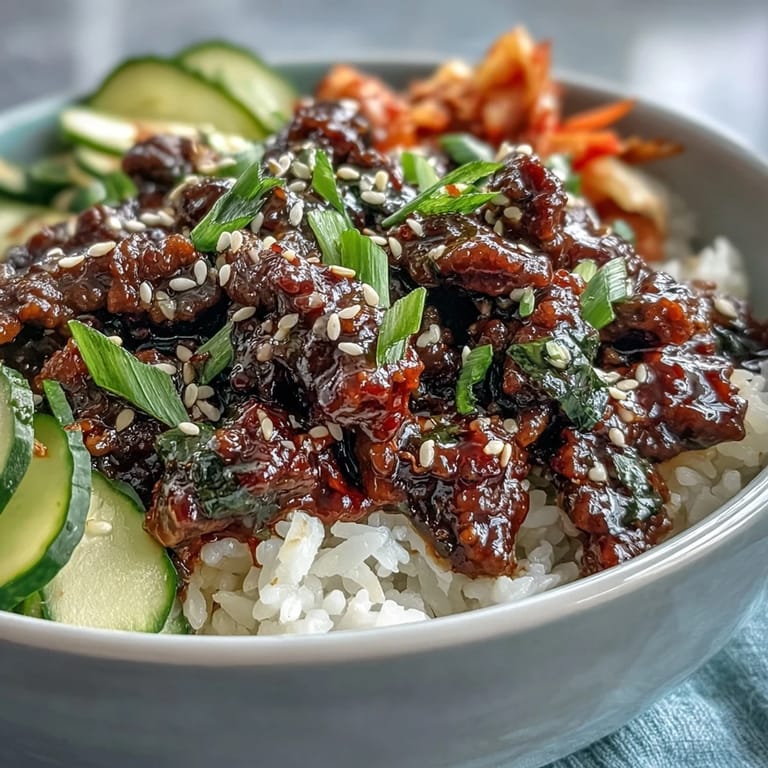
 My coworker Sarah brought a Korean beef bowl to lunch one afternoon, and I watched her eat it while pretending to focus on my sad desk salad. The way she mixed everything together, the steam rising off the rice, the little spark of heat from the kimchi—I asked for the recipe that same day. What I loved most was how she explained it took barely thirty minutes, which felt like a small miracle given how restaurant-quality it looked. This became my go-to weeknight dinner, the kind of meal that feels indulgent but doesn't demand hours in the kitchen.
I made this for my sister during a spring weekend when she was stressed about a big project, and she literally sat in my kitchen watching the beef cook, relaxing just from the smell of garlic and ginger hitting the oil. By the time we assembled the bowls, she was laughing and talking about something completely unrelated to work, which told me the recipe had done its job. That's when I realized this dish has a quiet magic—it's not just food, it's a moment of care wrapped up in umami and color.
Ingredients
- Lean ground beef: One pound gives you enough richness without greasy residue, and breaking it into small pieces as it cooks helps it brown faster and absorb all those amazing flavors.
- Gochujang: This Korean chili paste is the soul of the dish, bringing depth and controlled heat—start with two tablespoons and taste before adding more if you like things spicier.
- Soy sauce: Use regular soy sauce or tamari if you need gluten-free, as it binds all the savory elements together.
- Brown sugar: Just one tablespoon balances the heat and salt, creating a glossy sauce that clings to every grain of rice.
- Garlic and ginger: Mince these fresh because the aroma when they hit the hot oil is worth it, and it makes a real difference in flavor depth.
- Toasted sesame oil: This is not the cooking oil—it's the finishing touch that adds nuttiness, so don't skip it and don't use untoasted varieties.
- Green onions: Split the serving between raw (mixed into the beef) and fresh (sprinkled on top) to keep some crunch and brightness.
- Short-grain rice: White or brown both work, and cooking it while you prep the beef means everything finishes at the same time.
- Edamame: Buy pre-cooked and shelled to save time, and they add protein and a pop of green color.
- Cucumber and carrot: Slice them thin so they stay crisp, and do this while the beef cooks to streamline your work.
- Kimchi: This fermented vegetable adds funk and brightness—chop it roughly so texture comes through in every bite.
- Toasted sesame seeds: Toast them yourself in a dry pan for two minutes if you have time, as they taste infinitely fresher than pre-toasted.
Tired of Takeout? 🥡
Get 10 meals you can make faster than delivery arrives. Seriously.
One email. No spam. Unsubscribe anytime.
Instructions
- Wake up your pan with aromatics:
- Pour the sesame oil into a large skillet over medium heat and let it warm for just a few seconds—you want the kitchen to smell incredible. Add your minced garlic and ginger, stirring constantly for about a minute until the fragrance hits you and you know they're ready for the beef.
- Brown the beef with intention:
- Crumble the ground beef into the pan and resist the urge to stir constantly; let it sit for thirty seconds at a time so it develops color and depth. Break it up with a spatula, and cook for five to six minutes until no pink remains and the meat is genuinely browned, not just gray.
- Build the sauce layer:
- Stir in the gochujang, soy sauce, and brown sugar all at once, and watch as the beef becomes coated in a glossy, deep red sauce. Let it bubble gently for another two to three minutes, which allows the flavors to meld and the sauce to thicken enough to cling to the rice.
- Finish with fresh allure:
- Remove from heat and stir in half the green onions, reserving the rest for garnish—this adds both cooked onion flavor and a bright finish.
- Assemble with care:
- Divide your rice among four bowls, then arrange the warm beef in the center like you're creating something beautiful. Arrange the edamame, cucumber, carrot, and kimchi around the beef in little clusters of color, which makes each bite intentional and visually satisfying.
- Crown and serve:
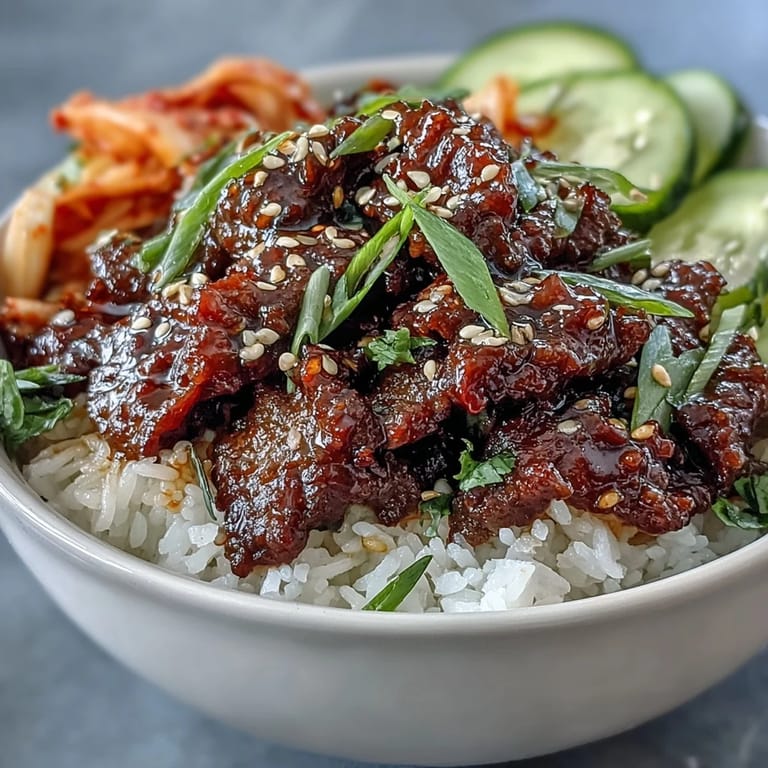
- Sprinkle the reserved green onions and toasted sesame seeds over everything, and serve immediately while the rice is still warm and the vegetables still have their crunch.
 Pin It
 My neighbor tasted a bite when I was eating one on my back porch, and she asked if I could teach her because her teenage son refused all her cooking. The next week she sent me a photo of him finishing a whole bowl, and that's exactly when I understood why this recipe matters—it's not fussy, it doesn't require fancy techniques, but it tastes like someone genuinely cared.
Why Temperature Matters More Than You Think
The moment everything comes together matters here because cold rice and warm beef create a temperature contrast that actually works in your favor. The warmth from the beef slightly softens the vegetables while keeping them crisp, and the cool rice provides relief from the heat of the gochujang. I learned this when I once assembled bowls an hour early for a potluck and everything tasted muddled and separated by the time we ate—now I treat assembly as the final step, not something to prep ahead.
Making It Your Own
This bowl thrives on customization because the structure is so solid that you can swap almost anything without losing the soul of the dish. Try ground turkey or chicken if beef feels too heavy, or use crumbled tofu or lentils for a vegetarian version that's just as satisfying. I've added sliced radish for extra crunch, swapped the cucumber for shredded cabbage, and even topped a bowl with a fried egg that made it feel like a completely new meal.
Heat and Balance
The beauty of gochujang is that it's spicy without being painful, but some people are more sensitive to heat than others, and there's no shame in adjusting it to your comfort zone. Start with one and a half tablespoons, taste the sauce, and build from there—this gives you control and removes any guessing. Here are three thoughts to keep in mind: use a little extra gochujang if you love bold flavors and have some kimchi on the side, reduce it slightly if you're serving people who prefer milder food, and remember that rice dilutes the heat beautifully so don't be afraid of the spice level in the pan.
- Taste the beef sauce before assembling bowls so you can adjust heat or saltiness in real time.
- Have extra kimchi and a drizzle of sesame oil nearby for anyone who wants to customize their heat level at the table.
- Serve with ice water or a cooling beverage because the gochujang builds warmth that sneaks up on you.
 Pin It
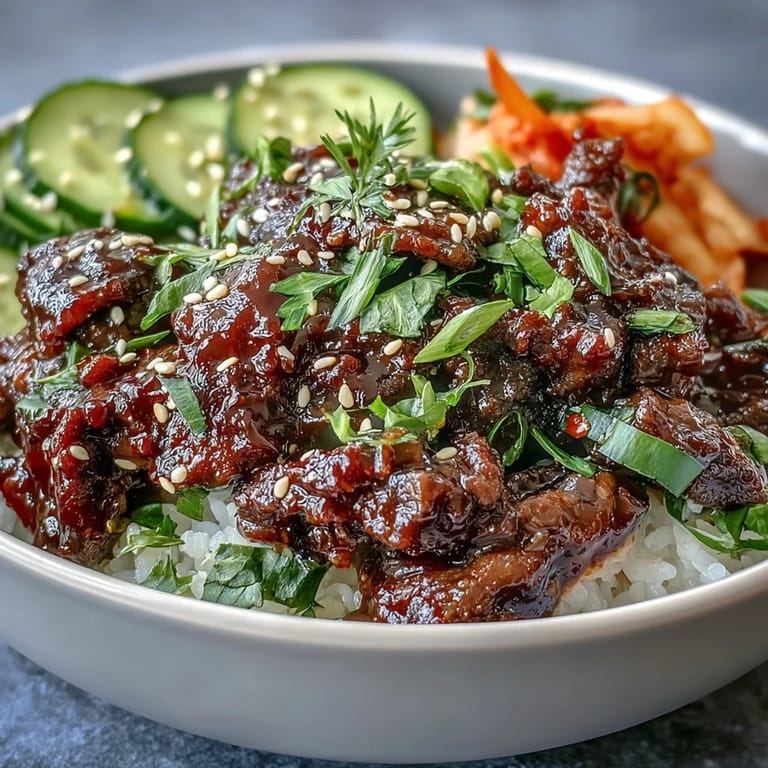
 This bowl has become the meal I make when I want to feel grounded and creative at the same time, like I'm cooking something real without overthinking it. It's the kind of dinner that makes you feel like you've accomplished something, even on the nights you're too tired to do much of anything.
Recipe FAQs
- → What makes the beef Korean-style?
The beef gets its Korean flair from gochujang, a fermented Korean chili paste that delivers sweet heat and umami depth. Combined with soy sauce, sesame oil, garlic, and ginger, it creates that distinctive Korean flavor profile you'd find in dishes like bibimbap or bulgogi.
- → Can I make this spicier or milder?
Absolutely. Adjust the gochujang quantity to your taste—start with 1 tablespoon for mild heat or increase to 3 tablespoons for serious spice lovers. You can also add gochugaru (Korean chili flakes) or sliced fresh chilies for extra kick.
- → What can I substitute for ground beef?
Ground turkey or chicken work beautifully for a lighter version. For plant-based options, use crumbled tofu, tempeh, or plant-based meat alternatives. The cooking time remains similar, though plant-based meats may brown faster.
- → Is this meal prep friendly?
Yes, this bowls perfectly for meal prep. Store the cooked beef, rice, and vegetables in separate airtight containers in the refrigerator for up to 4 days. Reheat the beef and rice gently, then assemble with fresh vegetables just before eating.
- → What other toppings work well?
A fried or sunny-side-up egg adds richness, while sliced avocado brings creaminess. Try pickled radishes, bean sprouts, fresh spinach, or shredded cabbage for more crunch and color. Drizzle with extra gochujang or a little sriracha mayo before serving.
- → Can I use different rice?
Short-grain white rice is traditional, but short-grain brown rice adds nuttiness and fiber. Jasmine rice works in a pinch, and cauliflower rice creates a low-carb alternative. Just adjust cooking time according to your rice variety.