 Pin It
 My cooking phase of teriyaki bowls started on a random Tuesday when my coworker brought leftovers that smelled like a Japanese restaurant had materialized in our break room. The glaze caught my eye first—that glossy, amber coating clinging to each piece of chicken—and I knew I had to recreate it at home. Turns out, balancing sweet and savory isn't as intimidating as it sounds, and once you nail the sauce, everything else falls into place naturally.
I made this for my sister when she was stressed about a presentation, and watching her face soften at the first bite reminded me that food doesn't need to be elaborate to matter. She came back the next week asking for the recipe, which meant she'd actually written down my chaotic instructions from memory. That's when I knew it was a keeper.
Ingredients
- Boneless, skinless chicken thighs or breasts (1.5 lbs), cut into bite-sized pieces: Thighs stay juicier than breasts, but if you prefer leaner meat, breasts work too—just don't overcook them.
- Soy sauce (1/3 cup): The backbone of your sauce; use regular or tamari if you need gluten-free.
- Mirin (1/4 cup): This Japanese sweet rice wine adds silky depth that you can't replicate with just sugar—it's worth hunting down.
- Brown sugar and honey (2 tbsp each): Together they create layers of sweetness without tasting one-dimensional.
- Rice vinegar (1 tbsp): The acid that keeps the sauce from becoming cloying.
- Garlic and ginger (2 cloves minced garlic, 1 tsp grated ginger): Fresh versions make all the difference; jarred ginger tastes tired in comparison.
- Sesame oil (1 tsp): A small amount adds that toasted, nutty whisper that makes people ask what the secret ingredient is.
- Cornstarch slurry (1 tbsp cornstarch plus 2 tbsp water): This thickens the sauce to a glossy finish at the very end.
- Jasmine or short-grain white rice (2 cups): Jasmine rice is forgiving and fragrant; it holds up beautifully under the glaze.
- Broccoli, carrots, bell pepper, and snap peas (1 cup each): These vegetables maintain their texture when stir-fried quickly, but substitute whatever you have on hand.
- Fresh pineapple (1 cup, diced): The tropical brightness balances the umami-rich sauce.
- Scallions and toasted sesame seeds (2 tbsp sliced scallions, 1 tsp sesame seeds): These finish the bowl with color and crunch.
Tired of Takeout? 🥡
Get 10 meals you can make faster than delivery arrives. Seriously.
One email. No spam. Unsubscribe anytime.
Instructions
- Rinse and start your rice:
- Rinse the rice under cold water until the water runs clear, which removes excess starch so each grain stays separate. Combine the rinsed rice, water, and a pinch of salt in a saucepan, bring to a boil, then reduce heat, cover, and simmer for 15 minutes.
- Let the rice rest:
- This step sounds small but matters—remove from heat and let it sit covered for 10 minutes, which lets the rice finish cooking gently in its own steam.
- Whisk together your sauce base:
- In a small bowl, whisk soy sauce, mirin, brown sugar, honey, rice vinegar, garlic, ginger, and sesame oil until the sugar dissolves. The sauce should smell complex and balanced, not just salty or just sweet.
- Marinate the chicken:
- Place chicken pieces in a bowl and pour half the sauce over them, tossing to coat evenly. Let this sit while you prep vegetables—at least 10 minutes, though 30 is even better if you have time.
- Stir-fry the vegetables quickly:
- Heat vegetable oil in a large skillet or wok over medium-high heat until it shimmers slightly, then add broccoli, carrots, bell pepper, and snap peas. Keep them moving for 3 to 4 minutes so they're crisp-tender, not mushy.
- Cook the marinated chicken:
- In the same pan (don't rinse it—those caramelized bits add flavor), add the chicken with its marinade and cook for 6 to 8 minutes, stirring occasionally, until the chicken is browned and cooked through. You'll know it's ready when the pieces are no longer pink inside.
- Thicken the sauce to glossy perfection:
- Pour the remaining teriyaki sauce into the pan, then stir the cornstarch with water to create a smooth slurry before adding it. Simmer for 2 to 3 minutes, stirring gently, until the sauce coats the chicken in a glossy amber glaze.
- Build your bowls:
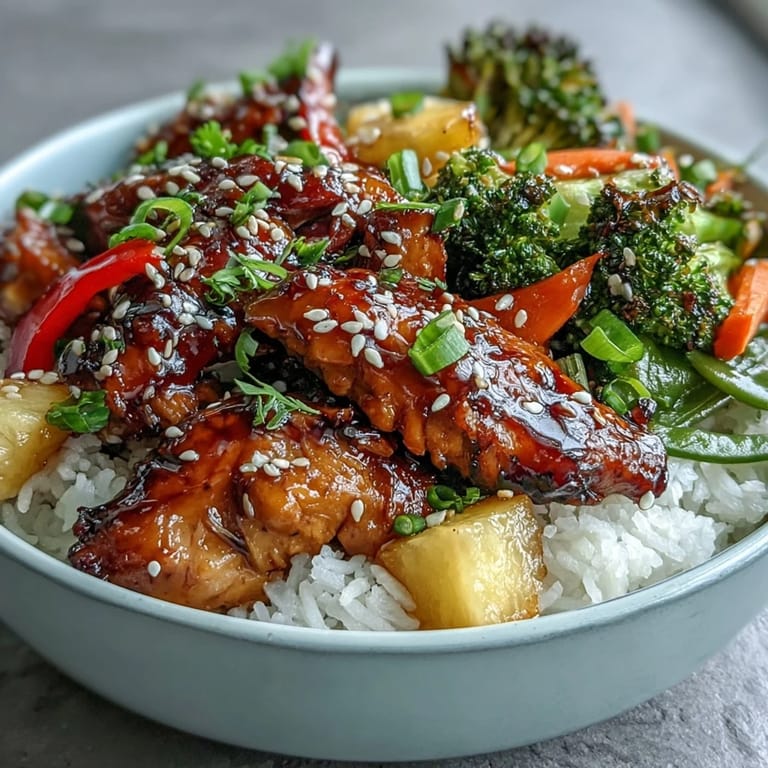
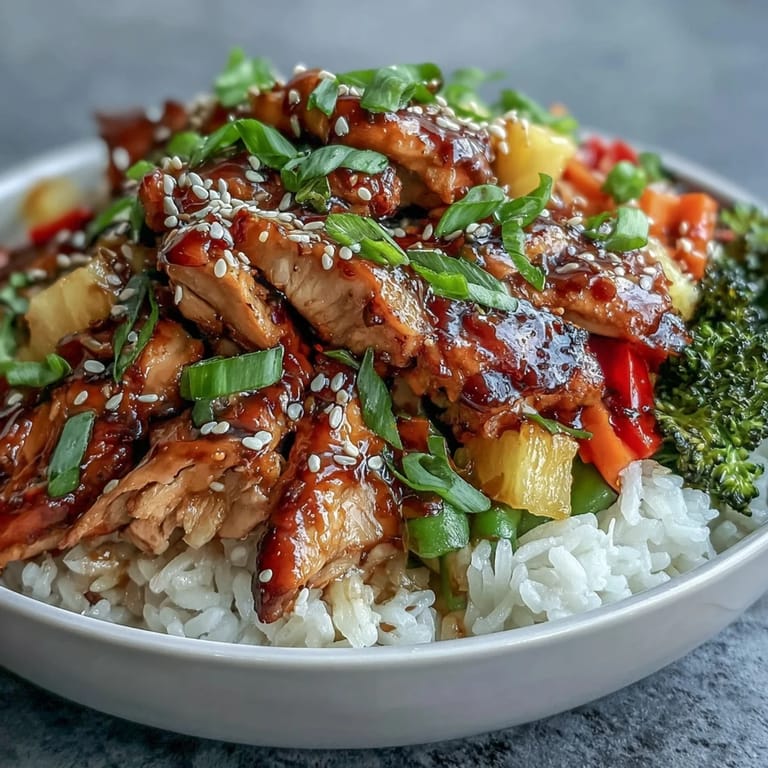
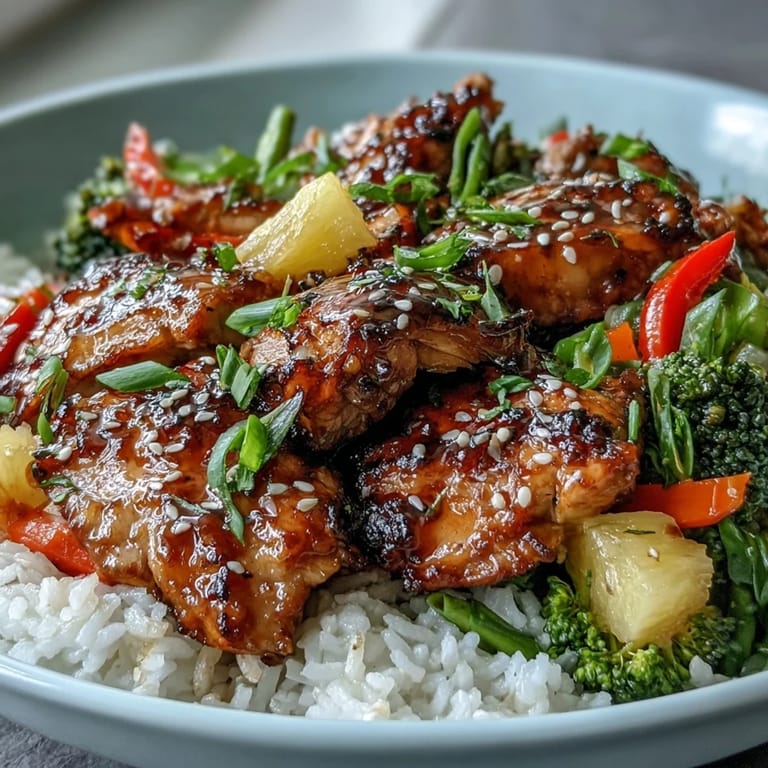
- Fluff the rice and divide it among four bowls, then top each with teriyaki chicken, the stir-fried vegetables, and a handful of fresh pineapple. Finish with sliced scallions and a sprinkle of toasted sesame seeds.
 Pin It
 A friend once told me that teriyaki bowls saved her during a month of late nights at work—she'd batch-cook everything on Sunday and assemble bowls throughout the week in under five minutes. That's when I realized this recipe isn't just about flavor; it's about giving people permission to eat well even when life feels hectic.
Why the Sauce Matters Most
The teriyaki sauce is where the magic happens, and getting it right is simpler than you might think. The key is balance—the soy sauce brings saltiness and umami, the mirin and honey add sweetness, the vinegar cuts through with acidity, and the garlic and ginger ground everything in warmth. When all four elements are present, your mouth will register depth instead of just sugar or just salt. I've made this sauce a hundred times now, and I still taste-test it before adding the chicken because small adjustments here ripple through the entire bowl.
Rice Is Your Canvas
Steamed jasmine rice might seem like background music in this dish, but it's actually the foundation that makes everything work. The rice needs to be fluffy enough to hold the sauce without turning mushy, and rinsing it beforehand is non-negotiable. I learned this the hard way by skipping the rinse step once and ending up with gluey, starchy rice that couldn't stand up to the glaze—never again. When you take those two extra minutes to rinse properly and let the cooked rice rest, you'll notice the difference immediately.
Vegetables, Timing, and What Comes Next
The vegetables are where you can play around without breaking anything—broccoli, carrots, bell pepper, and snap peas work beautifully, but mushrooms, zucchini, or baby corn will slide into this bowl without argument. The stir-fry happens fast, which is actually the point; you want vegetables that still have some texture instead of turning into a soft pile. Cook them first, set them aside, then add the chicken to the same pan so you capture all those caramelized flavors that have stuck to the bottom. If you want extra heat, drizzle sriracha or chili oil on top before serving, or pair the bowl with a crisp white wine like Sauvignon Blanc to balance the richness.
- For a vegetarian version, swap the chicken for firm tofu or tempeh and reduce the cooking time slightly since they need less time to heat through.
- You can make the sauce a day or two ahead and keep it in the fridge, which means assembly becomes genuinely quick on a busy evening.
- Freshness matters with the pineapple and scallions, so add them just before eating so they don't get soggy or wilted.
 Pin It
 This teriyaki chicken and rice bowl has become my default move when I want to cook something that tastes like restaurant food but actually came from my own kitchen. It's the kind of dish that reminds you why homemade meals matter.
Recipe FAQs
- → Can I use chicken breasts instead of thighs?
Yes, chicken breasts work well though they may be slightly less juicy than thighs. Cut them into similar bite-sized pieces and adjust cooking time to avoid overcooking. Breasts typically need 1-2 minutes less cooking time.
- → What can I substitute for mirin?
If you don't have mirin, substitute with equal parts dry sherry or white wine plus a pinch of sugar. You can also use Chinese Shaoxing wine, though the flavor profile will be slightly different.
- → Is this dish gluten-free?
The dish can be made gluten-free by using tamari or coconut aminos instead of regular soy sauce. All other ingredients including mirin are naturally gluten-free, but always check labels to be certain.
- → Can I make the teriyaki sauce ahead of time?
Absolutely. The sauce can be prepared up to a week in advance and stored in an airtight container in the refrigerator. If making ahead, wait to add the cornstarch slurry until you're ready to cook as it may thicken too much during storage.
- → What other proteins work with this teriyaki glaze?
The teriyaki sauce pairs beautifully with salmon, beef strips, shrimp, or tofu. Adjust cooking times accordingly—salmon needs about 4-5 minutes per side, shrimp cooks in 2-3 minutes, while tofu should be pressed and pan-fried until golden before adding the sauce.
- → Can I use brown rice instead of white?
Brown rice is a nutritious alternative and adds a nutty flavor. Note that brown rice typically requires about 45 minutes to cook and slightly more water—use 2.5 cups water for every cup of brown rice.